
Beautiful Plants For Your Interior
Beautiful Plants For Your Interior
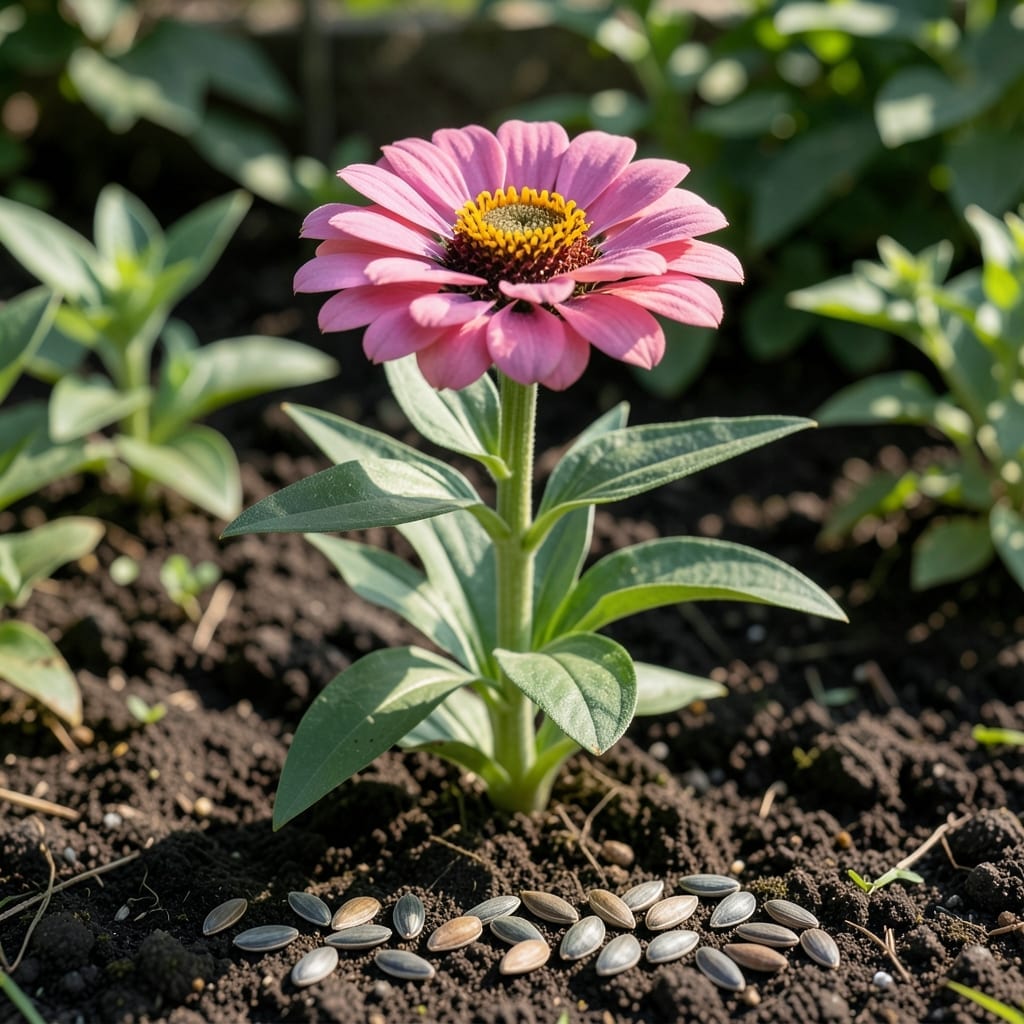
Identifying zinnia seeds correctly can save you from planting the wrong thing in your garden. These tiny powerhouses come in distinct shapes, colors, and sizes that set them apart from other flower seeds.
The 🌼 Zinnia produces seeds that are often overlooked due to their small size. But once you know what to look for, spotting them becomes easier than you might think.
I’ll show you the exact characteristics to watch for, so you can confidently identify and collect zinnia seeds for your next planting season.
If you’ve ever wondered what zinnia seeds look like, you’re not alone. These tiny seeds pack a lot of personality into their small size. I often find them hiding in the dried flower heads after the blooms fade.
Zinnia seeds typically appear as flat, tear-shaped or arrowhead-shaped structures with a rough texture. Their color can range from light brown to dark gray or even black, depending on the variety and maturity.
| Characteristic | Description |
| Shape | Tear-shaped or arrowhead |
| Size | 0.2-0.5 inches long |
| Color | Brown, gray, or black |
| Texture | Rough, slightly bumpy |
| Location | Center of dried flower head |
The size of zinnia seeds generally falls between 0.2 to 0.5 inches in length. This makes them larger than some flower seeds but still small enough to require careful handling when planting.
I notice that the Benary’s Giant variety tends to produce slightly larger seeds, while the Thumbelina zinnias have seeds on the smaller end of the scale. This size variation can help you identify which type you’re working with.
The texture is another key identifier. Run your fingers over them and you’ll feel a slightly rough or bumpy surface. This distinguishes them from smoother seeds like those of marigolds.
You’ll typically find zinnia seeds clustered in the center of the dried flower head. As the flower matures and dries, the petals fall away, revealing these seeds attached to the cone-shaped center.
The color often darkens as the seeds mature. I’ve found that immature zinnia seeds might appear lighter, while fully ripe ones take on those deeper brown or black hues that we associate with readiness for planting.
Remember that seed appearance can vary slightly between zinnia varieties. The Profusion series, for example, might have slightly different shaped seeds than the traditional dahlia-flowered types.
When collecting seeds, I always look for these key characteristics: the teardrop shape, the rough texture, and the dark coloration. These are your best clues that you’ve found the real deal.
🌼It’s easy to confuse zinnia seeds with other flower seeds when you’re first learning. I’ve made this mistake myself, especially with cosmos and marigold seeds, which can look similar at first glance.
Zinnia seeds stand out with their distinct arrowhead shape and rough texture. Most lookalikes have smoother surfaces or different shapes entirely. This texture difference is your first clue.
| Seed Type | Shape | Texture | Color |
| Zinnia | Arrowhead/teardrop | Rough, bumpy | Brown, gray, black |
| Cosmos | Long, needle-like | Smooth | Light brown |
| Marigold | Thin, straight | Smooth | Black and white |
| Sunflower | Oval, flat | Smooth | Black and white striped |
The cosmos seed is much longer and thinner, almost like a tiny needle. In contrast, zinnia seeds are shorter and wider with that characteristic pointed tip.
Marigold seeds are another common mix-up. They’re typically straight and thin with a smoother surface. Plus, they often have that distinct black-and-white coloring that zinnias lack.
Sunflower seeds are larger and flatter with their famous black and white stripes. If you see stripes, you can be sure it’s not a zinnia. I always check for this when I’m unsure.
Another tip: zinnia seeds are always found in the center of the dried flower head, while many lookalikes might be scattered differently. This location is a dead giveaway for identification.
🌼