
Beautiful Plants For Your Interior
Beautiful Plants For Your Interior
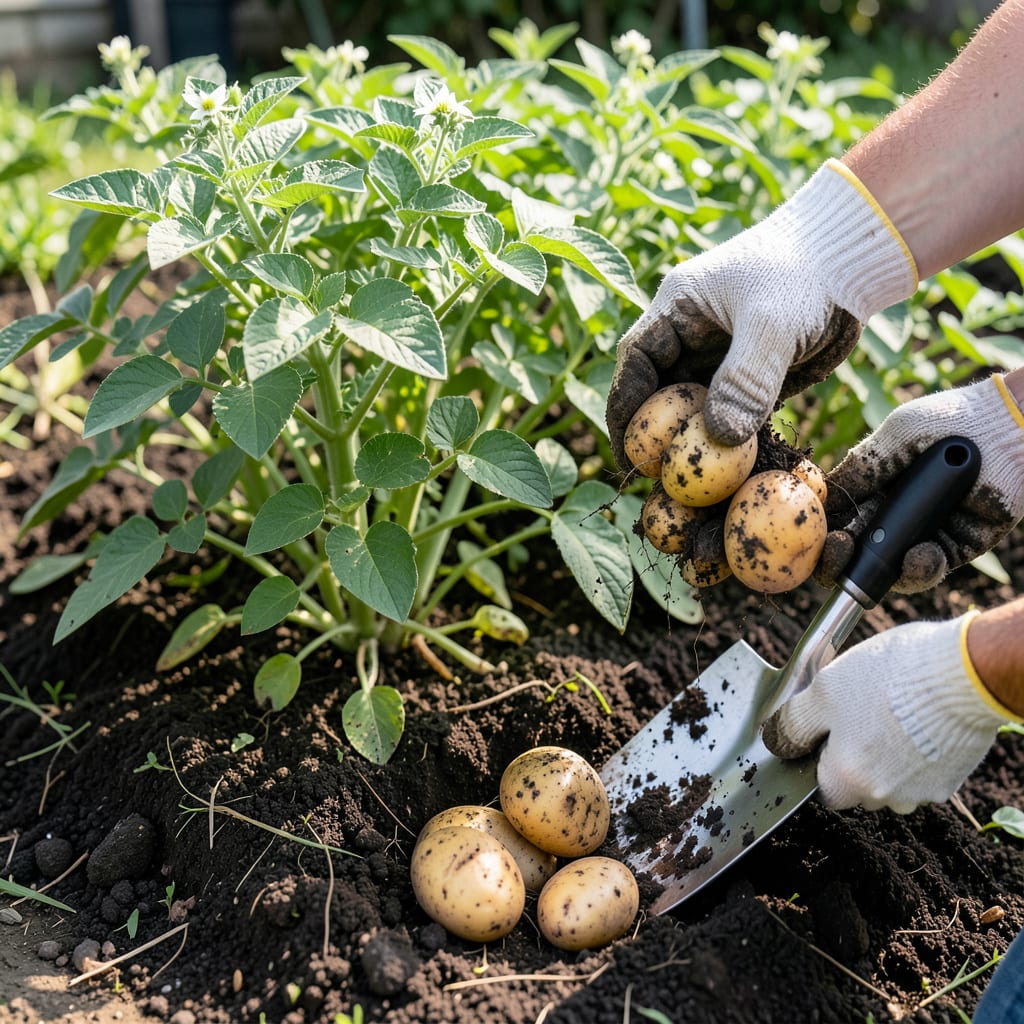
I remember the first time I dug up 🥔 Potato plants too early – the tubers were tiny and the skins rubbed right off. That’s when I learned the visual signs are everything.
From yellowing foliage to firm skin that doesn’t scrape easily, your plants will tell you exactly when they’re ready. Let me show you these game-changing indicators so you’ll never harvest too soon again.


I’ve learned that potato plants give clear signals when their tubers are mature. The most obvious sign is when the foliage begins to yellow and the vines start dying back naturally.☀️
This die-back typically occurs about 2-3 weeks before harvest time. The leaves turn yellow, then brown, and the stems become dry and brittle. This is nature’s way of telling you the energy has moved from the plant to the tubers.🌱
| Harvest Sign | What to Look For |
|---|---|
| Foliage Color | Turns yellow then brown |
| Vine Condition | Dry and brittle stems |
| Flower Stage | Flowers fade and drop |
| Tuber Skin | Firm and set, doesn’t rub off |
| Tuber Size | Full-sized for variety |
Another key indicator is the flower formation. Most potato varieties will bloom, and when those flowers begin to fade, it’s a good sign the tubers are nearing maturity. Some varieties may not flower at all, so don’t rely on this sign alone.🌿
The skin test is my favorite method. Gently rub a tuber with your thumb – if the skin stays intact, it’s ready. If it rubs off easily, the potatoes need more time. This test works best with new potatoes if you’re harvesting early.
For early varieties, you can start checking about 60-70 days after planting. Mid-season types usually take 80-90 days, while late varieties may need 100-120 days. These timeframes can vary based on your climate and soil conditions.
I always check the weather forecast before harvesting. A dry spell of a few days makes digging easier and helps the tubers cure naturally in the ground. Avoid harvesting when the soil is wet, as this can lead to rot and disease issues.
The size of the tubers is another visual clue. Most mature potatoes will be about the size of a small apple or larger, depending on the variety. If you’re growing fingerling potatoes, they’ll be smaller but still plump and firm.
Remember that green skin on potatoes indicates exposure to light, which can be toxic. If you see green patches, it means the tubers were too close to the surface. Always hill your potatoes to prevent this.🪴
In my experience, the best time of day to harvest is in the morning when the soil is cool and the plants are hydrated. This makes the digging process easier and reduces stress on both you and your potato plants.
I always use the gentle dig test to check potato readiness. Carefully brush away soil near the plant base to expose a few tubers without disturbing the roots.☀️
This method lets you inspect tuber size and skin firmness while leaving the plant intact. If they’re not ready, simply cover them back up and check again in a week.
The vine observation timeline is another reliable method. Most varieties show yellowing foliage about 2-3 weeks before optimal harvest. This is when the plant stops growing and redirects energy to the tubers.🌱
For the skin rub test, I select a small test tuber and gently rub it with my thumb. If the skin stays intact, it’s ready. If it peels off easily, the potatoes need more time to mature.
Early varieties like Yukon Gold may be ready in 60-70 days, while Russets often need 90-120 days. Always check your seed packet for variety-specific timelines.
I recommend testing multiple plants in your patch, as maturity can vary. Also consider your local climate – cooler areas may need extra growing time compared to warmer regions.🪴
I’ve seen many gardeners make the mistake of harvesting when the foliage is still green. This usually means the tubers aren’t mature and will be small with thin skins.☀️
Another common error is ignoring green patches on the skin, which indicate light exposure. This can make potatoes toxic to eat and should be avoided by proper hilling.🌱
⚠️ Harvest Warning: Never harvest with green foliage or wet soil. Wait for yellowing vines and dry conditions to avoid disease and small tubers.
Harvesting too late can be just as problematic. If you wait until the vines completely die and the soil stays wet, you risk rot and pest damage. I always aim for that sweet spot when foliage is mostly yellow.🪴
Some gardeners also misjudge by tuber size alone. While size matters, the skin test is more reliable. If the skin rubs off easily, your potatoes need more time regardless of their size.
Finally,
Watch for yellowing foliage and dying back vines—these are the clearest signs. The skin rub test also works: gently rub a tuber, and if the skin stays on, it’s ready.
Early harvest often means small tubers with thin skins that bruise easily. The skin rub test will fail, and the potatoes won’t store well.
Yes, but don’t wait too long. Once vines die, dig within 1-2 weeks to avoid rot or pest damage. Dry soil makes digging easier.
Green skin means light exposure, which can be toxic. Prevent this by hilling soil around the base of plants regularly.
