
Beautiful Plants For Your Interior
Beautiful Plants For Your Interior
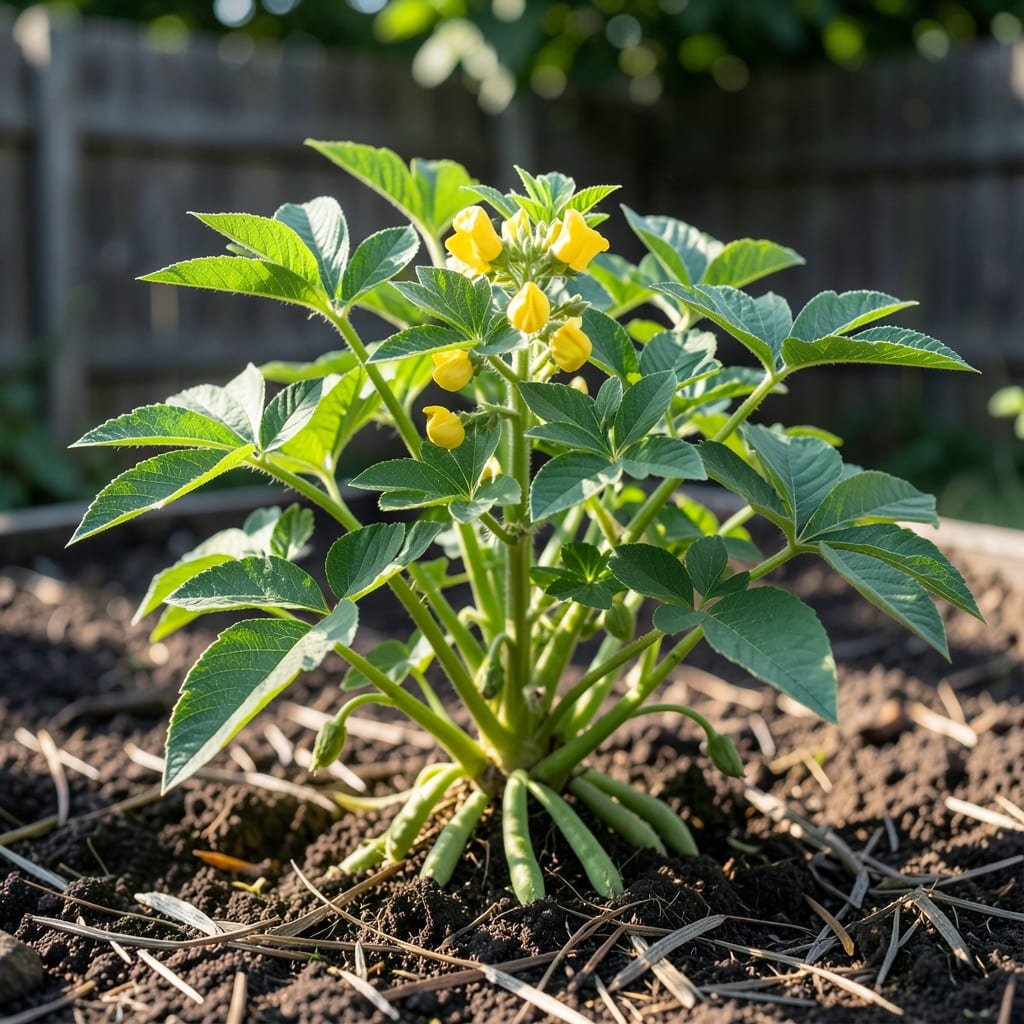
Peanut plants feature bright yellow flowers that bloom above ground, while their distinctive pegs (ovary stems) grow downward into the soil to form peanuts. The bushy green foliage reaches 12-18 inches tall with oval-shaped leaves arranged in pairs along branching stems.
What makes peanut plants truly fascinating is their unique growth pattern—unlike most crops, they develop their edible part underground. 🌱 The vibrant yellow blossoms aren’t just for show; they’re the starting point for those distinctive pegs that burrow into the soil. I’ve always found it remarkable how the plant’s above-ground appearance (lush, compact foliage) contrasts with its hidden subterranean productivity.
Gardeners often recognize peanuts by their symmetrical leaf pairs and dense, bushy structure that spreads about 1-2 feet wide. The leaves have a slightly leathery texture that helps them withstand heat, while the stems develop a slightly woody character as the plant matures. This combination of features makes them quite distinct from other legume plants in the garden. ✨
💡 In This Article
Peanut plants begin their life cycle with a germination process that’s surprisingly fast—sprouts typically emerge within 7-10 days when soil temperatures reach 65-70°F. What’s fascinating is how the seedling first develops a taproot that can grow 3-4 feet deep, anchoring the plant while lateral roots branch out to absorb nutrients.
This deep root system explains why peanuts are more drought-tolerant than many garden plants. 🌱
The real magic happens about 30-40 days after planting when those signature yellow flowers appear. Each flower only lasts 24 hours, but the plant produces new blooms daily during peak season. Here’s the botanical marvel: after pollination, the flower’s ovary stem (called a “peg”) elongates and bends downward—a process called geocarpic reproduction.
This peg must penetrate the soil to form peanuts, which is why loose, sandy soil is ideal for cultivation.
Once underground, the peg’s tip swells to form the peanut pod—a process taking 60-120 days depending on variety. The pods develop in a horizontal layer about 1-2 inches beneath the surface, which is why careful digging is required at harvest.
Each plant can produce 25-50 pods when conditions are optimal, with Virginia types yielding larger nuts than Spanish varieties. ✨
The plant’s above-ground appearance changes dramatically during maturation. Early leaves are bright green and soft, becoming darker and slightly leathery as the plant ages. The stems transition from green to slightly woody, especially near the base.
Gardeners can identify maturity when the inner shell of sample pods turns dark (for roasting types) or when leaves begin yellowing—signaling the plant is redirecting energy to pod development.
Temperature plays a crucial role throughout this cycle. Peanuts thrive in warm soil (80-90°F optimal) and stop growing below 55°F. The entire growth cycle typically spans 120-150 days, with the final month being critical for pod filling.
This is why peanuts are primarily grown in regions with long, hot summers—any frost will terminate the growing season abruptly. 🔥
What makes peanut plants unique among legumes is their dual purpose: while the pods develop underground, the above-ground foliage continues photosynthesizing to support pod growth. This simultaneous process requires careful water management—too much moisture causes peg rot, while too little stunts pod development.
The plant’s bushy structure (typically 12-18 inches tall and 18-24 inches wide) helps shade the soil, maintaining the moist but not soggy conditions that pegs need to penetrate successfully.
Peanut plants usually reach 12-18 inches in height with a similar spread. Their compact, bushy structure makes them ideal for garden beds. The size can vary slightly depending on the variety and growing conditions.
Each yellow peanut flower only lasts about 24 hours after blooming. This short lifespan is normal—the plant continuously produces new flowers throughout its growing season. The quick turnover helps maximize pod production underground.
The pegs are specialized stems that develop after pollination. They grow downward to bury the ovary 1-2 inches below the surface, where peanuts form. This unique geocarpic process protects developing pods from animals and harsh conditions.
Yes, but choose containers at least 18 inches deep and 24 inches wide per plant. Use loose, sandy soil to allow pegs to penetrate easily. Container-grown plants may produce fewer pods but can thrive on patios or balconies.
Look for yellowing leaves and check sample pods—the inner shell should be dark for roasting types. Most varieties mature in 120-150 days. Harvest before frost, as cold temperatures can damage developing pods underground.
