
Beautiful Plants For Your Interior
Beautiful Plants For Your Interior
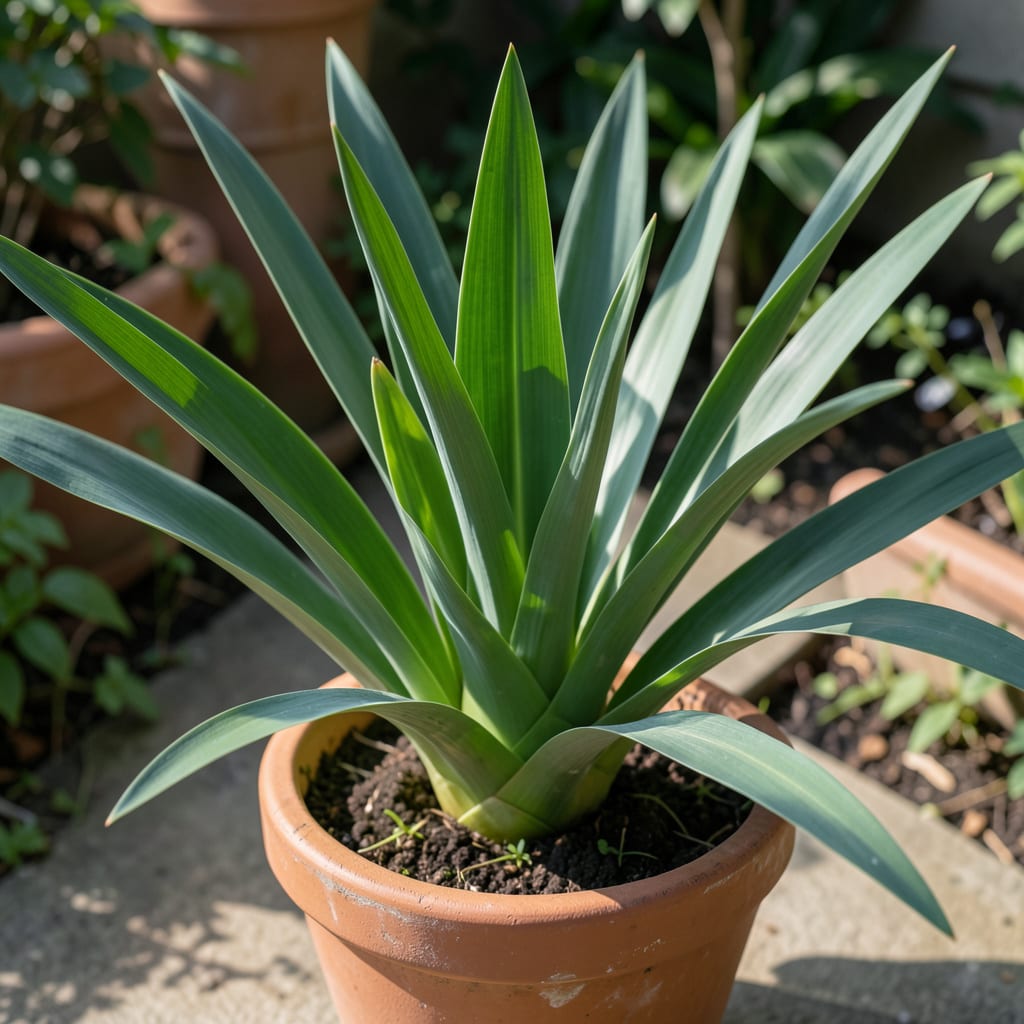
Long, straight, and sharp—like nature’s swords. Gladiolus leaves shoot up from the base in a fan shape, each blade reaching 12-24 inches tall with a pointed tip.
They’re bright green, slightly ribbed, and wrap the stem like a sheath. This distinct look makes them easy to spot in a crowded garden, even before the flowers appear.
📚 In This Guide
Here’s how to recognize gladiolus foliage with confidence, even among lookalike plants.
Gladiolus leaves emerge as long, sword-shaped blades that grow vertically from the base of the plant. They’re not flat like grass but have a slight groove running lengthwise down the center, giving them a subtle channel that catches light differently at certain angles.
Each leaf typically measures between 18-36 inches long and ½ to 1 inch wide, tapering to a sharp point at the tip. Unlike some lilies that have wider, floppier leaves, gladiolus foliage stands stiff and upright, almost like miniature green swords.
Look at how the leaves grow from the corm. Gladiolus produces leaves in a fan-like arrangement, with each subsequent leaf emerging slightly behind and overlapping the previous one. This creates a layered, almost pleated effect when viewed from the side.
The leaves grow directly from the base rather than branching off a stem. Young plants may have just a few leaves, but mature gladiolus can produce 6-9 leaves per corm, all radiating from the same central point.
The color is a vibrant, medium to deep green that appears almost blue-green in certain light. Unlike some plants that have variegated or striped foliage, gladiolus leaves are uniformly colored from base to tip.
Run your fingers along the surface—you’ll notice a smooth but slightly waxy texture. The edges are entire (not serrated or toothed), and the leaf feels substantial, not flimsy. This texture helps the plant conserve moisture in its native Mediterranean climate.
Gladiolus leaves can resemble those of iris or crocosmia at first glance, but key differences set them apart. Iris leaves are often wider and flatter, while crocosmia leaves tend to arch gracefully outward. Gladiolus maintains that rigid, upright posture regardless of weather conditions.
Another distinguishing feature is the visible midrib—the central vein running the length of the leaf. In gladiolus, this vein is pronounced but not raised, creating that subtle groove rather than a ridge. This detail is often overlooked but is a dead giveaway once you train your eye to spot it.
These key observations will help you distinguish gladiolus leaves from similar plants with confidence.
Shape and Size Focus: Remember the 18-36 inch length and ½ to 1 inch width from Step 1—the sword-like shape is distinctive. Unlike broader lily leaves, gladiolus maintains this slim profile while standing rigidly upright. That vertical growth is a dead giveaway.
Arrangement Insight: Step 2 mentions the fan-like pattern, which creates that layered effect when viewed from the side. Look for leaves emerging directly from the base in overlapping rows. Mature plants with 6-9 leaves per corm make this pattern especially obvious.
Texture and Color: The smooth, waxy surface and uniform medium to deep green color from Step 3 are consistent identifiers. Run your fingers along the leaf—if it feels substantial with entire edges (no teeth or serrations), you’re likely looking at gladiolus.
Midrib Detail: That subtle groove mentioned in Step 4 is often overlooked but crucial. The central vein creates a channel rather than a raised ridge, which catches light differently. This single feature can confirm identification when other traits are ambiguous.
Gladiolus leaves have a long, narrow, and pointed shape, resembling swords, because their natural design helps them efficiently capture sunlight and channel rainwater toward the roots in their native habitats.
Most gladiolus varieties feature long, sword-like leaves, but some may have slightly broader or more slender blades depending on the cultivar.
Gladiolus leaves typically emerge in early spring as the plant begins its growth cycle, often before the flowers bloom in summer.
Yellow leaves can indicate overwatering, poor drainage, or nutrient deficiencies. Check soil moisture and ensure proper care to revive the plant.
