
Beautiful Plants For Your Interior
Beautiful Plants For Your Interior
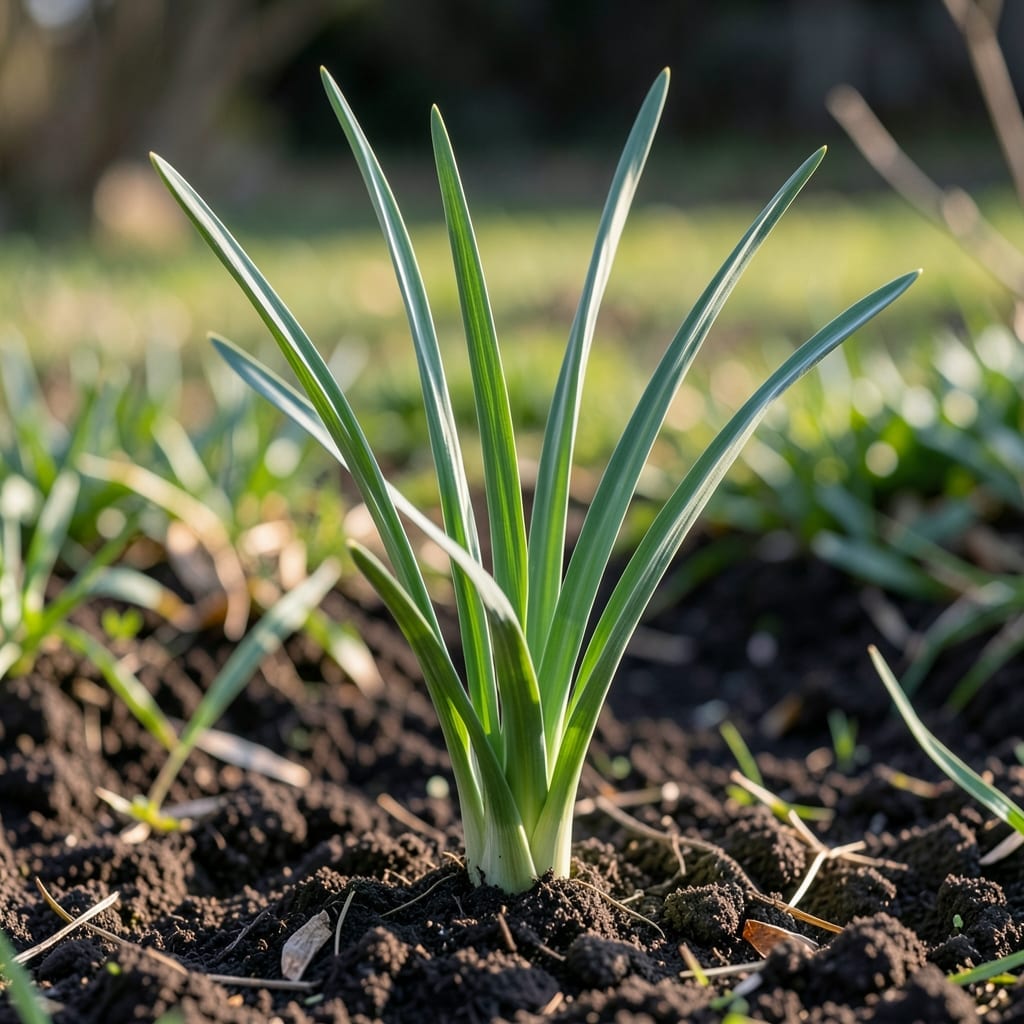
Daffodil leaves are long, narrow, and strap-shaped with a smooth, slightly waxy surface. They grow in a basal clump, emerging directly from the bulb, and have a vibrant green to blue-green color.
I notice these leaves have a distinctive parallel venation pattern that runs the full length, which helps maximize sunlight absorption. Their blue-green hue often intensifies during peak growth periods, and the waxy coating serves as a natural defense against moisture loss. This design is perfectly adapted for the bulb’s energy storage needs. ✨
What stands out most is how they form a fan-like arrangement at the base, creating an efficient system for photosynthesis. 💫
💡 In This Article
The blade shape of daffodil leaves is uniquely adapted for efficiency. Each leaf typically measures 12-18 inches long but only 0.5-1 inch wide, creating a high surface area-to-volume ratio. This elongated form maximizes sunlight exposure while minimizing water loss through transpiration. ✨
Parallel venation runs the entire length of each leaf, with 5-7 visible veins that never intersect. This pattern allows water and nutrients to flow directly from bulb to leaf tip without cross-connections. The veins also create slight ridges you can feel when running your fingers along the surface. 💫
That waxy coating you notice isn’t just for show—it’s a cutin layer that reduces water evaporation by up to 30%. The blue-green color comes from a combination of chlorophyll and anthocyanin pigments, which are most concentrated in spring when the plant is actively photosynthesizing. ⚡
What most people don’t realize is how these leaves function as solar panels for the bulb. During the 6-8 weeks after blooming, they produce and store energy that will fuel next year’s flowers. The fan-like arrangement ensures no leaf shades another, creating optimal light distribution. 🔥
You’ll often see the leaves emerge before the flowers in early spring. This timing gives the plant a head start on energy production. The leaves persist long after the blooms fade, sometimes until early summer, as they complete their critical role in nutrient storage. ✨
The elongated shape maximizes sunlight absorption while minimizing water loss. This design helps the plant photosynthesize efficiently during its 6-8 week energy-storing period after blooming.
Never remove them until they turn yellow or brown. The leaves continue producing energy for next year’s blooms for weeks after flowering. Premature removal weakens future growth.
Early yellowing often signals overwatering or poor drainage. Healthy leaves stay vibrant green and upright. Check soil moisture and drainage if you notice premature discoloration.
Avoid tying or braiding leaves as this reduces sunlight exposure. This practice can decrease energy production by up to 40%, affecting next year’s flowers.