
Beautiful Plants For Your Interior
Beautiful Plants For Your Interior
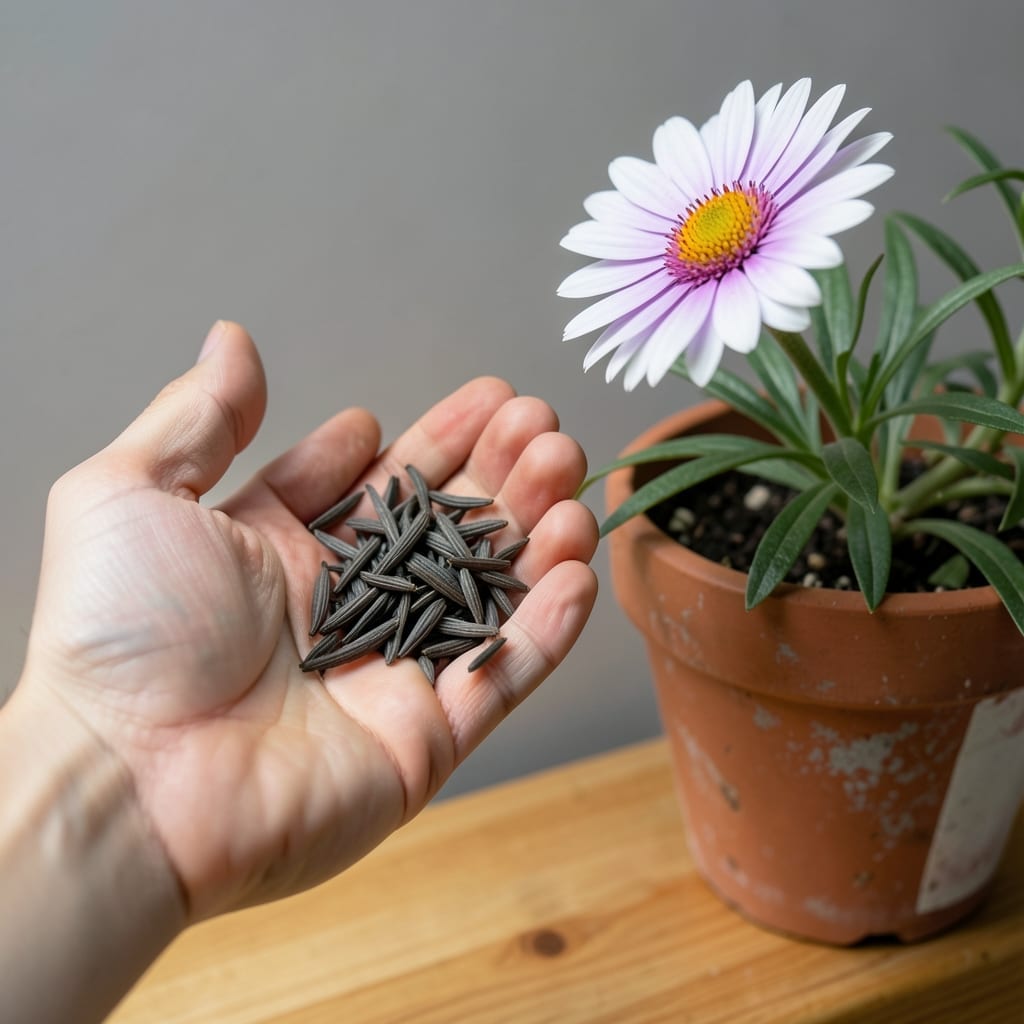
Tiny black specks with white tufts—that’s what you’re looking for. I remember the first time I held African Daisy seeds in my palm, surprised by how small they were, yet perfectly distinct.
Each seed is 1-2mm long, oblong, and covered in fine white hairs that catch the light. The contrast between the dark seed and the pale tufts makes them unmistakable once you know what to look for.
Quality seeds feel firm and dry, never damp or moldy. If you’re sourcing them, always check for uniform size and color—any green or soft seeds are likely immature or damaged.
These little powerhouses grow into vibrant, sun-loving plants that thrive in well-drained soil. Handle them gently—they’re delicate but packed with potential.
The appearance of African daisy (Dimorphotheca or Osteospermum) seeds—tiny black specks with white tufts—is a result of evolutionary adaptations and botanical structures. Here’s why they look this way:
The black color comes from the seed coat, which contains melanin-like pigments. These dark pigments absorb sunlight, warming the seed and potentially aiding germination in cool soils. Additionally, the dark hue may deter some predators or UV damage.
The white, fluffy tufts are part of the pappus, a modified calyx (flower structure) that acts like a parachute. This adaptation allows seeds to be carried by wind over long distances, increasing their chances of finding suitable soil to sprout in.
African daisy seeds are small and lightweight to maximize dispersal efficiency. Their compact, oblong shape reduces air resistance, while the tufts add surface area without bulk, helping them stay aloft longer. This is a classic example of natural selection favoring traits that enhance survival.
These features ensure the seeds can travel far, resist harsh conditions, and germinate effectively in their native arid or semi-arid habitats.
If you’re struggling to recognize African daisy seeds, here’s how to solve the confusion and avoid common mistakes:
African daisy seeds are tiny, flat, and black or dark brown, but the key identifier is the fluffy white tuft (pappus) attached to one end. If your seeds lack this tuft, they may be from a different plant. Fix: Compare them to confirmed images or purchase verified seeds from a trusted supplier. Prevention: Label seed packets clearly and store them separately to avoid mix-ups.
If your seeds aren’t sprouting, they might be old or improperly stored. Fix: Perform a float test—drop seeds in water; viable ones sink, while bad ones float. Prevention: Store seeds in a cool, dry place in airtight containers to maintain freshness.
African daisy seeds are small and can blend in with soil or plant debris. Fix: Spread seeds on a white paper towel and use a magnifying glass to spot the tufted ends. Prevention: Harvest seeds on a clean, light-colored surface to make them easier to see.
Pro tip 💡: If you’re saving seeds from existing plants, wait until the flower heads dry completely—this ensures the seeds (and their tufts) are fully mature.
The white tufts are called pappus, which help seeds travel by wind, like a tiny parachute. This natural adaptation increases their chances of landing in good soil.
Fresh seeds feel firm and dry, with intact white tufts. Test by dropping them in water—viable seeds sink, while old or bad ones float.
Yes, they resemble small dark seeds, but the white tufts are unique. Always check for this feature to confirm you have African daisy seeds.