
Beautiful Plants For Your Interior
Beautiful Plants For Your Interior
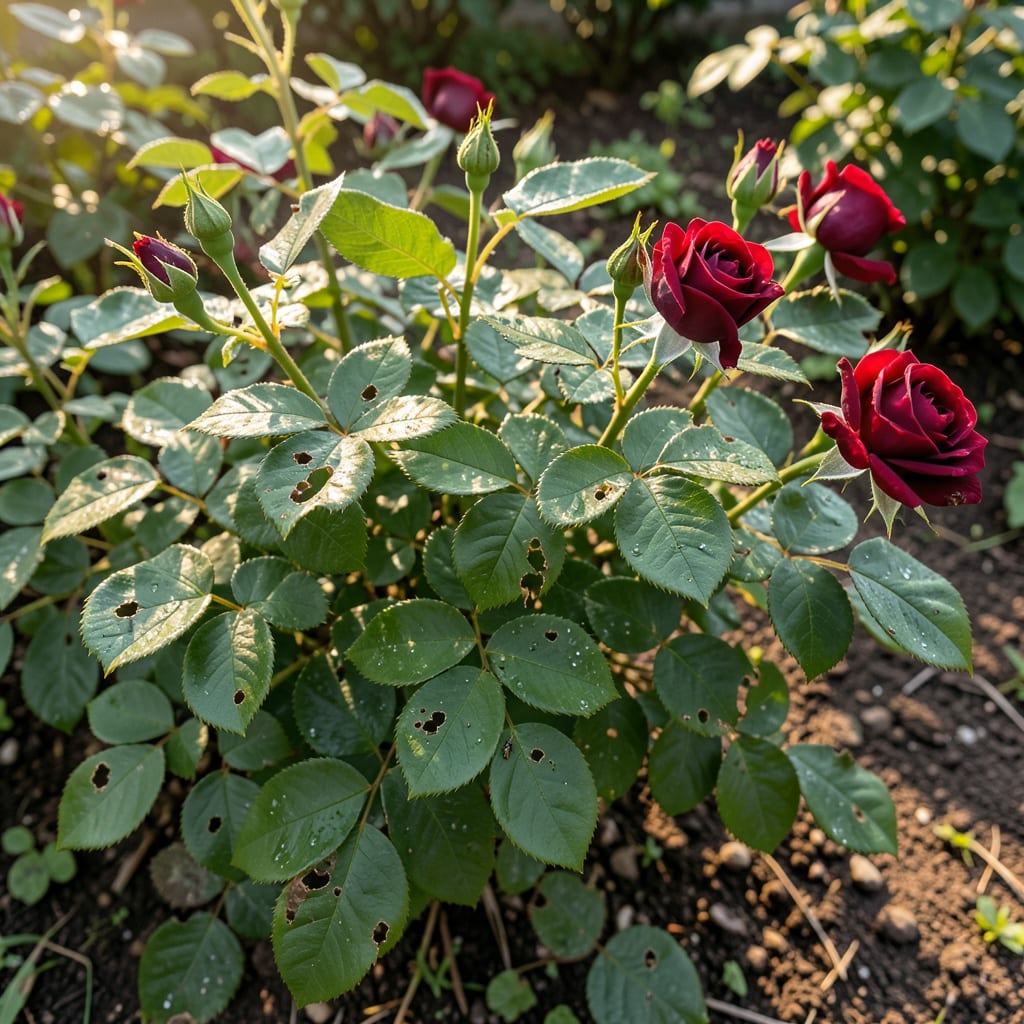
Woke up to Swiss cheese leaves on my roses this week. 🌿 Nothing kills the joy of a blooming bush faster than seeing those jagged holes and ragged edges where perfect petals should be.
Turns out the usual suspects are either hungry insects like Japanese beetles and sawfly larvae, or sneaky fungal infections that start with spots before turning into gaping holes. The damage looks different depending on the culprit.
Here’s the thing—identifying the right problem means you can fix it with organic sprays, better watering habits, or physical barriers. No more guessing games or wasted treatments.
Your roses don’t have to look like insect buffets. With the right approach, they’ll bounce back stronger and bloom like nothing ever happened.
Holes in rose bush leaves are rarely random—they’re usually the work of pests, pathogens, or environmental stress. Below are the most common causes, explained with clear, actionable science.
Chewing insects like Japanese beetles, rose slugs (sawfly larvae), and caterpillars physically remove leaf tissue, creating irregular holes or skeletonized patterns. Sawfly larvae, for example, rasp the surface between veins, while beetles often eat through the leaf entirely. Action: Inspect undersides of leaves early in the morning when pests are most active.
While fungal diseases like black spot (Diplocarpon rosae) and powdery mildew typically cause spots rather than holes, severe infections can weaken leaves, making them more susceptible to secondary damage. Bacterial leaf spot (Xanthomonas spp.) may also lead to tissue death and eventual holes as the leaf decays. Action: Improve air circulation and avoid overhead watering to reduce humidity.
Extreme heat, drought, or nutrient deficiencies (particularly magnesium or iron) can cause leaf edges to brown and die, sometimes mimicking hole-like damage. Over-fertilization, especially with high-nitrogen blends, may also promote soft, succulent growth that attracts pests. Action: Test soil pH (roses prefer 6.0–6.5) and adjust watering schedules to maintain consistent moisture.
Aphids, spider mites, and thrips pierce leaf cells to feed, which doesn’t create holes directly—but their feeding sites can become entry points for pathogens. Additionally, the honeydew they excrete fosters sooty mold, which can weaken leaves further. Action: Use insecticidal soap or neem oil to disrupt their life cycles before damage escalates.
Addressing holes in rose bush leaves starts with identifying the cause. Here’s how to tackle each issue effectively:
If aphids, beetles, or caterpillars are chewing your leaves, handpick visible pests or spray them off with water. For stubborn infestations, apply neem oil or insecticidal soap in the early morning or late evening. Prevention tip: 💡 Encourage natural predators like ladybugs by planting companion flowers such as marigolds.
Fungal spots (like black spot or powdery mildew) can weaken leaves, making them more vulnerable. Remove and destroy infected leaves immediately. Treat plants with a fungicide (copper or sulfur-based) and improve air circulation by pruning dense foliage. Prevention tip: ✨ Water at the base of the plant to keep leaves dry, and avoid overhead watering.
Drought or poor soil health can stress roses, attracting pests and disease. Ensure consistent watering (1–2 inches per week) and enrich soil with compost. Mulch around the base to retain moisture. Prevention tip: 🎯 Test soil pH (ideal: 6.0–6.5) and amend if needed for optimal growth.
These pests leave irregular holes, often overnight. Set up beer traps or sprinkle diatomaceous earth around plants. For a humane option, create barriers with copper tape. Prevention tip: 🌡️ Clear debris and hides (like boards or rocks) where they thrive.
Regularly inspect your rose bushes and act at the first sign of trouble. A little vigilance goes a long way in keeping your garden vibrant!
Check leaves in the morning when pests are most active. Look for Japanese beetles (metallic green), rose slugs (small green larvae), or slug trails.
Not directly, but overwatering creates perfect conditions for fungal growth. This weakens leaves, making them more susceptible to pest damage.
For immediate results, apply neem oil or insecticidal soap. For prevention, encourage ladybugs with companion planting.
