
Beautiful Plants For Your Interior
Beautiful Plants For Your Interior
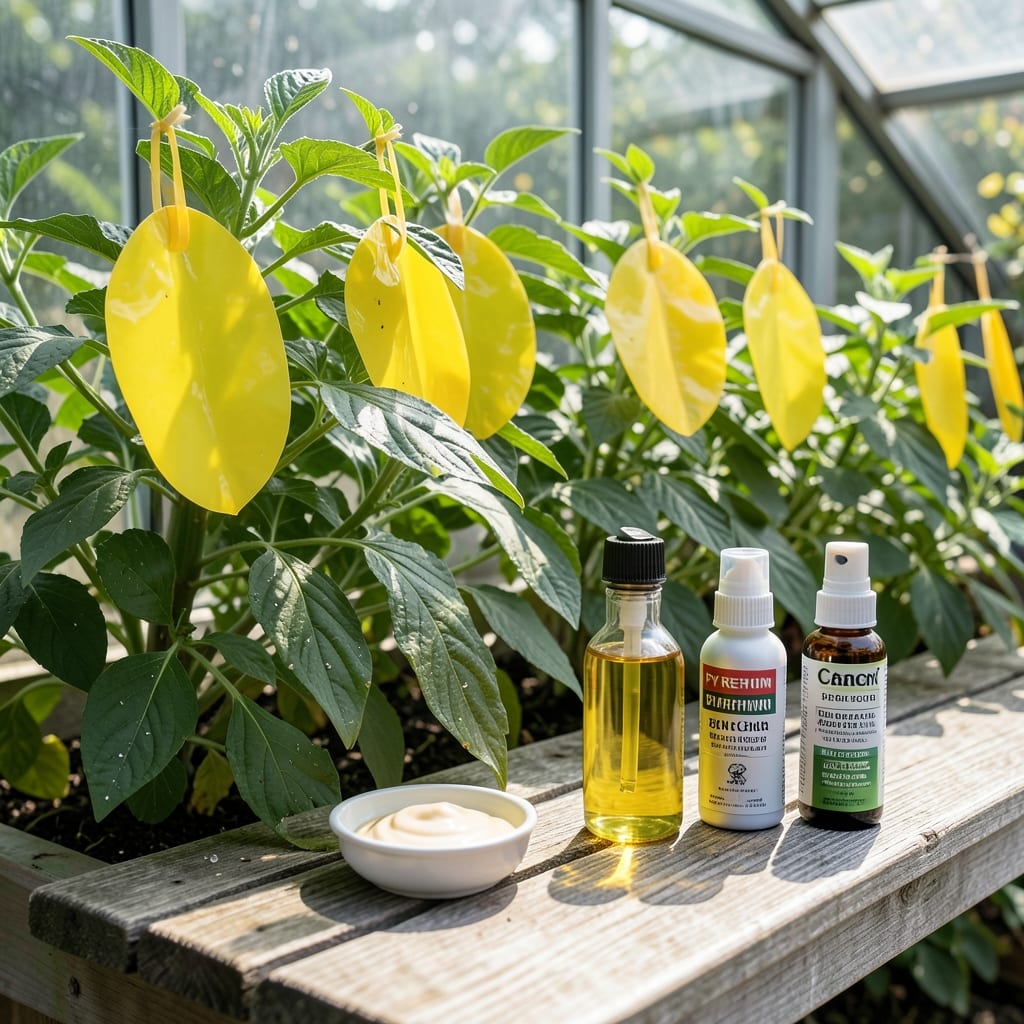
Those tiny white insects aren’t just annoying—they’re sap-sucking machines that can weaken plants fast. I first noticed them on my tomato leaves, clustered like tiny cotton balls on the undersides.
Left unchecked, they’ll turn leaves yellow and coat everything in sticky honeydew. The good news? Organic control works better than chemicals here. Here’s how to stop them cold.
Tiny white pests meet their match with these organic solutions. Simple, effective, chemical-free.
| Ingredient | Amount | Notes |
|---|---|---|
| Yellow Sticky Traps 🪣 | 5 pieces | Double-sided for maximum catch |
| Neem Oil 🌿 | 16 oz | Cold-pressed for effectiveness |
| Insecticidal Soap 💧 | 16 oz | Ready-to-use spray bottle |
| Horticultural Oil 🛢️ | 16 oz | Dormant or summer weight |
| Pyrethrin Spray 🌱 | 1 piece | Organic botanical insecticide |
| Spray Bottle 💦 | 1 piece | Adjustable nozzle preferred |
| Garden Shears ✂️ | 1 piece | For removing infested leaves |
| Reflective Mulch 🪵 | 1 bag | Disorients flying pests |
[recipeingredientscaler]
Yellow sticky traps are your first line of defense—home improvement stores carry them near the gardening section. Neem oil works best when mixed fresh; I grab Dyna-Gro or Garden Safe brands for reliability. Insecticidal soap should be unscented to avoid plant damage (the good stuff, not the dish soap under your sink).
No neem oil? Horticultural oil covers similar ground but works best in cooler temps. Pyrethrin spray is a last-resort knockout punch for heavy infestations. If you’re out of sticky traps, bright yellow cards coated with petroleum jelly work in a pinch (trust me on this one).
Store oils and sprays in a cool, dark place—they degrade in heat or sunlight. Keep sticky traps sealed until use. I mark the date on my spray bottles so I know when to replace them (worth the extra dollar).
These organic control methods will help you eliminate whiteflies without harming beneficial insects or your plants.
Hang the 5 pieces Yellow Sticky Traps near the tops of affected plants, just above the foliage. Whiteflies are strongly attracted to the color yellow and will fly directly to the sticky surface. Place them as soon as you notice the first whiteflies—this prevents the population from spreading to other plants.
Check the traps every 2-3 days and replace them when they’re covered with insects. If you see fewer whiteflies after 1 week, you’re making progress. This is your first line of defense and works best in combination with other methods.
Mix the 16 oz Neem Oil with water in the 1 piece Spray Bottle according to package instructions (usually 1-2 tablespoons per gallon). Spray the solution thoroughly on both sides of leaves, focusing on the undersides where whiteflies congregate. Neem oil disrupts their life cycle, preventing larvae from maturing.
Alternatively, use the 16 oz Insecticidal Soap as a ready-to-use spray. Apply it in the early morning or late evening to avoid leaf burn from the sun. Reapply every 4-7 days or after rainfall, as soap residues break down quickly.
Fill the 1 piece Spray Bottle with the 16 oz Horticultural Oil, diluted as directed (typically 2-3 tablespoons per gallon). This oil smothers whitefly eggs and nymphs on contact. Apply it when temperatures are between 40-90°F to avoid plant damage.
For best results, spray in the early morning when whiteflies are less active. Horticultural oil is particularly effective against nymphs, which are immobile and can’t escape the coating. Repeat applications every 7-10 days until the infestation is gone.
Spread the 1 bag Reflective Mulch around the base of your plants. The shiny surface confuses whiteflies by reflecting light, which disrupts their ability to locate host plants. This is especially useful for vegetable gardens and greenhouse settings.
Secure the mulch tightly to the soil to prevent it from blowing away. Combine this with your traps and sprays for a multi-layered defense. You’ll notice fewer whiteflies landing on your plants within 2 weeks of application.
Use the 1 piece Garden Shears to remove leaves or stems with heavy whitefly populations. Bag and dispose of the infested material immediately to prevent the pests from spreading. This reduces the overall population quickly and limits their ability to reproduce.
For severe infestations, use the 1 piece Pyrethrin Spray as a targeted knock-down treatment. Pyrethrin is a natural insecticide derived from chrysanthemums and provides immediate results. Spray in the evening when beneficial insects are less active, and avoid using it during the heat of the day to prevent plant stress.
Whiteflies, those tiny white insects often seen fluttering around plants, can vary in behavior and impact depending on the region. Here’s how these pests might differ across various areas:
In the Southeastern U.S., whiteflies thrive in warm, humid climates. They often target tomatoes, cotton, and ornamentals. Organic control here includes neem oil and insecticidal soaps, as the region’s long growing seasons demand consistent management.
The Southwest sees whiteflies on desert plants and citrus. Due to the arid climate, reflective mulches and beneficial insects like ladybugs are popular control methods. Water stress can exacerbate infestations, so proper irrigation is key.
In the Northeast, whiteflies are common in greenhouses and indoor gardens. Cooler temperatures slow their reproduction, but yellow sticky traps and biological controls like parasitic wasps are effective here.
The Midwest often deals with whiteflies on soybeans and vegetables. Farmers here rely on crop rotation and row covers to manage outbreaks, as chemical controls are less favored in organic farming practices.
