
Beautiful Plants For Your Interior
Beautiful Plants For Your Interior
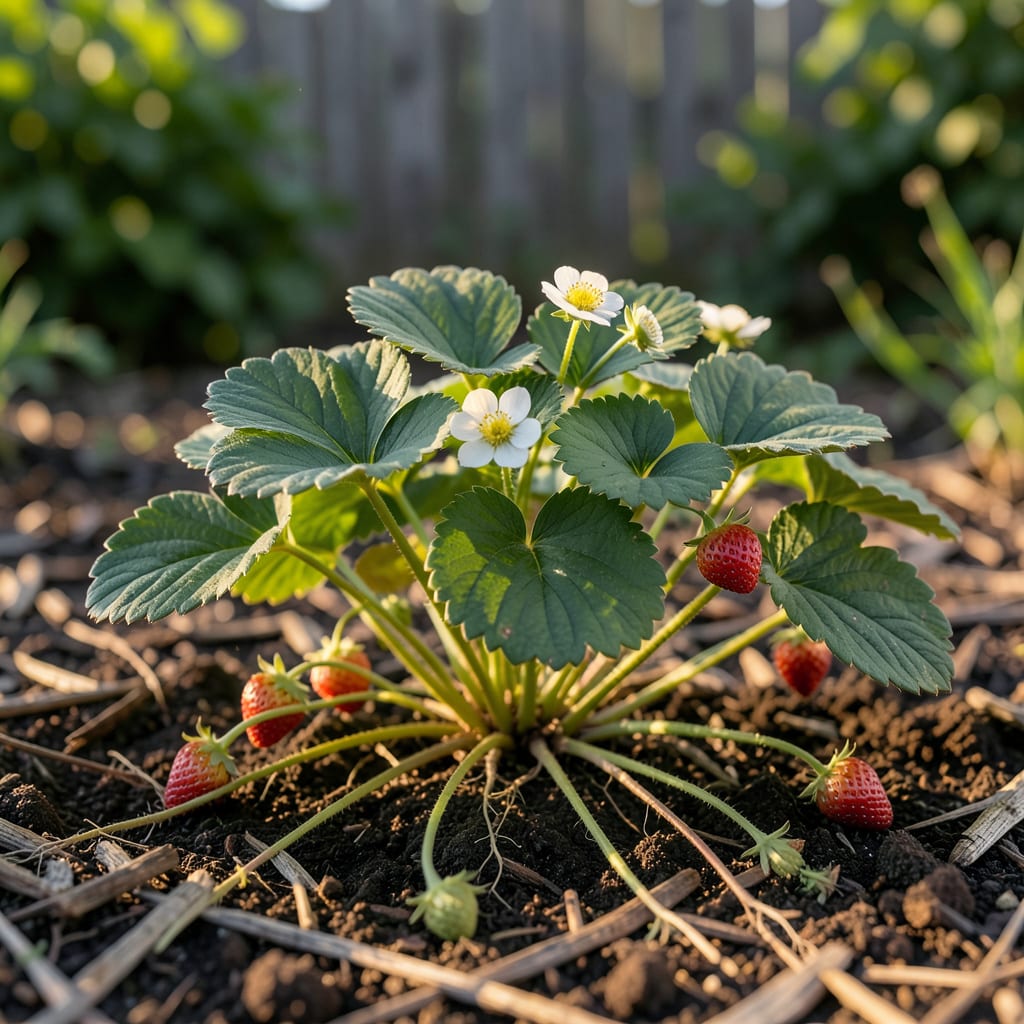
Runners in plants are horizontal stems that grow above ground, producing new plants at nodes along their length. Common in species like strawberries and spider plants, they enable vegetative reproduction and rapid spread.
This natural propagation method is what gives some plants their incredible ability to colonize large areas quickly. 🌱 I think of runners as nature’s way of cloning—each node along the stem has the potential to develop roots and shoots, creating genetically identical offspring. What’s fascinating is how the parent plant actually nourishes these new growths until they’re self-sufficient, which typically takes about 2-4 weeks depending on conditions.
The strategy behind runners reveals why certain plants thrive in challenging environments. They’re essentially building their own support network—when one part of the plant struggles, others can compensate. This is why you’ll often see runners in plants that grow in sandy soils or areas with variable moisture levels. ✨
💡 In This Article
The process begins when the parent plant produces specialized stems called stolons, which grow horizontally above the soil surface. These aren’t ordinary stems—they’re packed with growth hormones like auxins that concentrate at specific points called nodes. Each node contains dormant meristem cells that can develop into either roots or shoots when conditions are right.
The parent plant strategically allocates resources, sending about 30-40% of its energy to support runner development during active growth periods.
What’s remarkable is how these nodes transform into independent plants. When a node makes contact with moist soil, the cells respond to environmental cues—particularly moisture and temperature. Within 48-72 hours, root primordia (baby roots) begin forming, while shoot buds start developing simultaneously.
The parent plant maintains nutrient flow through vascular connections until the new plant establishes its own root system, which typically occurs when roots reach 2-3 inches in length. 🌱
The nutrient transfer system is particularly sophisticated. Studies show that parent plants can detect when a runner-connected offspring is struggling and will increase resource allocation to that specific node. This happens through specialized phloem cells that transport sugars and hormones.
The connection remains active until the new plant achieves about 70% photosynthetic capacity, at which point the runner naturally degenerates, leaving behind a self-sufficient clone.
Environmental factors play a crucial role in runner development. Research from the University of California found that strawberry plants produce 3 times more runners in long-day conditions (14+ hours of light) compared to short days. Soil temperature also matters—optimal runner formation occurs between 60-75°F.
When temperatures exceed 85°F, runner production decreases by up to 60% as the plant shifts energy to survival rather than reproduction. ✨
The genetic programming behind runners is equally fascinating. Plants like spider plants (Chlorophytum comosum) have evolved to produce runners with remarkable precision—they’ll grow exactly 12-18 inches before forming a new plantlet, ensuring optimal spacing for resource competition. This built-in measurement system allows the plant to maximize colonization efficiency while minimizing sibling competition.
What many gardeners don’t realize is that runners serve as more than just reproductive tools—they’re also survival mechanisms. During drought conditions, connected plants can share water resources through their runner networks.
A study in Nature Plants demonstrated that strawberry plants connected by runners had a 40% higher survival rate during water stress compared to isolated plants. This interconnected system creates what botanists call a “clonal colony” that functions almost like a single organism. 💫
Strawberries, spider plants, and bermudagrass are classic examples. Strawberries use runners to create dense patches, while spider plants dangle baby “spiderettes” from long stems. Many lawn grasses like zoysiagrass also spread aggressively via runners.
Most runner-propagated plants develop self-sufficient roots within 2-4 weeks under ideal conditions. You’ll know they’re ready when new leaves appear and gentle tugging meets resistance. Spider plant babies often root faster in water (7-10 days) than in soil.
Environmental factors play a huge role. Plants produce more runners in long daylight (14+ hours) and 60-75°F soil temperatures. Stress conditions like drought can also trigger increased runner production as a survival mechanism. Some species are genetically programmed to spread aggressively.
For containment, trim runners weekly during active growth. To encourage spreading, pin nodes to soil with U-shaped staples and keep moist. With strawberries, remove early runners to boost fruit production, then allow later runners for propagation.
Separating too soon is the most common error. Wait until new plants have 3-5 mature leaves and show root resistance when tugged. Also avoid over-fertilizing new plants—use half-strength solution only after active growth appears.
