
Beautiful Plants For Your Interior
Beautiful Plants For Your Interior
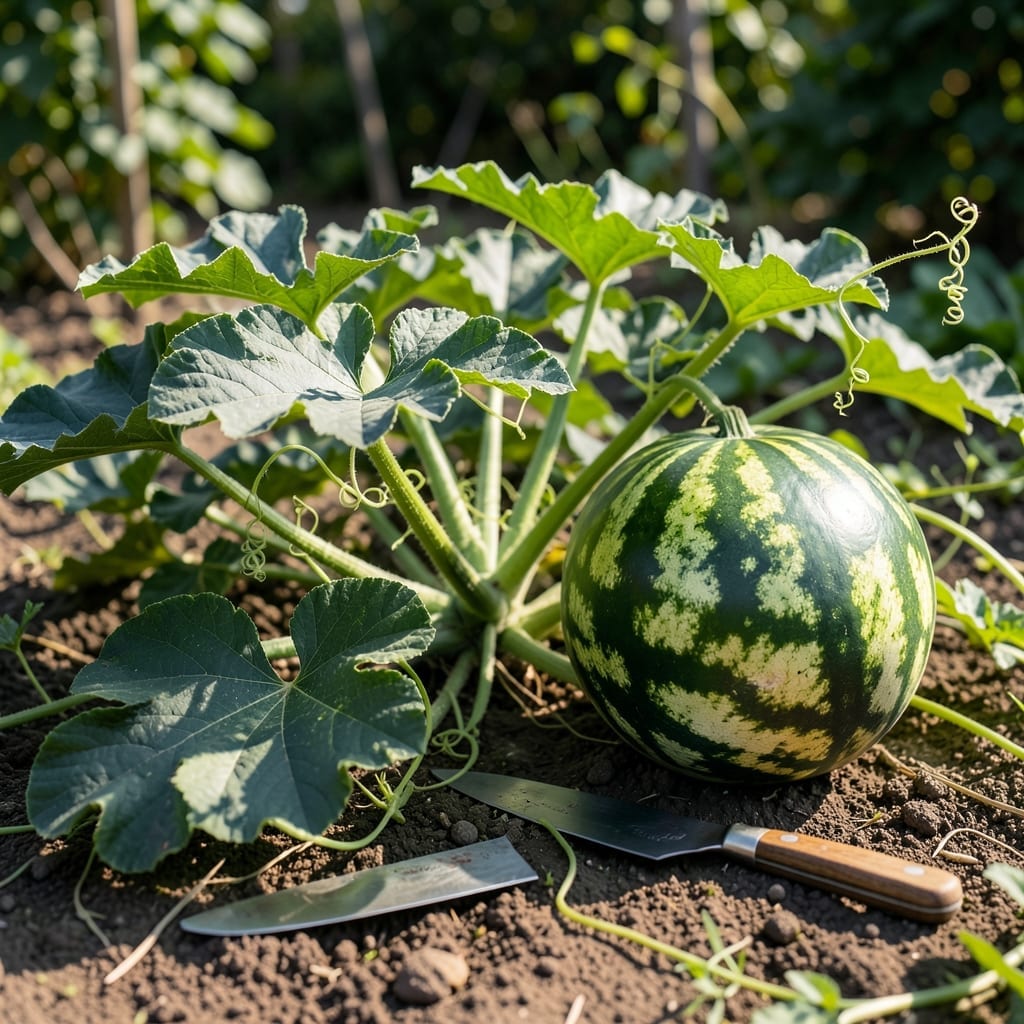
Nothing beats the disappointment of cutting into a 🍉 only to find it underripe or overripe. I’ve been there too many times, staring at that pale, unappetizing flesh when I was craving sweet, juicy perfection.
Learning to read Watermelon stripes is your secret weapon for picking at peak ripeness. Those subtle changes in color and texture speak volumes about what’s happening inside.
From July to September, your garden’s bounty depends on knowing these visual cues. The difference between a mediocre melon and a game-changer often comes down to this one skill.
Let me show you exactly how to interpret these signs. With these tips, you’ll never gamble on an unripe watermelon again.

I’ve learned that watermelon stripes are nature’s way of signaling ripeness. The transformation from shiny green to dull cream is the most telling sign. This change happens as chlorophyll breaks down in the rind. 🌱
Early on, stripes are bright and glossy, but as the fruit matures, they lose their sheen. A fully ripe watermelon often has a dull, almost powdery appearance. This visual cue is backed by sugar accumulation inside the fruit.
| Ripeness Stage | Stripe Appearance | What It Means |
|---|---|---|
| Underripe | Shiny green | Still developing sugars |
| Nearly ripe | Dulling green | Sugars accumulating |
| Fully ripe | Dull cream | Peak sweetness achieved |
The underside of the watermelon is another critical area to examine. When resting on the soil, the ground spot transitions from white to cream as it ripens. This color change is a reliable indicator. ☀️
I always check for even stripe patterns. Uneven or faded stripes might suggest uneven ripening, often due to inconsistent watering or shade exposure. Ideal watermelons have bold, consistent stripes all around.
The contrast between stripes also matters. In ripe watermelons, the dark green stripes become more defined against the lighter background. This contrast sharpens as the fruit reaches its peak.
I’ve noticed that size and weight complement stripe observations. A ripe watermelon feels heavy for its size, and its stripes appear more matte than glossy. These are signs of high water content and sugar. 💧
For seedless varieties, stripe changes may be subtler. I look for a uniform dullness across the entire rind. The ground spot remains the most reliable visual cue for these types.
Remember, temperature affects ripening. Watermelons grown in consistent warmth develop more predictable stripe patterns. Cooler conditions can slow this process, making stripes less reliable as a sole indicator.
In my experience, combining stripe analysis with other methods like the thump test gives the best results. A deep, hollow sound paired with dull stripes almost guarantees a perfectly ripe watermelon. ✂️
While watermelon stripes give great clues, I always use 3 proven tests to confirm ripeness. These methods work for all varieties and ensure you never pick too early or late.
The classic thumping test is my go-to: tap the fruit and listen for a deep, hollow sound. A high-pitched tone means it needs more time on the vine.
Check the ground spot – a creamy yellow color means it’s ready
Examine the stem – when it turns brown and dry, harvest time is near
Perform the thump test – a deep hollow sound indicates peak ripeness
The ground spot test is especially reliable. Look where the watermelon rests on the soil. A white or green spot means it’s not ready, while yellow or cream signals perfect ripeness.
I also check the stem end. When the curly tendril nearest the stem turns brown and dry, your watermelon is likely ready. This is nature’s way of saying the growth cycle is complete.
Remember, size isn’t everything. A smaller watermelon can be perfectly ripe while a large one might still be green inside. Combine these tests with your stripe observations for the best results.
With practice, you’ll develop an instinct for ripeness. I’ve found that morning harvesting often yields the sweetest fruit, as the sugars are most concentrated after a cool night.
🌱