
Beautiful Plants For Your Interior
Beautiful Plants For Your Interior
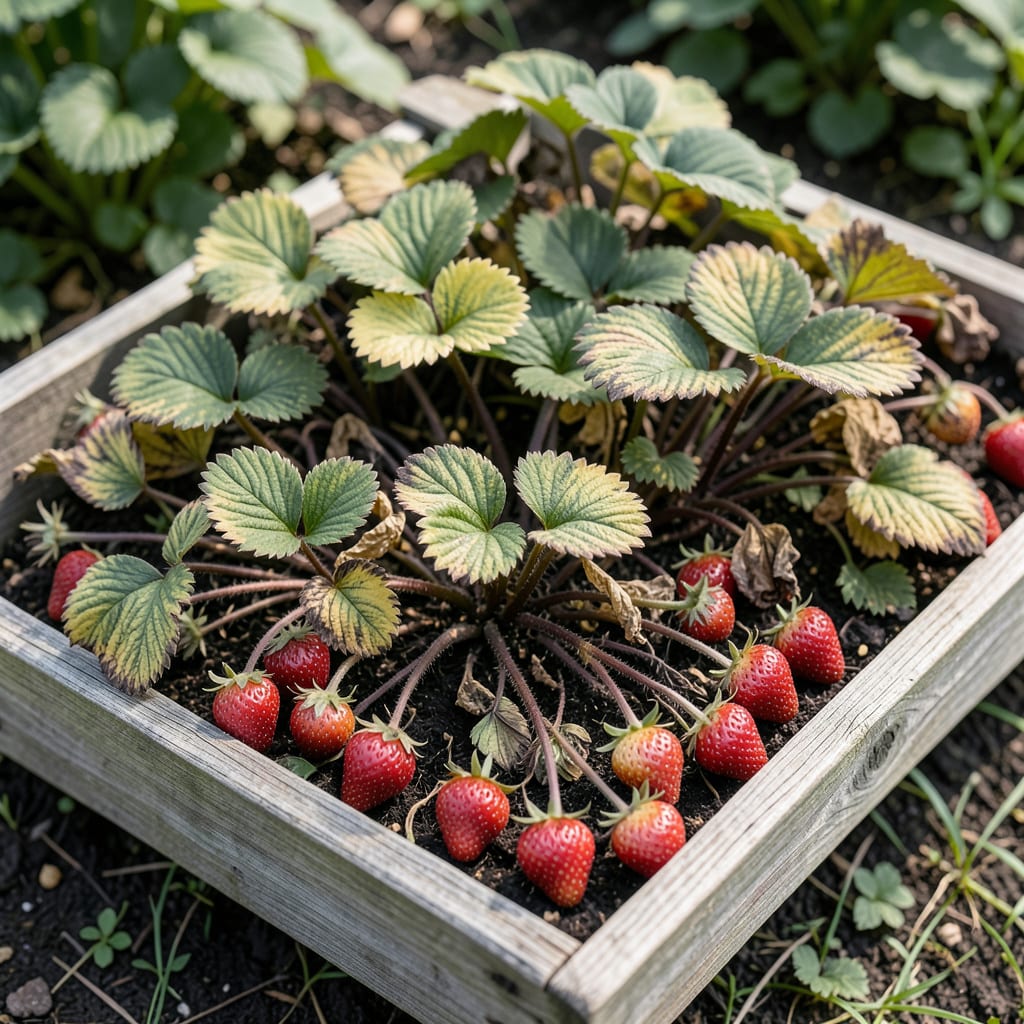
My strawberry patch went from thriving to wilting in two weeks. Verticillium wilt strikes fast, turning healthy plants into yellowed, stunted versions of themselves. I lost half my June-bearing strawberries the first time it hit.
The fungus lives in soil for years, attacking through roots when conditions are right. You’ll notice older leaves yellowing between veins first, then browning edges. New growth stunts while runners keep spreading the problem.
Here’s the thing—removing infected plants immediately stops the spread. I pull them, roots and all, and solarize the soil with clear plastic for 4-6 weeks to kill the fungus.
Prevention is simpler than cure: plant resistant varieties, rotate beds, and keep soil well-drained. My new patch has been clean for three seasons with these changes.
Verticillium wilt in strawberry plants is triggered by soilborne fungi, primarily Verticillium dahliae and Verticillium albo-atrum. These pathogens thrive in cool, moist conditions and invade plants through the roots, disrupting water and nutrient flow. Here’s why it happens:
The fungus persists in soil for years, especially in fields previously planted with susceptible crops like potatoes, tomatoes, or eggplants. Contaminated tools, irrigation water, or infected nursery stock can also introduce the pathogen to clean soil.
Cool temperatures (60–75°F) and high soil moisture create the perfect environment for Verticillium to germinate and infect strawberry roots. Overwatering or poor drainage exacerbates the problem by stressing plants and promoting fungal growth.
Not all strawberries are equally vulnerable. June-bearing varieties like ‘Chandler’ or ‘Camarosa’ are highly susceptible, while some day-neutral or everbearing types (e.g., ‘Albion’ or ‘Seascape’) show partial resistance. Planting susceptible cultivars in infested soil almost guarantees infection.
Repeatedly planting strawberries or other solanaceous crops in the same field without rotation allows Verticillium to build up in the soil. A 3–5 year rotation with non-host crops (e.g., grains or legumes) is critical to break the fungal life cycle.
Early detection and preventive measures—like soil testing and resistant varieties—are key to managing this persistent disease.
Verticillium wilt can feel like a death sentence for your strawberry patch, but don’t lose hope. With the right approach, you can save infected plants and protect healthy ones. Here’s how to tackle each cause head-on.
If the soil harbors the fungus, solarization is your best bet. Cover the affected area with clear plastic for 4–6 weeks during hot weather to bake the fungus out. For long-term prevention, rotate crops—avoid planting strawberries or other susceptible crops (like tomatoes or potatoes) in the same spot for at least 3–4 years. Pro tip: 💡 Use resistant varieties like ‘Albion’ or ‘Seascape’ in future plantings.
The fungus spreads easily on dirty tools. After pruning or digging near infected plants, dip tools in a 10% bleach solution (1 part bleach to 9 parts water) for 5 minutes, then rinse and dry. For a gentler option, use 70% isopropyl alcohol. Always clean tools between uses to prevent cross-contamination.
Verticillium thrives in soggy soil. If your strawberries are drowning, amend the soil with compost or sand to boost drainage. Raise beds if needed, and water at the base (not overhead) to keep foliage dry. Stick to a drip irrigation system for precise moisture control. Pro tip: 🌡️ Water in the morning so excess moisture evaporates during the day.
Stressed plants are more vulnerable. Strengthen your strawberries with balanced organic fertilizer (like fish emulsion or compost tea) and mulch to retain moisture and suppress weeds. Remove and destroy wilted plants immediately to prevent the fungus from spreading. Pro tip: ✨ Avoid high-nitrogen fertilizers—they promote leafy growth at the expense of disease resistance.
Prevention is your best defense. Start with disease-free plants, keep the garden clean, and monitor regularly for early signs of trouble. With these steps, your strawberry patch can bounce back stronger than ever!
Look for older leaves yellowing between veins first, then browning edges. New growth stunts while runners keep spreading the problem.
Remove infected plants immediately, roots and all. Solarize the soil with clear plastic for 4-6 weeks to kill the fungus.
Yes, day-neutral varieties like ‘Albion’ or ‘Seascape’ show partial resistance. Avoid highly susceptible June-bearing types.
Avoid planting strawberries in the same spot for 3-4 years. Use non-host crops like grains or legumes during this rotation period.
