
Beautiful Plants For Your Interior
Beautiful Plants For Your Interior
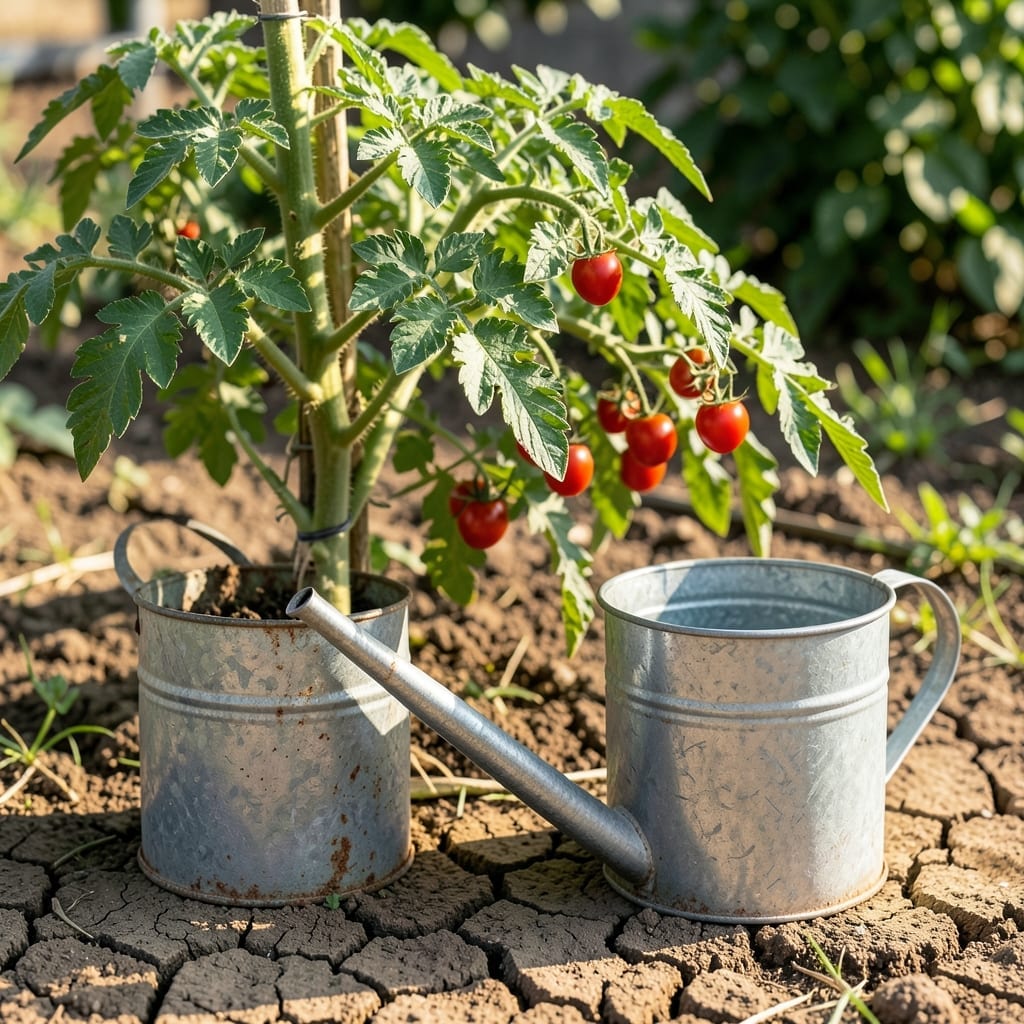
Wilted leaves and dry soil mean your tomatoes are begging for water. I’ve saved more plants than I can count with a simple reset.
The telltale signs—curling leaves, crispy edges, and soil pulling away from the pot edges—are impossible to miss once you know what to look for. Most people wait too long to act, but 24 hours of proper watering can bring them back.
Deep watering at the base, not the leaves, delivers moisture where it’s needed. A slow soak for 30-45 minutes lets the roots absorb what they’ve been missing.
Prevent this next time with consistent checks and a watering schedule that matches your climate. Your plants will thank you with juicy, vibrant fruit.
Underwatering tomatoes often stems from a few preventable missteps in care. Here’s why it happens, broken down by the most common culprits:
Tomatoes thrive on regular moisture. Irregular watering—such as drenching the soil after days of neglect—disrupts their ability to absorb nutrients. The plant’s roots grow shallow, making them less efficient at pulling water from deeper soil layers. Aim for 1–2 inches of water per week, split into 2–3 sessions, to maintain steady hydration.
Sandy or loamy soils drain too quickly, leaving roots parched. Without organic matter (like compost), soil lacks the structure to hold moisture. Test your soil: if it crumbles dryly in your hand, it’s not retaining enough water. Amend with peat moss or coconut coir to improve water retention.
High temperatures accelerate evaporation, drying out soil faster than roots can keep up. Tomatoes in full sun (especially in containers) are vulnerable. Mulch with straw or wood chips to insulate soil and reduce water loss by up to 50%.
Over-pruning, transplant shock, or root damage (e.g., from tilling) weakens a plant’s ability to uptake water. Stressed roots prioritize survival over growth, leading to wilting. Avoid disturbing roots and ensure seedlings are hardened off before transplanting.
Light watering wets only the surface, encouraging shallow roots. Deep, infrequent watering (e.g., 1 inch twice weekly) trains roots to grow downward, accessing moisture reserves. Use a moisture meter to check soil depth—dryness below 2 inches signals underwatering.
Underwatered tomatoes can bounce back quickly with the right care. Here’s how to fix each common issue and prevent future stress.
Give your plants a thorough drink at the base, not just the surface. Use a moisture meter or your finger to check soil depth—water should reach at least 6 inches down. For severe cases, submerge the pot (if container-grown) in water for 10–15 minutes to rehydrate the root ball. Prevention tip: 💡 Water deeply 2–3 times a week instead of light daily sprinkles.
Dry, crusty soil repels water. Loosen the top layer gently with a fork, then apply a 2–3 inch layer of organic mulch (straw or wood chips) to lock in moisture. Avoid plastic mulch, as it can trap heat. Prevention tip: ✨ Add compost to improve soil water retention before planting.
If leaves are small or yellowing, your tomatoes may be chronically thirsty. Switch to a drip irrigation system or soaker hose for consistent moisture. Water early in the morning to reduce evaporation. Prevention tip: 🎯 Group plants with similar water needs together for even care.
Low humidity accelerates moisture loss. Mist leaves lightly in the early morning or place a tray of water near the plants to increase local humidity. Avoid wetting leaves in direct sunlight to prevent burns. Prevention tip: 🌡️ Use shade cloth during heatwaves to reduce stress.
With these fixes, your tomatoes will recover and thrive—just stay consistent!
Check for wilted or curling leaves, dry soil pulling from pot edges, and crispy leaf tips. A finger test works too—if the top 2 inches of soil are dry, it’s time to water.
Early morning is ideal, as it allows plants to absorb moisture before the heat of the day. Avoid evening watering, which can promote fungal growth due to prolonged dampness.
Yes! Submerge container plants in water for 10-15 minutes or deeply soak in-ground plants. Most will recover within 24 hours if roots aren’t damaged.
If soil is too dry, water may run off without absorbing. Loosen the top layer first, then water slowly. Mulching helps prevent this issue long-term.