
Beautiful Plants For Your Interior
Beautiful Plants For Your Interior
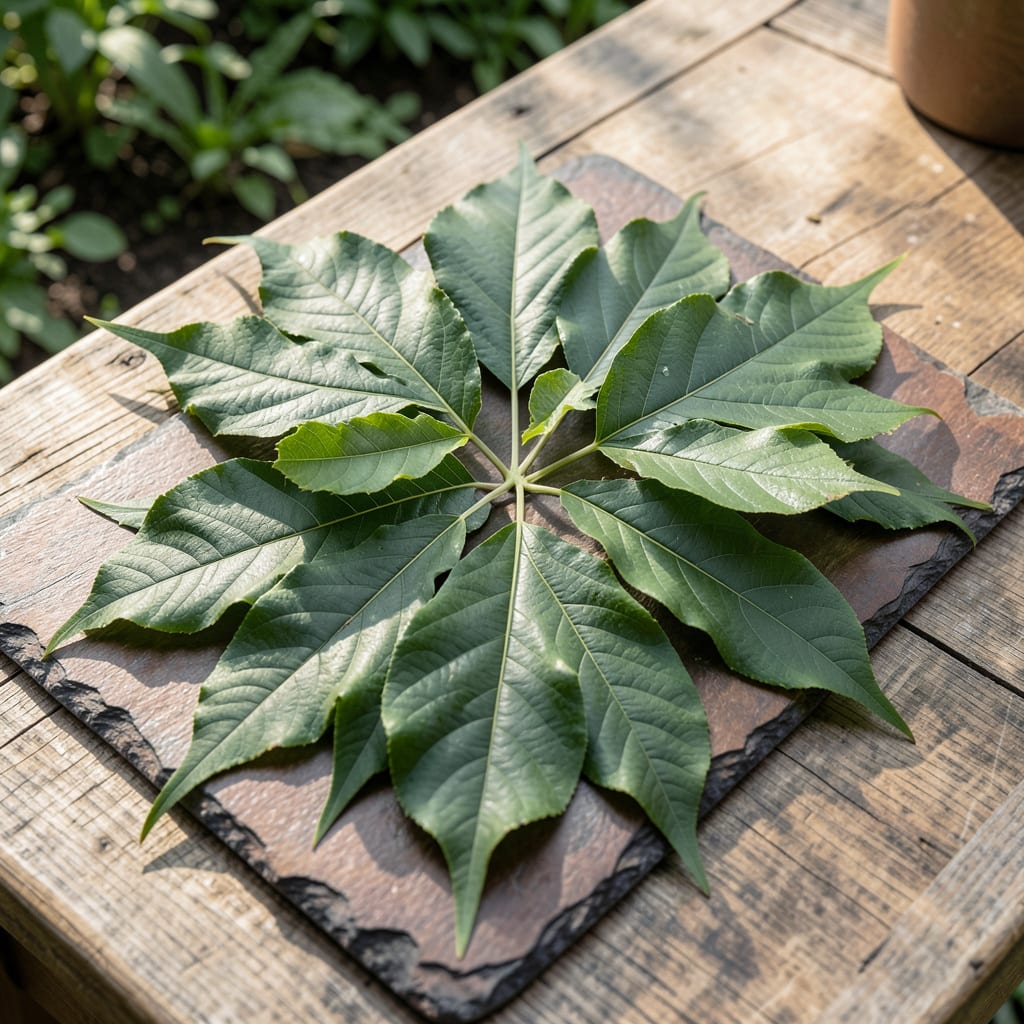
Spotted a suspect tree in your yard? Tree of Heaven leaves offer the clearest identification clues—long, compound fronds with smooth edges and a distinctive musty smell when crushed.
I learned to recognize them after my neighbor’s invasive stand spread 20 feet in one season. Look for the small gland at the base of each leaflet and the tree’s tendency to sprout aggressive suckers from roots and trunk.
📚 In This Guide
Use these visual markers to distinguish this invasive species from lookalikes like sumac or walnut.
Tree of heaven produces compound leaves that range from 1-2 feet long with 11-41 leaflets arranged in pairs along a central stem. I always check the leaflet bases first—each has a small, rounded lobe at the bottom that looks almost like a tiny thumbprint.
Unlike sumac, which has a single terminal leaflet, tree of heaven often has an odd number of leaflets with one at the tip. The arrangement is alternate on the stem, not opposite. You’ll notice the leaflets emerge slightly staggered, creating a feather-like appearance.
Each leaflet is 2-6 inches long with a lance-shaped form that tapers to a point. The edges are the real giveaway—they’re smooth and entire (no teeth or lobes), which sets them apart from walnut leaves that have serrated edges.
I look for the distinctive glandular notches near the base of each leaflet. These small, dark spots on the underside of the leaflet base are unique to tree of heaven. Hold the leaf up to the light—you’ll see them as tiny dark depressions.
Crush a leaf or stem between your fingers. Tree of heaven emits a strong, unpleasant odor often described as similar to peanuts or burnt plastic. This is one of the most reliable identifiers, especially when combined with the visual cues.
I’ve found the smell is most noticeable in the stems and younger leaves. If you’re working with mature foliage, you might need to crush several leaves to detect it. The odor lingers on your hands, so it’s unmistakable once you’ve experienced it.
The upper surface of the leaves is typically dark green and smooth, while the underside is a paler green. You might notice a slight sheen on the upper surface in good light. The texture is generally smooth, though some leaflets develop a slightly rough feel as they mature.
In autumn, the leaves turn a yellowish-brown color, which can help with identification when other visual markers are less obvious. I watch for this color change in late September through October in most climates.
Sumac leaves have serrated edges and a single terminal leaflet, while walnut leaves have toothed margins and a more rounded base. Tree of heaven’s smooth-edged leaflets with glandular notches are unique among these species.
I always recommend taking photos of the entire leaf structure, individual leaflets, and the base of the leaflets for comparison. The combination of these features—compound structure, smooth edges, glandular notches, and the distinctive odor—creates an identification profile that’s hard to mistake for anything else.
These visual identification strategies will help you confidently distinguish this species from similar plants.
Leaf Structure Focus: In Step 1, pay special attention to the compound leaves that range from 1-2 feet long with 11-41 leaflets. The small, rounded lobe at the base of each leaflet is particularly distinctive—it resembles a tiny thumbprint and is often overlooked by beginners.
Edge Examination: For Step 2, remember that the smooth, entire edges are a key differentiator. Unlike walnut leaves with their serrated margins, tree of heaven leaflets maintain clean lines. The glandular notches near the base are another unique feature—hold leaves to the light to spot these tiny dark depressions.
Odor Confirmation: Step 3’s characteristic smell is most reliable when testing younger leaves or stems. The strong, unpleasant odor—often compared to peanuts or burnt plastic—lingers noticeably. With mature foliage, you may need to crush several leaves to detect it, but once you’ve smelled it, you won’t forget it.
Seasonal Color Clues: As mentioned in Step 4, the autumn transformation to yellowish-brown can be a helpful identifier when other markers are less obvious. This color change typically occurs from late September through October in most climates, providing an additional confirmation point.
Tree of heaven leaves are compound with 10-40 small, lance-shaped leaflets. Look for a musty smell when crushed and smooth edges with a few teeth near the base.
Leaves typically emerge in late spring (April–May) and remain green until early fall. They grow rapidly, often reaching full size by early summer.
Yes, all parts of the tree, including leaves, contain toxins like ailanthone. Avoid ingestion, and wear gloves when handling to prevent skin irritation.
Black walnut and sumac leaves resemble tree of heaven, but walnut leaves have a stronger scent, and sumac leaves are arranged in pairs, not alternately.
Yellowing leaves may indicate stress from drought, poor soil, or pests like the spotted lanternfly. Check moisture levels and inspect for damage.
