
Beautiful Plants For Your Interior
Beautiful Plants For Your Interior
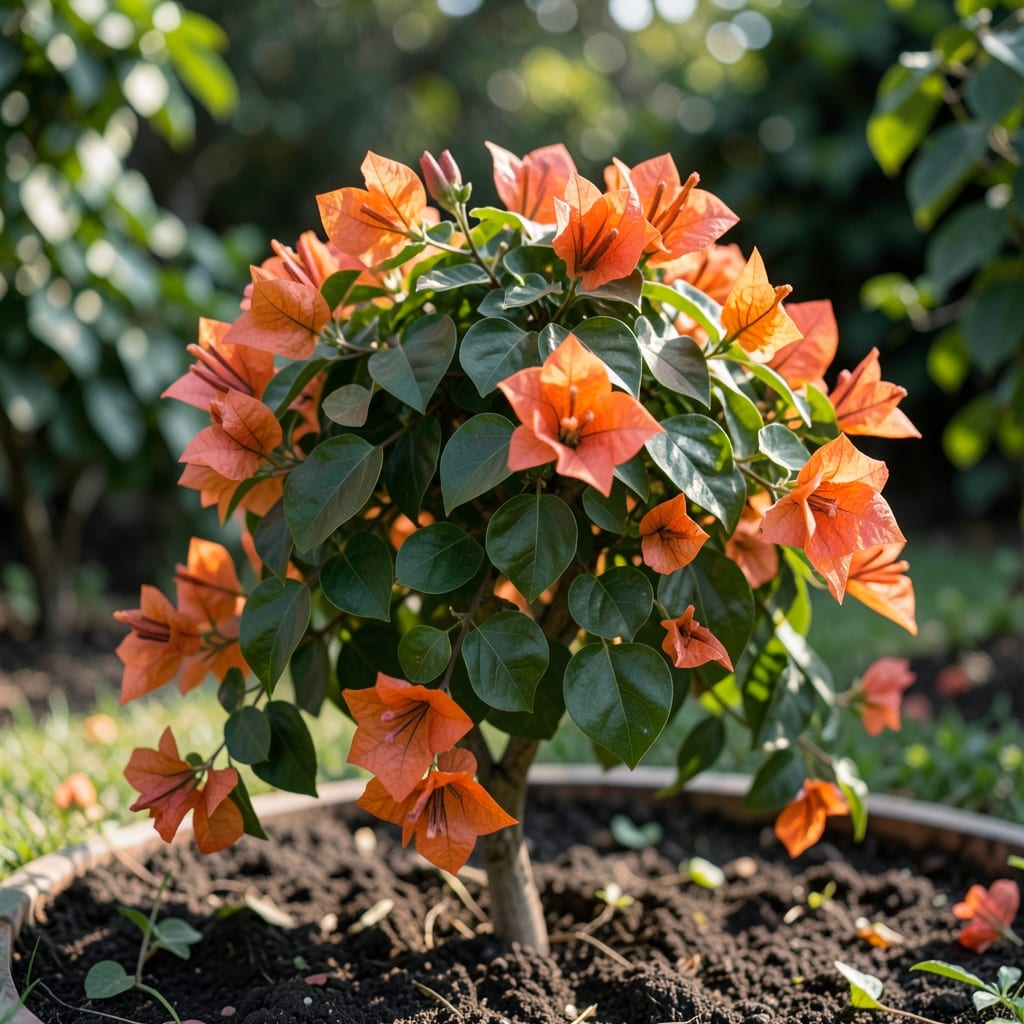
Torch Glow bougainvillea brings tropical drama to any landscape. Its vibrant orange-red bracts light up gardens for months, not just a season.
I’ve grown this variety in both ground beds and containers with equal success. It thrives in full sun, tolerates drought once established, and rewards you with year-round color in warm climates. The key is well-draining soil and minimal fuss.
📚 In This Guide
Here’s the method I use to cultivate vibrant, long-blooming bougainvillea that thrives in heat and dazzles year-round.
Bougainvillea demands full sun—at least 6-8 hours daily—and well-draining soil to prevent root rot. I always choose a spot with southern or western exposure where the plant won’t be shaded by structures or trees. Heavy clay soil suffocates roots, so amend the planting area with 50% perlite or coarse sand to improve drainage.
Test drainage by digging a 12-inch-deep hole and filling it with water. If it doesn’t empty within 30 minutes, the soil needs more amendment. The ideal pH range is 6.0-6.5, slightly acidic, which you can verify with a soil test kit before planting.
Dig a hole twice as wide but no deeper than the root ball. Bougainvillea hates sitting in a depression where water pools. Remove the plant from its container and gently loosen the roots if they’re circling—this encourages outward growth into the surrounding soil.
Space multiple plants 8-10 feet apart to accommodate their vigorous, sprawling growth. Backfill the hole with amended soil, tamping lightly to eliminate air pockets. Water deeply after planting to settle the soil, but avoid further watering until the top 1-2 inches of soil feel dry.
Once established, bougainvillea is drought-tolerant, but the first 4-6 weeks require consistent moisture. Water deeply 2-3 times per week, allowing the soil to dry slightly between sessions. Overwatering causes leaf drop and weak blooms, so always check soil moisture with your finger before watering.
Begin fertilizing 6 weeks after planting with a high-phosphorus, bloom-boosting fertilizer (like 10-30-10) applied every 4-6 weeks during the growing season. Reduce frequency to once in early fall and stop entirely in winter when growth slows. Yellowing leaves often signal over-fertilization—flush the soil with water if this occurs.
Prune bougainvillea after each bloom cycle to encourage new growth and more flowers. Use clean, sharp pruners to remove dead or weak stems, cutting just above a leaf node at a 45-degree angle. This plant blooms on new wood, so heavy pruning in late winter or early spring stimulates vigorous flowering.
Train vines onto a trellis, fence, or arbor for vertical interest. Secure stems with soft ties, avoiding wire that can cut into the bark as it thickens. If you prefer a bushier shape, pinch back the tips of new growth regularly. Always wear gloves—bougainvillea thorns are sharp and can cause irritation.
Torch Glow bougainvillea is cold-hardy to 30-35°F, but frost will damage foliage and stems. In colder climates, grow it in a container and move it indoors to a sunny, cool room (around 50-60°F) before temperatures drop below 40°F. Reduce watering significantly during winter dormancy.
Watch for pests like aphids, mealybugs, and scale, which are attracted to the sap-rich stems. Treat infestations with neem oil or insecticidal soap, applying in the early morning or late evening to avoid burning the leaves. Regularly inspect the undersides of leaves for early signs of trouble.
These insights will help you avoid common pitfalls when cultivating this stunning plant.
Sunlight Essentials: The 6-8 hours of daily direct sunlight isn’t just a suggestion—it’s critical for vibrant blooms. I learned this the hard way when my first plant produced only sparse, pale bracts. Position your bougainvillea where it gets unobstructed morning to afternoon sun, especially if you’re in a cooler climate.
Drainage Test: That 1-hour soil drainage test in Step 2 is your best defense against root rot. Dig the 12-inch hole exactly as described, and if water lingers beyond an hour, don’t risk in-ground planting. Raised beds or containers with drainage holes are your safest bet for this tropical plant.
Planting Height: Placing the root ball 1-2 inches above soil level might look odd initially, but trust me—it prevents water from pooling around the stem. After my first plant nearly drowned from improper planting depth, I now mound the soil slightly to ensure perfect drainage every time.
Winter Care: When temperatures approach that 40°F threshold, don’t wait to move potted plants indoors. I lost an entire plant by procrastinating just one cold night. Find a bright, cool spot (like a sunroom) and reduce watering significantly—your bougainvillea will thank you with vigorous growth next season.
Protect it from frost by moving potted plants indoors or covering garden plants with frost cloth. Reduce watering and stop fertilizing until spring to help it enter dormancy.
Lack of blooms is often due to insufficient sunlight, overwatering, or too much nitrogen. Ensure it gets 6+ hours of sun daily, water sparingly, and use a phosphorus-rich fertilizer.
Yes! It thrives in containers with well-draining soil. Choose a pot at least 12-16 inches deep and repot every 2-3 years. Prune regularly to maintain size.
Watch for aphids, mealybugs, or fungal leaf spots. Treat pests with neem oil and improve air circulation to prevent fungal issues. Avoid overhead watering.
Prune lightly after each bloom cycle to encourage new growth and more flowers. Heavy pruning can be done in early spring to shape the plant.