
Beautiful Plants For Your Interior
Beautiful Plants For Your Interior
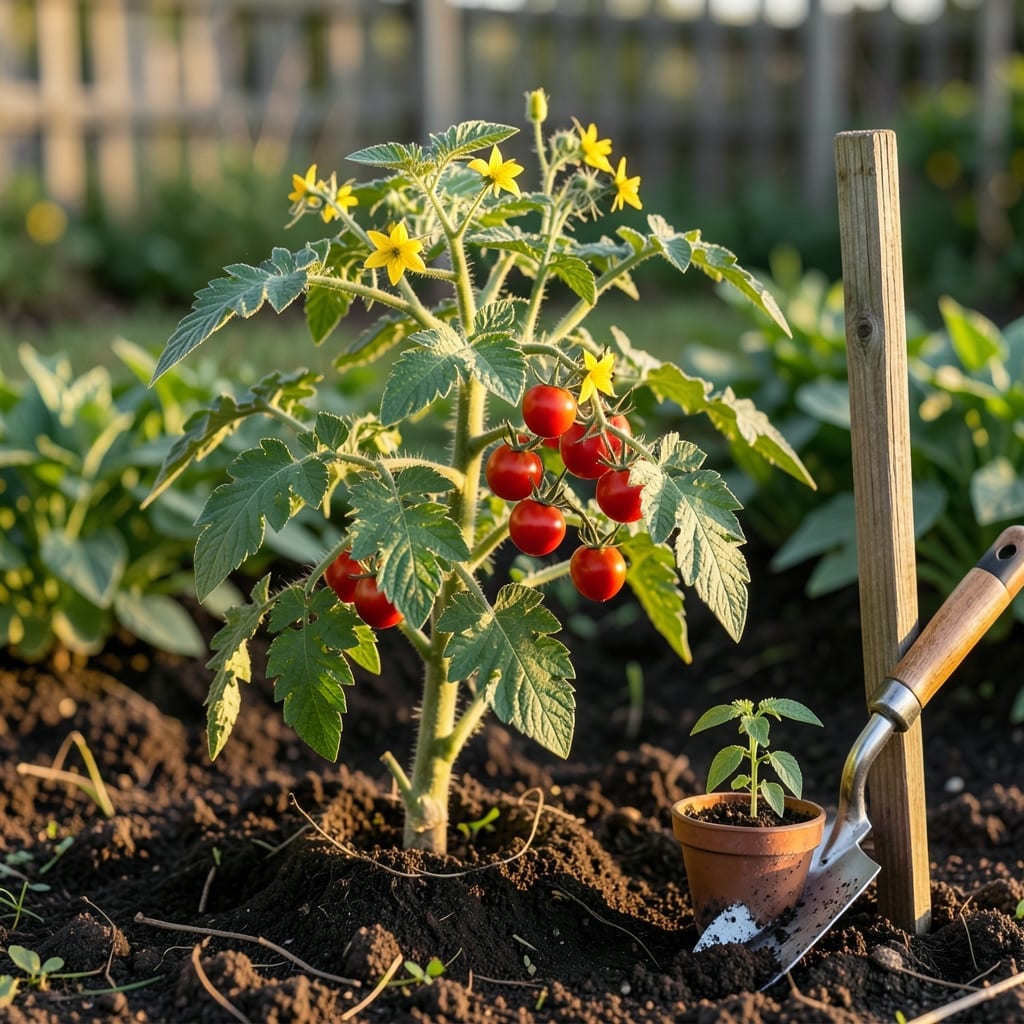
Imagine biting into a juicy tomato that’s bursting with flavor—far better than anything from the grocery store. That’s what growing your own can deliver, and it’s easier than you might think.
I’ve learned that the key to success starts with the planting process. With the right approach, even beginners can enjoy a thriving garden full of vibrant 🍅 Tomato plants.
This guide will walk you through every step, from prepping your soil to caring for young plants. You’ll discover how to avoid common pitfalls that can derail your efforts.
Find out how to set your garden up for a bountiful harvest this season. Let’s get started.
Starting your own tomato plants is easier than you think. I always begin with soil preparation because healthy soil means stronger plants and bigger harvests. Test your soil’s pH—it should be between 6.0 and 6.8 for best results.
Next, decide between starting seeds indoors or buying transplants. If you’re new, transplants are the easiest way to get a head start. Either way, timing is key—wait until soil temps hit 60°F.
I can’t stress enough how important proper spacing is. Crowded plants compete for nutrients and sunlight, leading to weaker growth and disease spread. Give them room to thrive.
When planting, bury the stem deep—this encourages additional root growth along the buried stem. I’ve seen this trick turn leggy seedlings into sturdy plants in just a few weeks.
Don’t forget immediate support. Installing cages or stakes at planting time prevents root disturbance later. I prefer tomato cages for determinate varieties and stakes for indeterminate ones.
Watering deeply after planting helps eliminate air pockets in the soil. Aim for 1-2 inches of water per week, but always check soil moisture first—overwatering is a common mistake.
For the first week, keep an eye on your new plants. If they wilt during the day but perk up at night, they’re likely adjusting. But if they stay wilted, check for underwatering or disease.
I like to add a layer of organic mulch like straw or wood chips. This keeps soil temperature steady and reduces water evaporation. Plus, it suppresses weeds that compete with your tomatoes.
Remember, consistency is key in those first few weeks. Stick to a watering schedule, monitor for pests, and watch your plants grow stronger every day. You’ll be rewarded with a bountiful harvest in no time 🌿
Choosing the right tomato variety makes all the difference in your garden’s success. I’ve found that cherry tomatoes thrive in containers, while beefsteak varieties need more space to sprawl. Each type has unique needs. 🌱
For cooler climates, early-maturing varieties like ‘Stupice’ or ‘Glacier’ are ideal. In hotter regions, heat-tolerant types such as ‘Solar Fire’ or ‘Heatmaster’ perform best. Disease resistance is also key for humid areas. 🌿
| Variety | Climate | Flavor Profile | Growth Habit |
|---|---|---|---|
| Cherry | All climates | Sweet, tangy | Compact, bushy |
| Beefsteak | Warm climates | Rich, meaty | Large, vining |
| Heirloom | Moderate | Unique, robust | Variable |
| Roma | Hot climates | Mild, low acid | Determinate |
If you’re short on space, determinate varieties like ‘Roma’ or ‘Celebrity’ stay compact and are perfect for container gardening. These plants grow to a set size, making them easier to manage. ✂️
For those wanting a long harvest season, indeterminate types like ‘Brandywine’ or ‘Sungold’ keep producing until frost. They do require sturdy supports like trellises or cages to handle their vigorous growth. ☀️
Disease-resistant varieties, marked with codes like VFN (resistant to Verticillium, Fusarium, and Nematodes), are a smart choice for organic gardeners. They reduce the need for chemical treatments and ensure a healthier crop.
Finally, consider your growing conditions. If your garden gets less than 6 hours of sun, opt for shade-tolerant varieties. Always match the plant to your environment for the best results. 🌻