
Beautiful Plants For Your Interior
Beautiful Plants For Your Interior
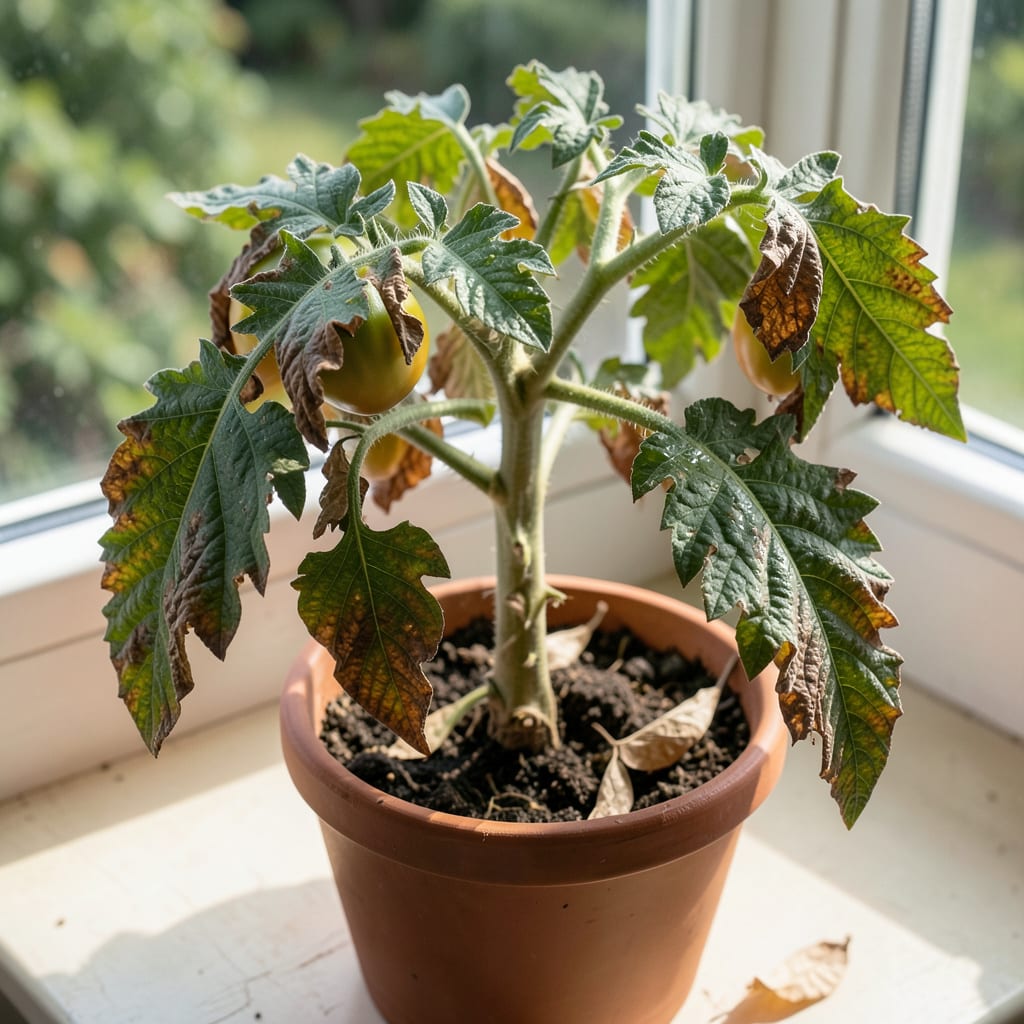
Brown, curling leaves on your tomato plants aren’t just unsightly—they’re a cry for help. I’ve nursed countless tomato plants back from the brink, and the key is catching these symptoms early before they spread.
This could be early blight, pest damage, or even just inconsistent watering. The good news? Most causes are fixable with simple, organic solutions. You’ll need to play detective with the leaves’ patterns and your plants’ recent history.
With the right approach, you can stop the damage in its tracks and coax your plants back to health. Many of my tomatoes have made full recoveries within 2-3 weeks of treatment, going on to produce bumper crops.
Works for container or in-ground plants, heirlooms or hybrids. Let’s diagnose and treat this together.
Tomato plant leaves turning brown and curling are often a sign of underlying stress. Here are the most common causes, explained scientifically and with actionable insights:
High temperatures (above 90°F/32°C) disrupt photosynthesis, causing leaves to curl inward to reduce surface area and water loss. Chronic drought triggers abscisic acid production, a hormone that closes stomata, leading to browning from moisture deficiency. Fix: Water deeply at dawn and use mulch to retain soil moisture.
Excess water suffocates roots, preventing oxygen uptake and promoting fungal pathogens like Phytophthora. This root rot manifests as yellowing leaves that turn brown and crisp. Fix: Ensure pots have drainage holes and amend heavy soil with compost.
Sap-sucking pests like whiteflies and aphids inject toxins while feeding, disrupting nutrient flow. Their honeydew also fosters sooty mold, which blackens leaves. Fix: Spray with neem oil or introduce beneficial insects like ladybugs.
Pathogens like Alternaria solani (early blight) create concentric brown spots, while Xanthomonas bacteria cause leaf margins to curl and blacken. These thrive in wet foliage. Fix: Remove infected leaves, improve airflow, and apply copper-based fungicides preventatively.
A lack of potassium or magnesium disrupts chlorophyll production, leading to brown, curly edges (scorching). Over-fertilization (especially nitrogen) can also cause leaf burn. Fix: Test soil and amend with compost or a balanced organic fertilizer.
When your tomato plant leaves start turning brown and curling, quick action is key. Below are targeted solutions for each common cause, along with prevention tips to keep your plants thriving.
Fix: Check soil moisture by sticking your finger 1-2 inches deep. If dry, water deeply; if soggy, let it dry out. Adjust watering to keep soil consistently moist but not waterlogged.
Prevention: Use mulch to retain moisture and water early in the day to reduce evaporation. Ensure pots have drainage holes.
Fix: Move potted plants to shade during extreme heat or use row covers for cold nights. For in-ground plants, provide afternoon shade with a cloth.
Prevention: Harden off seedlings before transplanting and avoid planting too early in spring or late in fall.
Fix: Spray leaves with a neem oil or insecticidal soap solution to target aphids, whiteflies, or spider mites. Remove heavily infested leaves.
Prevention: Encourage beneficial insects like ladybugs and practice crop rotation to disrupt pest cycles.
Fix: Remove infected leaves immediately and apply a copper-based fungicide or baking soda spray (1 tsp baking soda + 1 quart water + a drop of soap).
Prevention: Space plants for airflow, avoid overhead watering, and clean garden tools to prevent disease spread.
Fix: Rinse leaves with water if you suspect chemical exposure. Prune damaged foliage and monitor for recovery.
Prevention: Avoid spraying herbicides near tomato plants, and use organic weed control methods instead.
💡 Pro Tip: Regularly inspect your plants for early signs of trouble. Catching issues early makes them easier to manage!
Most cases are reversible with early intervention. Remove only severely damaged leaves and treat the underlying cause. Healthy plants often recover within 2-3 weeks with proper care.
Check undersides of leaves for tiny insects or sticky residue (pests). Diseases often show as spots or patterns. A magnifying glass helps spot early signs.
Mild cases rarely impact fruit production. Severe stress may reduce yield, but quick treatment minimizes damage. Focus on saving healthy growth.
