
Beautiful Plants For Your Interior
Beautiful Plants For Your Interior
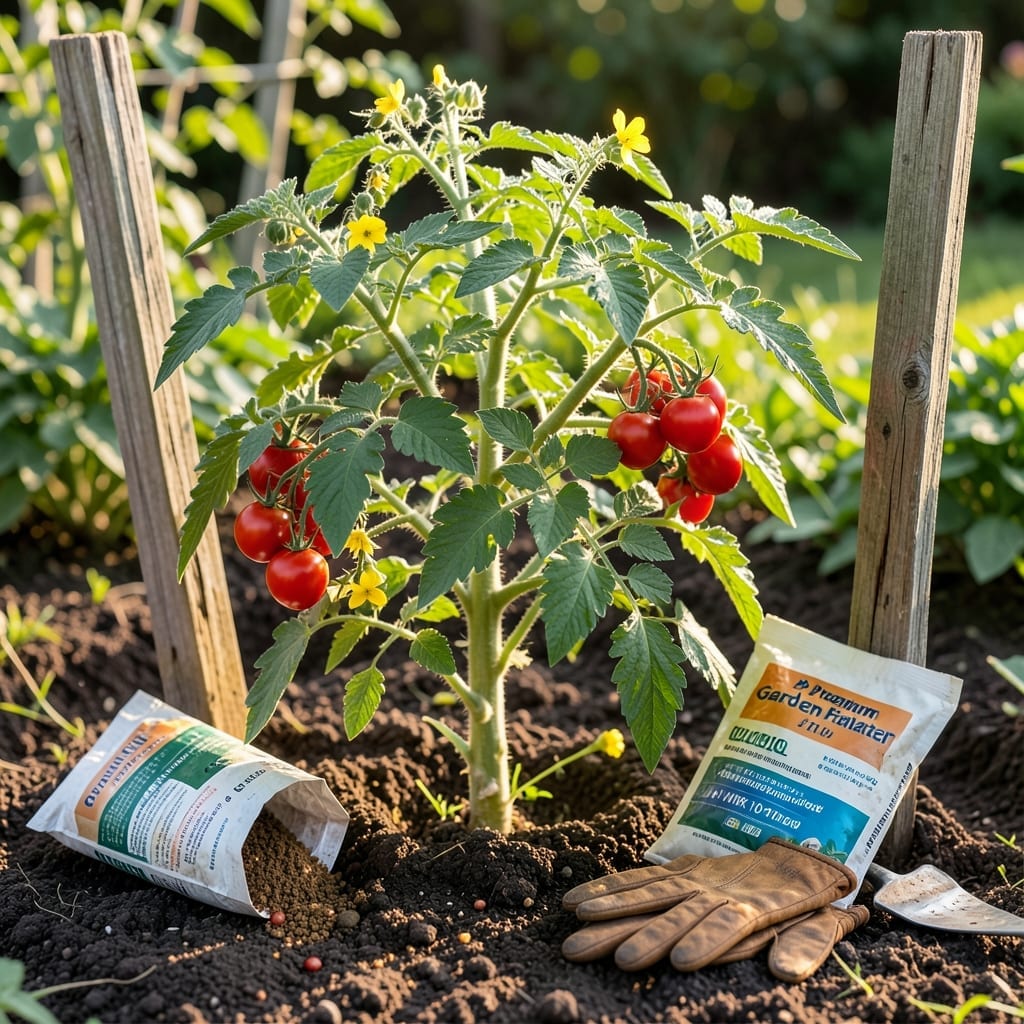
There’s nothing quite like biting into a juicy homegrown 🍅 Tomato, still warm from the sun. But getting those perfect fruits requires more than just planting and watering. The real secret lies in your feeding strategy.
I’ve learned that timing and balance are everything when it comes to fertilizing Tomatoes. Too much too soon can lead to leafy growth with few fruits, while too little leaves your plants struggling to thrive.
Whether you’re growing in zone 6 or elsewhere, a smart feeding plan will transform your harvest. We’ll explore when to feed, what to use, and how to avoid common pitfalls that can derail your Tomato plants.
Discover how to create a simple yet effective schedule that keeps your Tomatoes happy from spring planting through that first July harvest and beyond.

I’ve found that tomato plants thrive when their fertilizer needs match their growth stages. Early on, they crave nitrogen for leafy growth, but too much later can delay fruiting.
As flowering begins, shift to a phosphorus-heavy formula to boost fruit development. This staged approach prevents wasted nutrients and overfeeding.
| Growth Stage | Key Nutrient | NPK Ratio | Frequency |
|---|---|---|---|
| Seedling | Nitrogen | 10-5-5 | Every 2 weeks |
| Transplanting | Balanced | 5-10-10 | At planting |
| Vegetative | Nitrogen | 12-4-8 | Weekly |
| Flowering | Phosphorus | 5-10-10 | Every 10 days |
| Fruiting | Potassium | 3-8-12 | Every 2 weeks |
I always start seedlings with a 10-5-5 NPK to encourage strong stems and healthy leaves. This gives them the foundation they need.
At transplanting time, I switch to a 5-10-10 formula to support root establishment and prevent transplant shock. A single application works wonders.
During the vegetative stage, I use a 12-4-8 mix weekly. This keeps foliage lush without overdoing it. Watch for yellowing leaves, a sign of deficiency.
The flowering stage demands a phosphorus boost. I apply a 5-10-10 fertilizer every 10 days to promote strong blooms.
Once fruits appear, I shift to a 3-8-12 ratio for potassium. This helps fruit development and disease resistance. Bi-weekly feeding is ideal.
I avoid over-fertilizing by sticking to this tomato plant fertilizer schedule. It’s easy to think more is better, but too much nitrogen can lead to leafy plants with few tomatoes.
Remember, consistency and correct ratios are key to a bumper crop. Adjust based on soil tests and plant responses for best results 🌱
I’ve experimented with both organic and synthetic fertilizers for my tomato plants, and each has its place. Organic options like compost and fish emulsion improve soil health over time.
Synthetic fertilizers provide quick nutrient boosts but can lead to salt buildup if overused. The key is finding the right balance for your tomato plant fertilizer schedule.
I often start with organic compost at planting, then supplement with liquid fish emulsion during the vegetative stage. This gives my Tomatoes a strong foundation.
For a quick boost during flowering, I might use a balanced synthetic like 10-10-10. But I always follow up with organic matter to maintain soil health.
Remember, overusing synthetics can harm beneficial microbes. I rotate between types to keep my tomato plants thriving and my soil fertile 🌿