
Beautiful Plants For Your Interior
Beautiful Plants For Your Interior
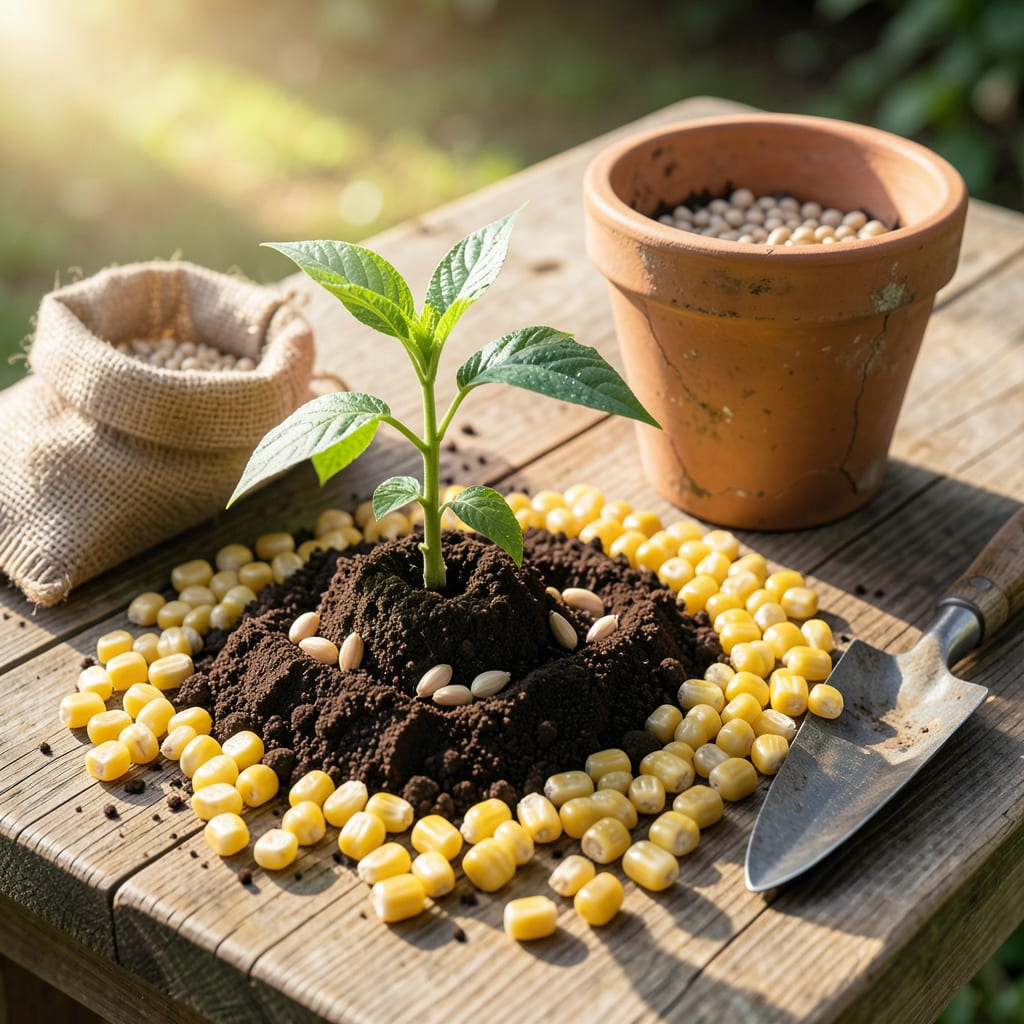
I learned the hard way that corn won’t thrive without the right start. Planting it too close or too shallow leads to weak stalks and sparse ears.
With proper spacing, 1-2 inches deep and 12-18 inches apart, in warm soil, you’ll get strong plants that produce full, sweet ears by midsummer. Here’s how to set it up right the first time.
📚 In This Guide
Here’s the method I trust for strong stalks and full ears every season.
Wait until soil temperature reaches 60°F—corn seeds won’t germinate in cold ground. I check mine with a soil thermometer first thing in the morning for three days straight. If the reading stays consistent, you’re good to go.
Plant 2-3 weeks after your last frost date when air temperatures stay above 50°F at night. Pushing this too early results in stunted plants that never recover. Early varieties can handle cooler temps, but sweet corn needs warmth to develop properly.
Pick a spot with full sun exposure—at least 6-8 hours of direct light daily. Corn is a heavy feeder, so I work the soil to 12 inches deep, removing rocks and breaking up clumps. This gives roots room to spread.
Add a 2-3 inch layer of compost or well-rotted manure to the bed. Mix it into the top 6 inches of soil. Don’t just lay it on top—corn roots need to access those nutrients as they grow. Avoid fresh manure, which can burn young plants.
Sow seeds 1-2 inches deep—any deeper and they’ll struggle to emerge. I make shallow furrows with a hoe, drop seeds every 4-6 inches, then cover lightly with soil. Press the soil gently to ensure good seed-to-soil contact.
Plant in blocks of at least 3-4 rows rather than single long rows. This improves pollination, which is critical for ear development. Space rows 24-30 inches apart to give plants room to grow without competing for light and nutrients.
Water the area thoroughly right after planting until the soil is moist to a 4-inch depth. Keep the soil consistently damp but not soggy during germination. I use a gentle spray to avoid washing seeds away or creating crusty soil that blocks sprouts.
Seeds typically emerge in 5-12 days, depending on soil temperature. Watch for thin white shoots first, then green leaves. If you see uneven emergence after 10 days, check for crusting or seed damage—sometimes a light rain or gentle watering can help late seeds break through.
Once seedlings are 3-4 inches tall, thin them to 12 inches apart. I pull the weaker seedlings, leaving the strongest one in each spot. This gives each plant enough space to develop properly.
Apply a 1-inch layer of mulch around plants to retain moisture and suppress weeds. Start side-dressing with nitrogen fertilizer when plants are 6 inches tall, then again when they begin to tassel. This supports the heavy feeding needs during ear development.
Here’s what I’ve learned the hard way to help you avoid the most common planting pitfalls.
Temperature Matters: That 60°F soil temperature in Step 1 isn’t just a suggestion—it’s critical. I’ve tried planting when the soil was just 55°F, and the seeds either rotted or struggled for weeks. Use a soil thermometer and check for three consecutive mornings to be absolutely sure.
Sunlight is Non-Negotiable: The 6-8 hours of full sun mentioned in Step 2 is essential for strong stalk development. I once planted in a spot that got afternoon shade, and the plants grew tall but produced small, underdeveloped ears. Choose your sunniest location.
Spacing Strategy: In Step 3, the 1-2 inch planting depth and 4-6 inch seed spacing are carefully calibrated. Any deeper, and seeds may not have the energy to push through. Any closer, and seedlings will compete for nutrients before you even get to the thinning stage.
Germination Watch: During Step 4, if you don’t see sprouts by day 10, resist the urge to dig up seeds to check. A gentle watering can often help late seeds break through crusty soil. I’ve saved many a patch this way.
The ideal time is after the last frost when soil temperatures reach at least 60°F (15°C). In most regions, this falls between late April and early June. Planting too early in cold soil can stunt growth, so patience pays off!
Plant seeds about 1 to 1.5 inches deep. Deeper planting can delay germination, while shallow seeds may dry out or get washed away. Space rows 30-36 inches apart for proper airflow and growth.
Yes, but choose a large container (at least 12 inches deep) and a dwarf variety like ‘Golden Midget.’ Ensure it gets full sun and consistent watering. Container-grown corn may yield smaller ears but is great for small spaces!
Common causes include poor pollination, overcrowding, or nutrient deficiencies. Plant in blocks (not single rows) to aid wind pollination, thin seedlings, and fertilize with nitrogen-rich amendments for best results.
