
Beautiful Plants For Your Interior
Beautiful Plants For Your Interior
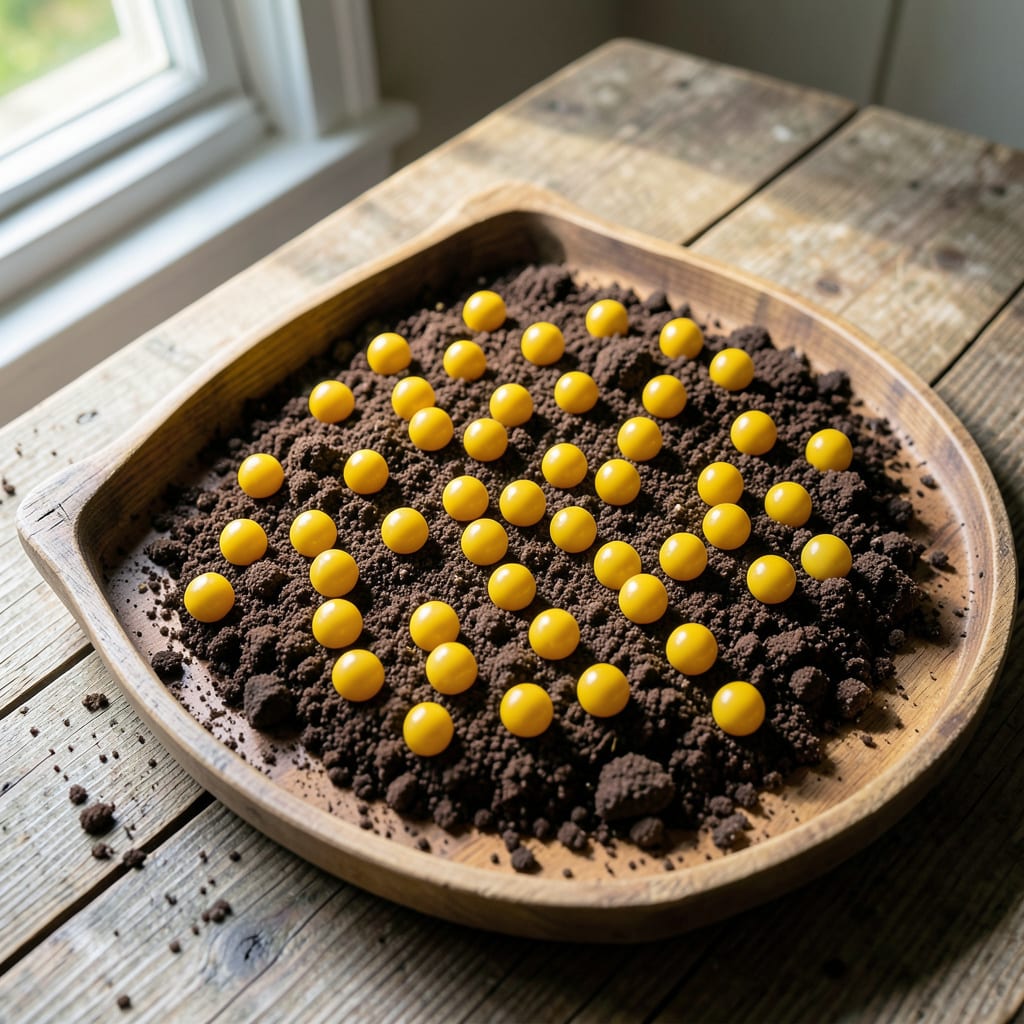
Spotted tiny yellow balls in your soil and wondering what they are? I’ve seen this before, and the answer might surprise you.
These could be insect eggs, fungal growth, or even mineral deposits. Each has different causes and solutions, but identifying them early is key to protecting your plants.
You’ll want to examine their location, texture, and any accompanying plant symptoms. This simple inspection can reveal whether you’re dealing with pests, harmless fungi, or just nature’s oddities.
Prevention often starts with proper soil care and regular monitoring. Let’s figure out what you’re seeing and how to address it.
Those mysterious tiny yellow balls in your soil are often the work of nature’s smallest engineers. Here’s a breakdown of the most common causes, each with a clear scientific explanation:
Many soil-dwelling fungi, like Sclerotinia or Rhizoctonia species, produce sclerotia—compact masses of hardened mycelium that store nutrients and energy. These structures often appear as small, yellowish-brown balls (1–3 mm in diameter) and help the fungus survive harsh conditions. They’re a sign of fungal activity, often triggered by excess moisture, poor drainage, or decaying organic matter in the soil.
Some insects, such as fungus gnat larvae or springtails, lay eggs that resemble tiny yellow spheres. These eggs are typically 0.5–1 mm wide and may cluster near the soil surface. Alternatively, larval cases (from beetles or flies) can harden and turn yellow as they mature. Check for high humidity or overwatering, which attracts egg-laying pests.
Leguminous plants (e.g., peas, beans) form nitrogen-fixing root nodules via symbiotic bacteria (Rhizobia). While usually pinkish or white, older or stressed nodules can turn yellow. These are 2–5 mm in size and attached to roots. If you dig up a plant and find these, it’s a sign of healthy soil biology—no action needed!
In rare cases, sulfur granules (from fertilizers or volcanic soil) or iron oxide concretions can form tiny yellowish balls. These are inorganic and often occur in acidic or mineral-rich soils. Test your soil’s pH if you suspect this—adjustments may be necessary.
To pinpoint the cause, inspect the balls’ location, texture, and surrounding conditions. Fungal sclerotia are usually buried, while insect eggs sit near the surface. When in doubt, a magnifying glass or lab test can confirm the culprit!
If you’ve spotted tiny yellow balls in your soil, don’t panic—here’s how to tackle the most common causes and restore your garden’s health.
Let the topsoil dry out between waterings to discourage fungus gnats, as they thrive in damp conditions. Use yellow sticky traps to catch adults and break their life cycle. For larvae, apply beneficial nematodes or a hydrogen peroxide solution (1 part 3% peroxide to 4 parts water) to the soil. This kills larvae on contact while aerating the roots.
Prevention tip: 💡 Avoid overwatering and use well-draining soil mixes. Store potting soil in sealed containers to prevent contamination.
If the yellow balls are actually sulfur granules (from slow-release fertilizers), test your soil’s pH. Amend with compost or organic matter to improve nutrient availability. For a quick fix, apply a balanced liquid fertilizer (e.g., 10-10-10) to replenish nitrogen. Yellowing leaves often accompany this issue, so act fast to prevent stunted growth.
Prevention tip: 🌡️ Rotate crops annually and use slow-release fertilizers as directed—overapplication can lead to excess granules.
Check under leaves and along stems for clusters of pests. Blast them off with a strong stream of water, then apply neem oil or insecticidal soap to remaining bugs. For severe cases, introduce ladybugs or lacewings as natural predators. Repeat treatments every 5–7 days until the infestation clears.
Prevention tip: ✨ Inspect new plants before bringing them home, and quarantine infested plants immediately to avoid spread.
Use a soil test kit to check pH levels. If the soil is too acidic (below 6.0), add lime to raise it. For alkaline soil (above 7.5), mix in sulfur or peat moss. Yellow deposits may also indicate mineral buildup—flush the soil with water to remove excess salts.
Prevention tip: 🎯 Test soil pH every spring and adjust as needed for your plants’ preferences.
It depends on the cause. Fungal sclerotia or insect eggs can harm plants if left unchecked, while root nodules are harmless. Identify the type first to determine the right action.
Insect eggs are usually 0.5–1 mm wide, clustered near the surface, and appear in moist soil. Use a magnifying glass to check for tiny, round shapes.
Remove the top layer of soil and replace it with fresh, sterile mix. Avoid overwatering to discourage pests or fungi.
Yes, but they’re more common in moist, organic-rich soils. Well-draining mixes reduce the risk of fungal growth or pest eggs.
