
Beautiful Plants For Your Interior
Beautiful Plants For Your Interior
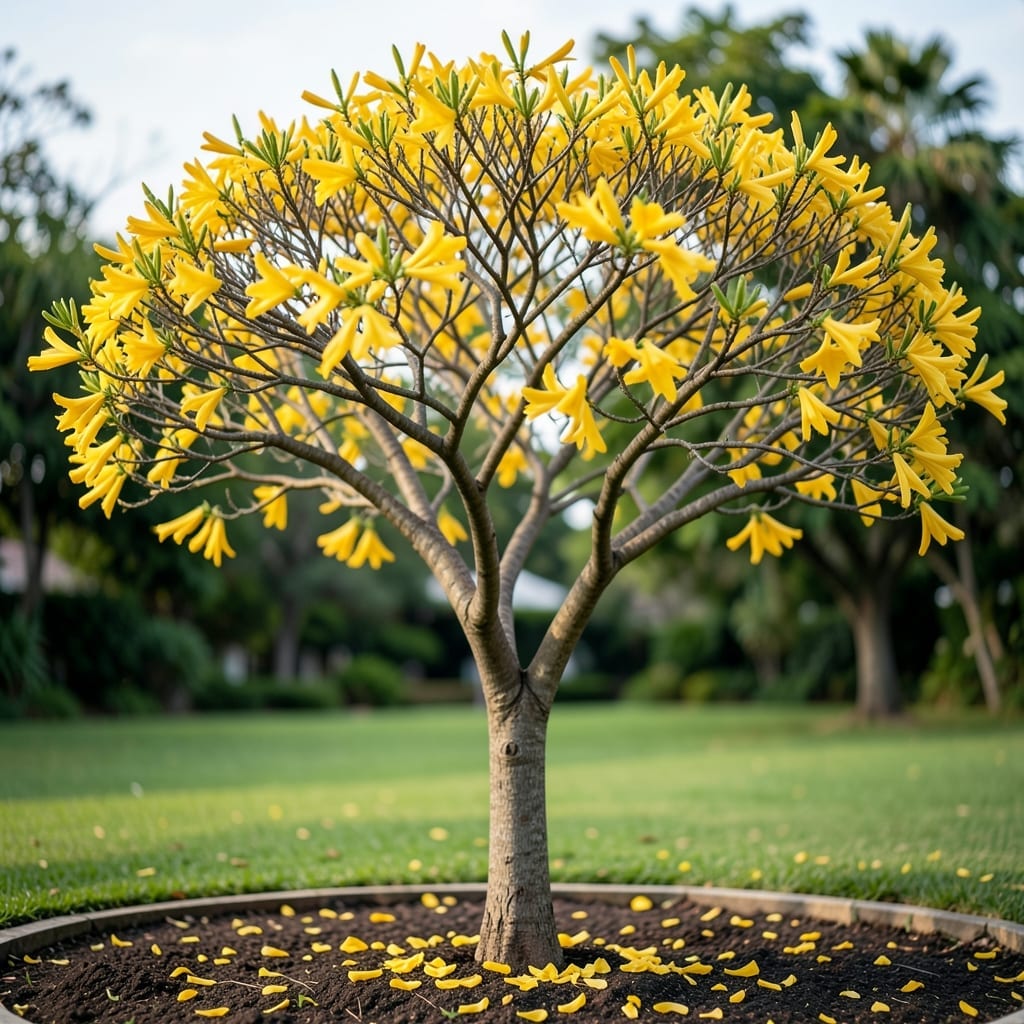
That first spring when my tabebuia burst into golden blooms changed everything. Nothing beats watching a bare tree transform into a living sunbeam overnight.
I learned the hard way that these trees need full sun and well-draining soil to thrive. Plant in the wrong spot and you’ll get weak growth and fewer flowers. The right location means 10+ years of reliable color.
Water deeply but infrequently once established. Overwatering causes root rot faster than drought stress. Prune only to shape or remove dead wood—these trees naturally grow into a beautiful form.
Perfect for warm climates where it can reach 25-30 feet tall. The payoff is worth every bit of care when those trumpet-shaped flowers appear.
The vibrant tabebuia (often called the trumpet tree) can lose its lush green foliage to yellowing leaves due to several environmental, nutritional, or biological factors. Below are the most common causes, each with clear, science-backed explanations.
Yellowing leaves often signal a lack of essential nutrients, particularly nitrogen or magnesium. Nitrogen deficiency typically starts in older leaves, causing uniform yellowing (chlorosis) as chlorophyll breaks down. Magnesium deficiency, on the other hand, appears as yellow patches between leaf veins, as this nutrient is critical for chlorophyll production. A soil test can confirm imbalances; amend with a balanced fertilizer (e.g., 10-10-10) or magnesium sulfate (Epsom salt) for quick correction.
Tabebuias thrive in well-draining soil. Excess water suffocates roots, reducing oxygen uptake and hindering nutrient absorption. This stress triggers leaf yellowing, often accompanied by wilting or root rot. To fix this, ensure pots have drainage holes and use a loose, sandy soil mix. Water only when the top 2 inches of soil are dry.
Sudden temperature drops, extreme heat, or excessive shade can disrupt photosynthesis, leading to yellow leaves. Tabebuias prefer full sun (6+ hours daily) and temperatures between 60–85°F. If growing in cooler climates, protect the tree from drafts or frost. Relocate potted specimens to sunnier spots if yellowing persists.
Sap-sucking pests like aphids, spider mites, or scale insects drain the tree’s resources, causing yellow stippling or curling leaves. Inspect the undersides of leaves for webbing or sticky residue (honeydew). Treat with neem oil or insecticidal soap, applying weekly until pests are eradicated.
If your Tabebuia (trumpet tree) is looking lackluster, don’t worry—most issues are fixable with the right approach. Below are targeted solutions for common problems, along with prevention tips to keep your tree thriving.
Yellow leaves often signal overwatering or poor drainage. Check the soil: if it’s soggy, reduce watering and amend heavy clay with compost or sand to improve drainage. For potted trees, ensure the container has drainage holes.
Prevention tip: 💡 Water only when the top 2 inches of soil are dry, and use a well-draining potting mix.
Spider mites, aphids, or scale can stress your Tabebuia. Blast pests off with a strong stream of water or apply neem oil (1 tbsp per gallon of water) every 7–10 days until they’re gone. For severe cases, use insecticidal soap.
Prevention tip: 🎯 Inspect leaves weekly and encourage beneficial insects like ladybugs.
If your tree looks sparse or stretched, it’s likely not getting enough sunlight. Move it to a spot with full sun (6+ hours/day). For indoor trees, supplement with a grow light.
Prevention tip: ✨ Rotate potted trees quarterly to ensure even light distribution.
Slow growth or pale leaves may indicate a lack of nutrients. Use a balanced, slow-release fertilizer (10-10-10) in spring and summer, following package instructions. Avoid over-fertilizing, which can burn roots.
Prevention tip: 📊 Test soil annually and adjust fertilizer type (e.g., high-phosphorus for blooming).
It typically reaches 25-30 feet tall in ideal conditions. Dwarf varieties stay smaller at 10-15 feet, making them better for limited spaces.
Expect vibrant trumpet-shaped flowers in late winter to early spring. In warmer climates, some varieties may produce a second bloom in fall.
Once established, it handles short dry periods well. However, regular watering during the first year helps roots develop. Avoid soggy soil to prevent rot.
Yes, but choose dwarf varieties and use a large pot with drainage. Repot every 2-3 years to prevent root binding.