
Beautiful Plants For Your Interior
Beautiful Plants For Your Interior
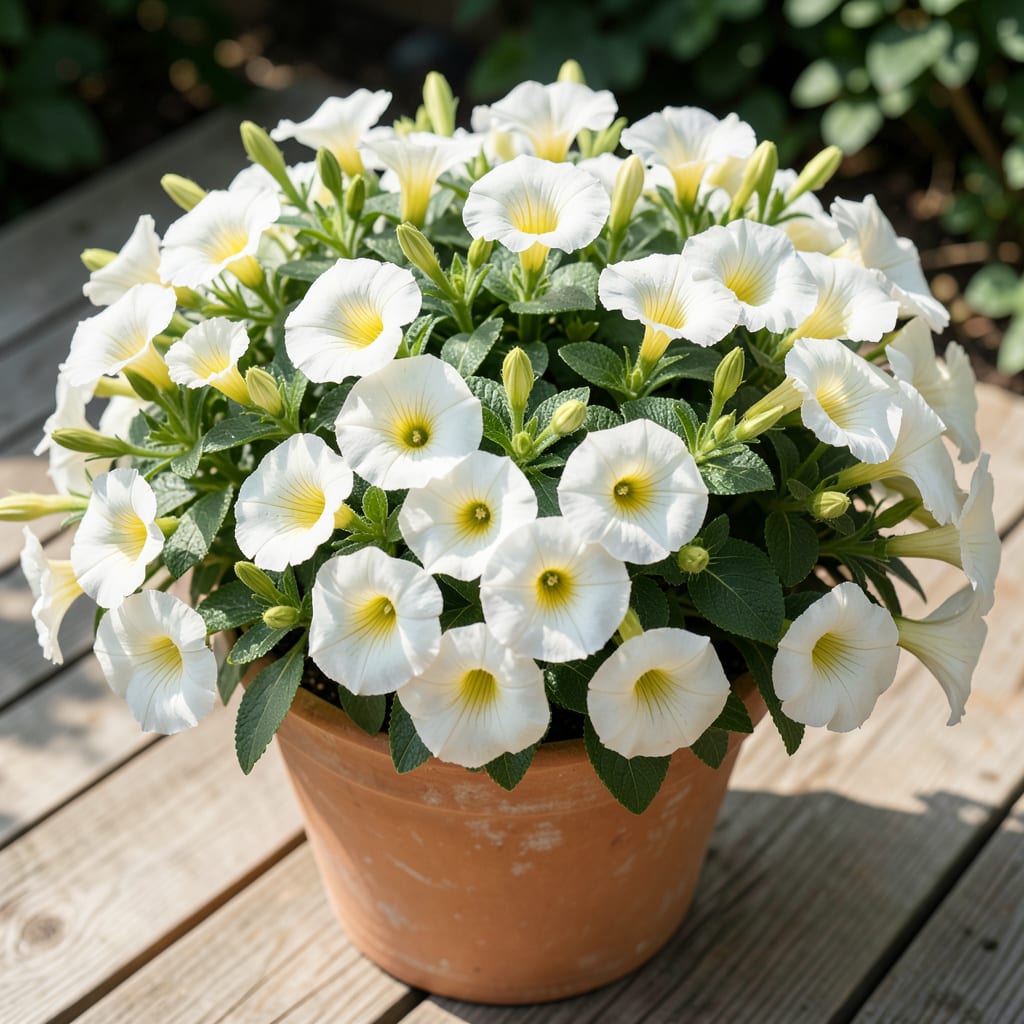
I fell for Supertunia Mini Vista White the first time I saw its pure white blooms spilling over a container. This little powerhouse delivers big color without the sprawl of traditional petunias.
It thrives in full sun, handles heat like a champ, and keeps flowering without deadheading. Perfect for hanging baskets, window boxes, or garden edges where you want nonstop blooms from spring to frost.
📚 In This Guide
This method delivers compact, free-flowering plants that thrive with minimal effort.
Choose a spot receiving full sun—at least 6-8 hours of direct light daily. Supertunia Mini Vista White tolerates partial shade but produces fewer blooms and may stretch unnaturally. The more light it receives, the tighter and more floriferous the habit.
Ensure the area has well-draining soil. These petunias abhor waterlogged roots, which leads to yellowing leaves and stunted growth. If planting in containers, select ones with multiple drainage holes—at least 12 inches in diameter for each plant to accommodate its spreading habit.
Amend the planting area with 2-3 inches of organic matter, such as compost or aged manure, worked into the top 6-8 inches of soil. This improves drainage while providing the nutrients needed for vigorous blooming.
For container growing, use a high-quality potting mix formulated for annuals, ensuring it contains perlite or vermiculite for aeration. I’ve found that mixing in a slow-release fertilizer at planting time reduces the need for frequent feeding later in the season.
Space plants 12-18 inches apart in garden beds to allow for their mounding and trailing growth. In hanging baskets or containers, plant one per 10-12 inch pot to prevent overcrowding, which can lead to poor air circulation and disease.
Dig a hole slightly larger than the root ball, place the plant so the top of the root ball sits level with the soil surface, and backfill gently. Press the soil lightly to remove air pockets, then water deeply to settle the roots. Avoid burying the stem, as this can cause rot.
Water plants at the base when the top 1 inch of soil feels dry to the touch. These petunias are somewhat drought-tolerant once established but perform best with consistent moisture. Container plants dry out faster, so check them daily during hot, dry periods.
Feed weekly with a balanced, water-soluble fertilizer like 10-10-10 or 20-20-20 to support continuous flowering. If using a slow-release fertilizer, reapply every 8-10 weeks according to package instructions. Deadhead spent blooms occasionally, though Supertunia Mini Vista White is self-cleaning and doesn’t strictly require it.
Pinch back leggy stems by one-third if the plant becomes unruly or sparse. This encourages bushier growth and more blooms. Trim back overgrown plants in midsummer to rejuvenate them if they’ve become woody or straggly.
Monitor for pests like aphids or spider mites, which can stress the plant. A strong spray of water often dislodges minor infestations. For severe issues, treat with insecticidal soap or neem oil, always applying in the early morning or late evening to avoid leaf burn.
Small adjustments in light and soil make a surprisingly big difference with these petunias.
Light Requirements: The 6-8 hours of direct sun specified in Step 1 isn’t just a suggestion. I learned the hard way that stretching this to partial shade results in leggy, sparse plants with dramatically fewer blooms. If your space gets morning shade, position them where they’ll catch that full afternoon sun.
Soil Preparation: For Step 2, don’t just scratch compost into the surface. Work that 2-3 inches of organic matter deep into the top 6-8 inches of soil. This creates the loose, nutrient-rich environment these petunias need to establish quickly and bloom profusely throughout the season.
Container Considerations: When planting in pots as mentioned in Step 3, that 12-inch diameter minimum per plant is critical. Smaller containers lead to root binding and moisture stress. Also, ensure your pots have drainage holes—sitting in waterlogged soil is the fastest way to kill these otherwise resilient plants.
Pruning Technique: In Step 5, when pinching back stems by one-third, use sharp scissors or pruners. Tearing stems can create ragged edges that invite disease. And don’t be timid—these plants respond aggressively to pruning with fresh, compact growth and a new wave of blooms.
Water when the top inch of soil feels dry, typically every 2-3 days in hot weather. Ensure good drainage to prevent root rot. These plants are drought-tolerant once established but bloom best with consistent moisture.
Yes! They thrive in containers, hanging baskets, or window boxes. Use well-draining potting mix and ensure the container has drainage holes. Their compact size makes them perfect for small spaces.
Plant after the last frost in spring when temperatures stay above 50°F (10°C). They love warmth and will flourish in full sun, providing vibrant blooms from late spring until the first frost.
Deadhead spent flowers and check for adequate sunlight (6+ hours daily). Fertilize lightly every 2-3 weeks with a balanced, water-soluble fertilizer to encourage continuous blooming.
Try Supertunia Vista Bubblegum or Snowdrift for comparable low-maintenance, trailing habits. Both offer prolific blooms and similar care needs, with different color options.
