
Beautiful Plants For Your Interior
Beautiful Plants For Your Interior
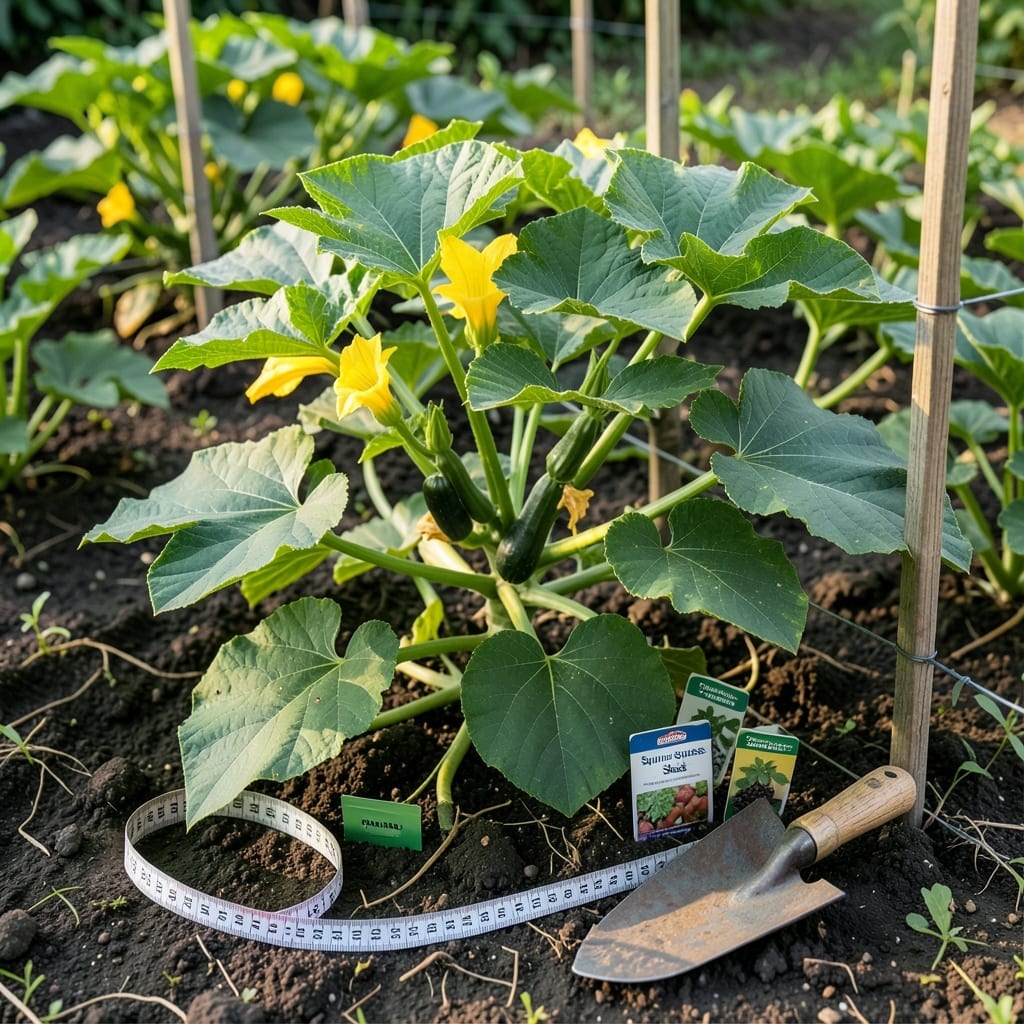
Proper spacing can make or break your Summer Squash 🎃 harvest. Crowd them too close and you’ll sacrifice size, airflow, and productivity.
I learned this the hard way my first season. Those sprawling vines need room to thrive, especially in zone 6a where they grow vigorously from April to September.
Whether you’re planting bush or vining varieties, getting the distance right means bigger yields and healthier plants. It’s not just about the space between plants, but also between rows.
Let me show you how to maximize your garden space while giving your Summer Squash exactly what it needs to flourish all season long.

I’ve learned the hard way that summer squash spacing isn’t one-size-fits-all. Bush varieties like pattypan need less room, while vining types like zucchini demand space to sprawl. Give them room to breathe, and you’ll see the difference in yield and health. 🌱
Proper spacing prevents disease by improving airflow and ensures each plant gets enough sunlight and nutrients. Crowding leads to competition, smaller fruits, and a higher risk of fungal issues. Trust me, it’s worth the extra square foot. 🌿
| Variety | In-Row Spacing | Row Spacing | Notes |
|---|---|---|---|
| Bush Types | 24-30 inches | 3-4 feet | Compact, ideal for raised beds |
| Vining Types | 36-48 inches | 5-6 feet | Needs trellis support or ground space |
| Raised Beds | 18-24 inches | N/A | Closer spacing due to improved drainage |
For bush varieties, I recommend 24-30 inches between plants and 3-4 feet between rows. This gives them enough room to spread without wasting space. They’re perfect for small gardens or containers. 🌻
Vining squash, like zucchini, needs 36-48 inches in-row and 5-6 feet between rows. These plants can sprawl 6-8 feet if left unchecked. I use a trellis to save space and keep fruits off the ground. ✂️
In raised beds, you can tighten spacing to 18-24 inches apart. The improved soil and drainage allow for closer planting. Just ensure each plant still gets full sun and good airflow.
I’ve found that overcrowding leads to smaller fruits and more pest problems. If you’re planting multiple rows, orient them north to south to maximize sunlight exposure for all plants. ☀️
Don’t forget to consider companion plants. Pairing summer squash with beans or corn can help utilize space efficiently. But avoid planting near potatoes, as they compete for nutrients.
If you’re short on space, vertical gardening is a game-changer. Train vining squash up a strong trellis, and you’ll free up ground space for other crops. Just ensure the structure can support the weight of mature squash. 🌿
Finally, always mulch around your squash plants. This retains moisture, suppresses weeds, and keeps fruits clean. I use straw or shredded leaves for best results. With the right spacing and care, your summer squash will thrive. 🌱
I’ve seen many gardeners struggle with summer squash because they overlook spacing. Crowding plants leads to poor airflow and increased disease risk. Zucchini and yellow squash need room to thrive, not compete.
Another common error is ignoring vertical space. Vining varieties can climb trellises, saving ground space. Bush types still need 2-3 feet between plants for best results.
I always recommend testing soil first. Poor drainage can stunt growth, even with perfect spacing. Amend with compost to improve structure before planting.
Row spacing is just as critical as plant spacing. For most varieties, 4-6 feet between rows ensures easy access for harvesting and maintenance.
If you’re growing in raised beds, reduce spacing slightly but never sacrifice airflow. Vertical gardening can help maximize small spaces without overcrowding.
Finally, monitor plant growth weekly. Summer squash grows quickly, and adjusting spacing early prevents problems later. Thin seedlings if they emerge too densely.
With these fixes, you’ll see healthier plants and a bigger harvest all season long. 🌱