
Beautiful Plants For Your Interior
Beautiful Plants For Your Interior
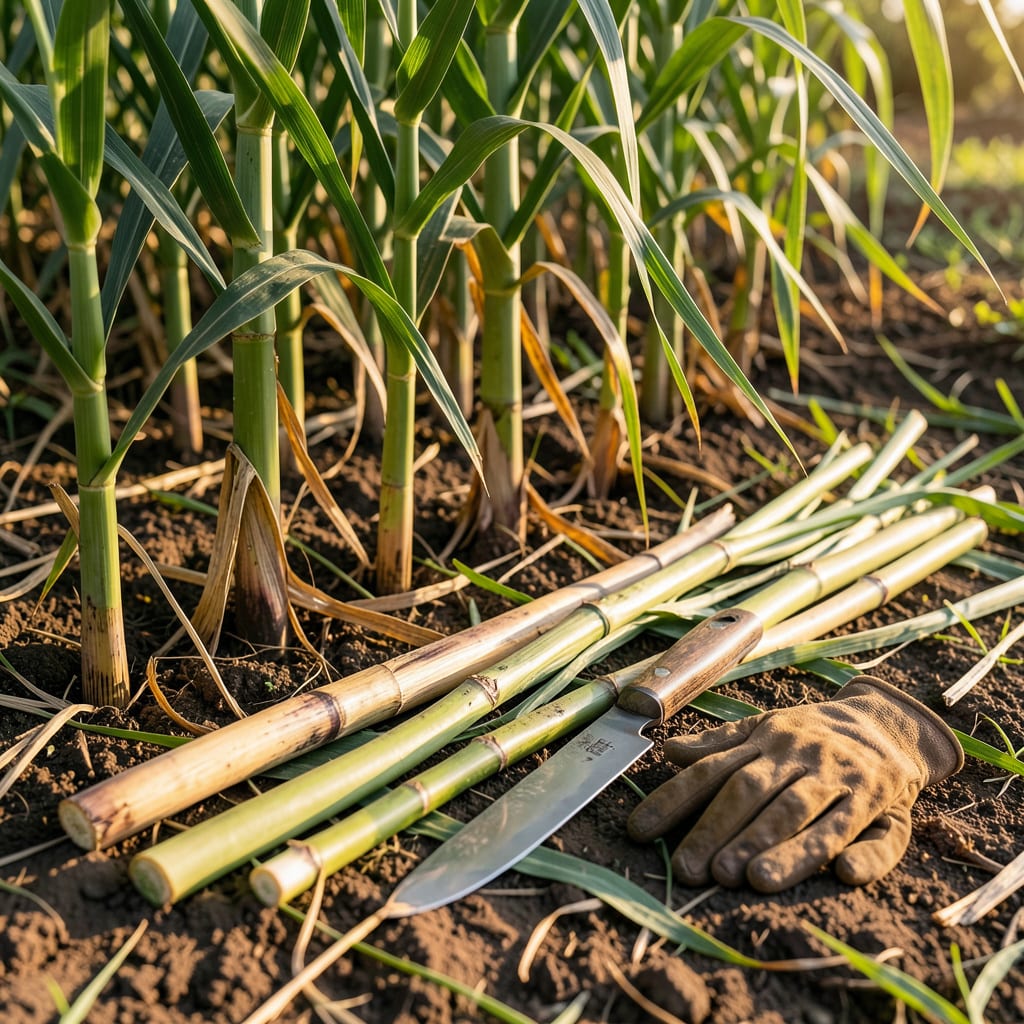
Timing your 🌿Sugarcane harvest perfectly separates sweet success from bitter disappointment. Those golden stalks won’t reach peak flavor until they’re truly ready.
I’ll show you the field-tested signs to watch for, so you can pull in your crop at its most delicious moment. No guesswork, just maximum sweetness from your hard work.


Knowing when to harvest sugar cane is all about reading the plant’s signals. I look for thick, hard stalks that are 1-2 inches wide, a sure sign of maturity. Thin or spongy stalks mean it’s not ready yet.
Another key indicator is the lower leaves turning yellow and dry. This change happens as the plant redirects energy to sugar production in the stalks. Green, healthy leaves mean it’s still growing.
The metallic sound test is my favorite field trick. When I flick a mature stalk with my fingernail, it rings like a tuning fork. Immature cane sounds dull or thuddy.
For serious growers, a Brix refractometer is invaluable. I check for readings of 20% or higher, which indicates peak sugar content. Anything below means waiting a little longer.
Timing also depends on planting date. Sugar cane typically needs 12-24 months to mature. Early varieties may be ready in a year, while others need nearly two.
I always check multiple stalks across the field. Uniformity in these signs tells me the entire crop is ready. If some stalks lag behind, I’ll harvest the mature ones first.
Remember, weather affects sweetness. A few weeks of cool, dry weather before harvest can boost sugar content. Hot, rainy periods might delay the perfect moment.
Finally, I avoid harvesting after heavy rain. Wet stalks are harder to process and may develop mold. I wait for dry conditions for the cleanest harvest.
With these signs in mind, you’ll never guess at your sugar cane harvest time again. Your reward? The sweetest, most flavorful crop possible 🌿
Climate plays a huge role in determining the ideal sugar cane harvest time. In tropical zones, I can harvest year-round, but peak sweetness often hits during dry seasons when sugar concentrations rise naturally.
For subtropical regions, the window narrows to late fall through early spring. Cooler nights and sunny days create perfect conditions for maximum Brix levels in the stalks.
| Climate Zone | Best Harvest Period | Key Varieties |
| Tropical | Year-round, peak in dry season | CP 72-2086, HoCP 96-540 |
| Subtropical | Late fall to early spring | L 79-1002, CP 80-1743 |
| Temperate | Late summer to early fall | Early maturing types |
Variety matters too. Early-maturing cane like HoCP 85-845 may be ready in 12-14 months, while late varieties such as CP 72-1210 need closer to 24 months.
I always check the maturity class of my planted variety. This tells me whether I’m working with an early, mid, or late-season cane, which directly impacts my harvest timeline planning.
Weather patterns can accelerate or delay harvest. A prolonged drought might stress the plants and reduce sugar content, while too much rain before harvest can dilute the sweetness. I monitor forecasts closely.
In my experience, the sweetest harvests come after a period of cool nights and sunny days. This temperature fluctuation helps the cane convert starches to sugars more efficiently.
Always adjust your sugar cane harvest time based on both climate and variety for the best results 🌿
Even experienced growers can misjudge their sugar cane harvest time by falling into common traps. I’ve seen premature harvesting rob growers of 30% potential sweetness because the stalks hadn’t fully matured.
Harvesting too late is equally problematic. Over-mature cane begins to lodge or rot, and sugar content can actually decrease as the plant starts to deteriorate. Timing is a delicate balance.
Harvesting too early: Thin stalks with low sugar content and poor flavor development.
Waiting too long: Risk of lodging, rot, and sugar degradation in over-mature cane.
Ignoring weather: Harvesting during wet periods leads to mold and processing difficulties.
Skipping Brix tests: Without measuring sugar levels, you’re guessing at maturity.
Another mistake I see is ignoring soil moisture before harvest. Wet soil makes equipment access difficult and can compact the ground, harming future crops. I always wait for dry field conditions.
Pest damage often goes unnoticed until harvest time. I inspect stalks regularly for borer holes or signs of disease. Damaged cane won’t store well and may need to be processed immediately.
Finally, don’t rely on calendar dates alone. While 12-24 months is typical, your specific variety and climate may shift this. Always combine visual signs with Brix measurements for accuracy. Avoiding these mistakes ensures your harvest is both timely and bountiful 🌿
Most varieties need 12-24 months from planting to reach full maturity. Early types may be ready in a year, while late-maturing cane can take nearly two years to peak.
Premature harvesting results in thin stalks with low sugar content. You could lose up to 30% sweetness by picking before the cane fully matures. Always check for thick, hard stalks first.
Cool nights and sunny days boost sugar content, while heavy rain can dilute sweetness. Dry conditions are ideal for both flavor and processing.
Use a Brix refractometer to measure sugar levels. Look for readings of 20% or higher for peak sweetness. This tool is essential for serious growers.
