
Beautiful Plants For Your Interior
Beautiful Plants For Your Interior
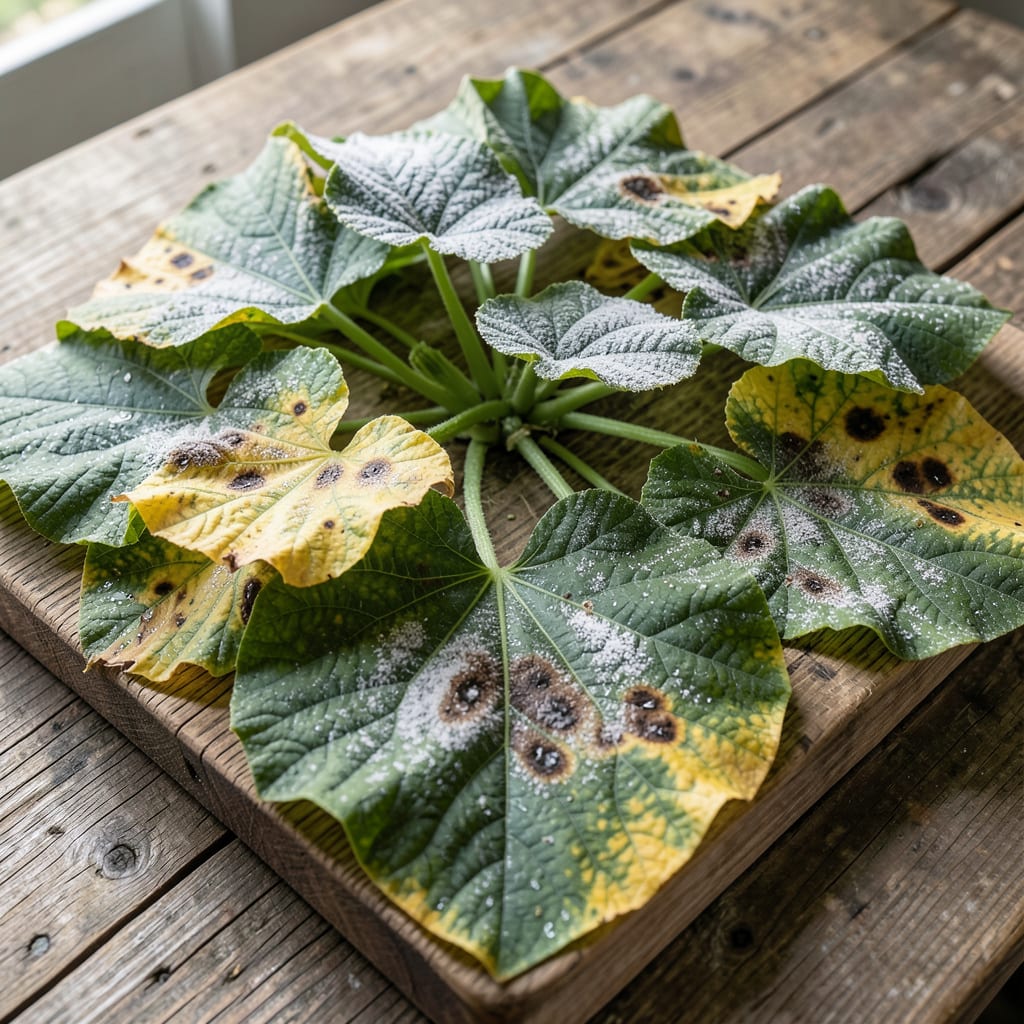
Yellow spots on your squash leaves mean trouble. I’ve lost entire crops to powdery mildew and downy mildew before learning to catch these early.
White powder, yellow patches, or brown edges each tell a different story about what’s attacking your plants. Most issues spread fast in warm, humid conditions, but simple changes can stop them in their tracks.
You’ll save weeks of growth by acting at the first sign of trouble. Proper spacing, morning watering, and removing affected leaves work wonders for most common problems.
This guide helps you identify the exact issue and fix it before it ruins your harvest. No fancy equipment needed.
Squash plants are vulnerable to a range of leaf diseases, often triggered by environmental, biological, or cultural factors. Understanding the root causes helps you prevent and manage issues before they spread. Below are the most common culprits behind squash leaf problems.
Fungi like powdery mildew, downy mildew, and alternaria leaf blight thrive in humid, wet conditions. These pathogens spread via spores, which germinate on leaf surfaces when moisture lingers. Poor air circulation, overhead watering, and crowded plantings create the perfect breeding ground. Fungal diseases often appear as white, gray, or brown spots, often with a fuzzy or powdery texture.
Bacteria such as Pseudomonas syringae (angular leaf spot) and Xanthomonas campestris (bacterial leaf spot) enter plants through wounds or stomata, especially during rainy or overly wet weather. They multiply rapidly in warm, moist environments, causing water-soaked lesions, yellowing, or leaf dieback. Contaminated tools, splashing water, or infected seed can introduce these bacteria to your garden.
Insects like aphids, cucumber beetles, and squash bugs don’t just feed on leaves—they also spread viruses (e.g., cucumber mosaic virus) and create entry points for secondary infections. Their feeding damage weakens plants, making them more susceptible to disease. Look for stippling, holes, or sticky residue (honeydew) as signs of pest activity.
Extreme heat, drought, or nutrient deficiencies (e.g., magnesium or nitrogen lack) can stress squash plants, reducing their natural defenses. Stress manifests as yellowing (chlorosis), leaf curl, or scorched edges. Over- or under-watering also disrupts root health, leading to poor nutrient uptake and increased disease vulnerability.
Pathogens like Fusarium and Verticillium wilt fungi persist in soil and infect roots, blocking water and nutrient flow. Infected plants often show wilting, yellowing, and vascular discoloration. Crop rotation and resistant varieties are key to managing these persistent threats.
Tackling squash plant leaf diseases early can save your harvest. Below are targeted fixes for common issues, plus tips to keep problems at bay. Act fast—the sooner you treat, the better your chances! 🌱✨
Mix 1 tablespoon baking soda, 1 teaspoon dish soap, and 1 gallon of water. Spray affected leaves thoroughly every 5–7 days until the white powder disappears. Prevention tip: 💡 Space plants 2–3 feet apart for better airflow and water at the base to keep leaves dry.
Apply a copper-based fungicide (follow label instructions) at the first sign of yellow spots or fuzzy growth on leaf undersides. Remove and destroy severely infected leaves to stop the spread. Prevention tip: 🌡️ Avoid overhead watering and plant resistant varieties like ‘Jupiter’ or ‘Magical.’
Spray neem oil (mix 2 tbsp per gallon of water) on leaves to deter beetles and disrupt their lifecycle. For organic control, use floating row covers early in the season. Prevention tip: ✨ Rotate crops yearly and remove plant debris after harvest to break the beetle’s cycle.
Prune all spotted leaves and apply a biofungicide (like Bacillus subtilis). Disinfect pruners with rubbing alcohol between cuts. Prevention tip: 🎯 Mulch with straw to prevent soil-borne spores from splashing onto leaves.
Let the top inch of soil dry out between waterings. If roots are soggy, improve drainage by amending soil with compost or creating raised beds. Prevention tip: ⏰ Water in the morning so leaves dry quickly in the sun.
Consistency is key—inspect leaves weekly and treat at the first sign of trouble. Healthy squash plants reward you with a bountiful harvest! 🥬🌿
Look for white, powdery spots on the upper surfaces of leaves. These patches spread quickly and can cover entire leaves if untreated.
This often signals nutrient deficiency or bacterial leaf spot. Check soil moisture and test for missing nutrients like nitrogen or magnesium.
If caught early, prune affected leaves and improve drainage. For fungal wilts like Fusarium, remove the plant to prevent spreading.
Space plants 2-3 feet apart, water at the base in the morning, and remove debris. Crop rotation also helps break disease cycles.
