
Beautiful Plants For Your Interior
Beautiful Plants For Your Interior
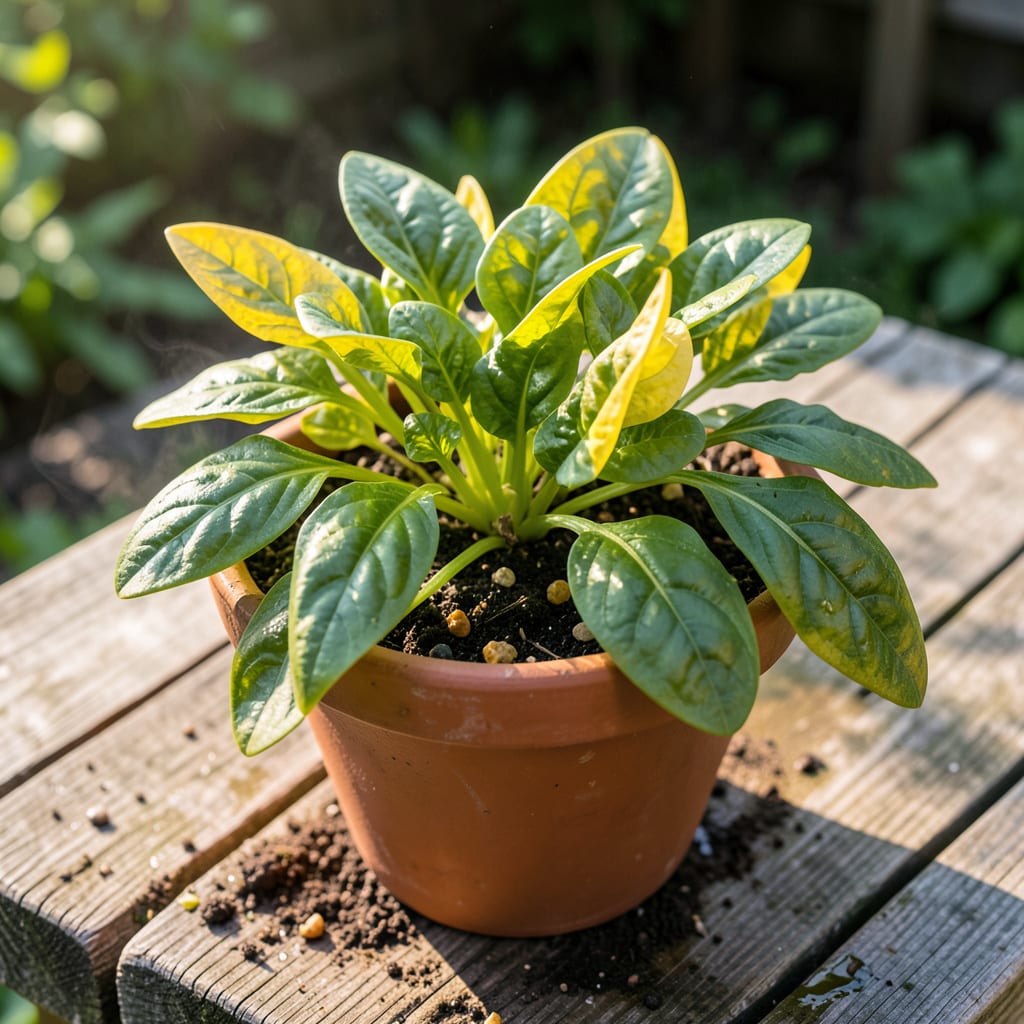
Yellow spinach leaves hit different when it’s your own patch. I’ve watched healthy plants turn sickly overnight, and the fix is always simpler than you think.
Most cases come down to 3 things: too much water, not enough nitrogen, or soil that’s too acidic. The pattern tells you which one—yellow at the bottom means water, yellow at the top means food, and all-over yellow means your soil needs balancing.
Catching it early means saving the harvest. A pH test strip and a quick soil squeeze reveal everything. Adjust one variable at a time and watch the leaves bounce back within 7-10 days.
Works for container spinach too. The same rules apply, just on a smaller scale.
When your spinach leaves turn yellow, it’s often a sign of stress from environmental or cultural factors. Below are the most common causes, explained with actionable insights.
Spinach thrives in nitrogen-rich soil. A lack of nitrogen often causes uniform yellowing, starting with older leaves. Similarly, deficiencies in magnesium or iron can lead to interveinal chlorosis (yellowing between leaf veins). Test your soil and amend with a balanced fertilizer or compost to restore nutrients.
Too much water suffocates the roots, reducing oxygen uptake and leading to yellow, wilted leaves. Spinach prefers moist but well-drained soil. If your soil is waterlogged, improve drainage by adding organic matter like perlite or sand. Water only when the top inch of soil feels dry.
Extreme temperatures—either too hot or too cold—can stress spinach, causing leaves to yellow. Spinach grows best in cool weather (50–70°F). If temperatures soar, provide shade cloth. For cold stress, use row covers to protect plants from frost.
Fungal diseases like downy mildew or bacterial leaf spot can cause yellow spots or patches. These often appear as irregular yellowing with dark edges. Improve air circulation, avoid overhead watering, and apply copper-based fungicides if needed.
Sap-sucking pests like aphids or spider mites drain nutrients from leaves, leading to yellowing. Inspect the undersides of leaves and treat with insecticidal soap or neem oil if pests are present.
When your spinach leaves turn yellow, quick action can save your crop. Below are targeted fixes for the most common causes, along with prevention tips to keep your plants thriving.
Fix: Reduce watering frequency and ensure your soil drains well. If the soil feels soggy, hold off on watering until the top inch is dry. For potted spinach, check that drainage holes aren’t clogged. Transplant waterlogged plants into fresh, well-draining soil if root rot is suspected.
Prevention: Use raised beds or containers with drainage holes. Mix in compost or perlite to improve soil structure. Water deeply but less often—spinach prefers consistent moisture, not a swamp.
Fix: Yellowing between leaf veins often signals iron or nitrogen deficiency. Apply a balanced, water-soluble fertilizer (10-10-10) or a nitrogen-rich amendment like blood meal. For iron, use chelated iron spray or work iron sulfate into the soil. Test your soil pH—spinach prefers 6.5–7.0. If it’s too alkaline, add sulfur to lower it.
Prevention: Enrich soil with compost before planting. Rotate crops annually to avoid depleting nutrients. Use slow-release fertilizers for steady feeding.
Fix: If leaves yellow due to heat stress, provide afternoon shade with row covers or taller plants. For cold damage, protect spinach with mulch or frost cloth. Ensure plants get 4–6 hours of sunlight daily but aren’t baking in extreme heat.
Prevention: Plant spinach in early spring or fall to avoid temperature extremes. Choose heat-tolerant varieties like Bloomsdale Long Standing for warmer climates.
Fix: Inspect leaves for aphids or whiteflies—blast them off with water or use insecticidal soap. For fungal issues (e.g., downy mildew), remove infected leaves and apply copper fungicide. Rotate crops to break disease cycles.
Prevention: Space plants 4–6 inches apart for airflow. Avoid overhead watering to reduce fungal spores. Encourage beneficial insects like ladybugs with companion plants like marigolds.
💡 Pro tip: Yellow lower leaves may be natural aging—trim them to redirect energy to new growth!
Yes, too much water suffocates roots and reduces oxygen uptake. Spinach prefers moist but well-drained soil. Water only when the top inch feels dry.
Uniform yellowing often means nitrogen deficiency. Yellowing between veins suggests iron or magnesium. Test soil and amend with compost or balanced fertilizer.
Once leaves turn yellow, they won’t recover. Focus on fixing the underlying issue to prevent new leaves from yellowing. Trim affected leaves to redirect energy.
Aphids and spider mites drain nutrients, causing yellow spots. Inspect leaf undersides and treat with insecticidal soap or neem oil if found.
