
Beautiful Plants For Your Interior
Beautiful Plants For Your Interior
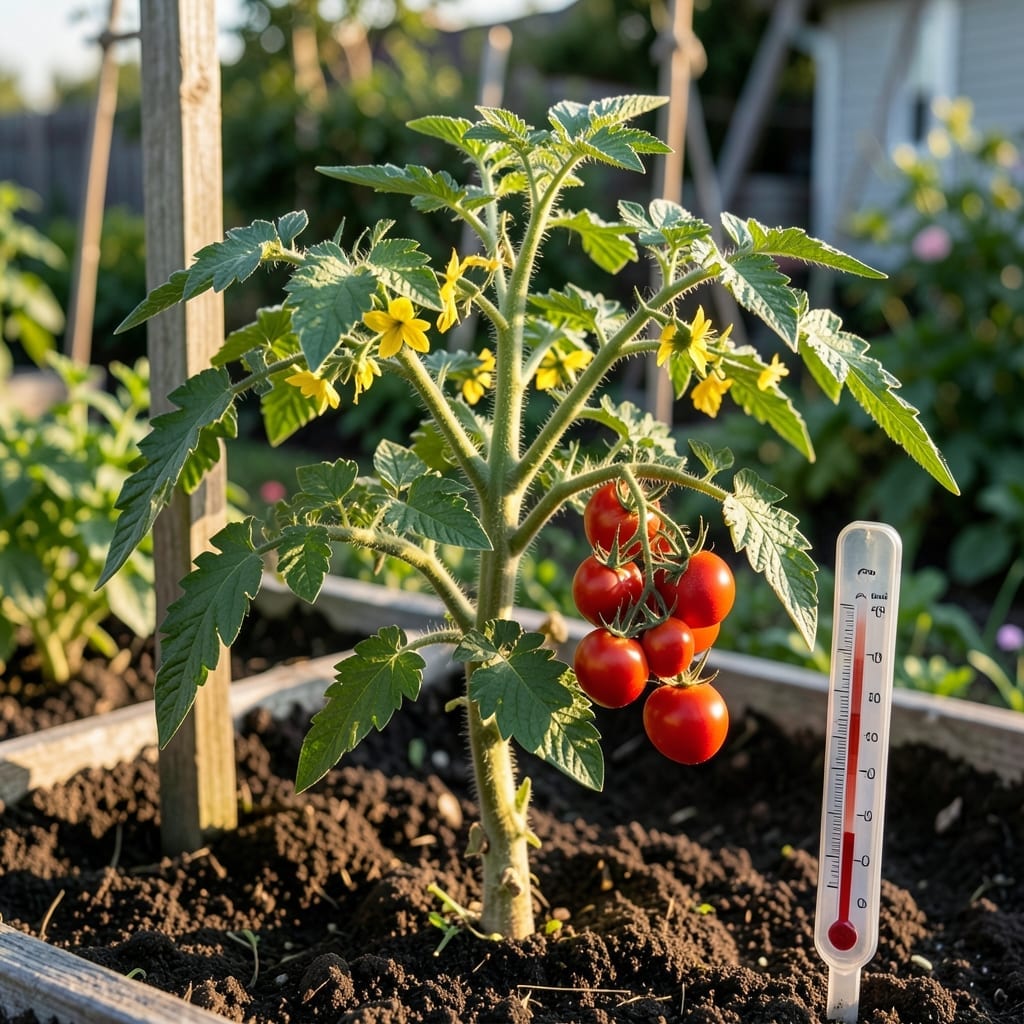
Tomato seedlings demand precision, and soil temperature is the most overlooked factor that can make or break your harvest. Get it right, and you’ll see faster germination and stronger roots.
I’ve learned through trial and error that even 60°F can be the difference between thriving 🍅 plants and a lackluster crop. It’s not just about warmth—it’s about consistency.
Let me show you exactly how to measure, adjust, and maintain the perfect soil conditions for your tomatoes this season. Your garden will thank you.
Getting soil temperature right is critical for tomato success. Too cold, and seeds won’t sprout. Too hot, and roots struggle to absorb nutrients.
I’ve seen germination fail at 50°F and thrive at 75°F. The difference is night and day for your plants.
| Growth Stage | Ideal Soil Temp | Why It Matters |
|---|---|---|
| Seed Germination | 70-85°F | Speeds up sprouting, prevents rot |
| Root Development | 60-70°F | Encourages strong root growth |
| Mature Growth | 55-85°F | Balances nutrient uptake, fruit set |
For seed germination, aim for 70-85°F. This range ensures quick sprouting within 5-10 days and minimizes disease risk.
Once seeds sprout, 60-70°F keeps roots growing strong. Cooler temps slow development, while warmer soils push top growth too fast.
At maturity, tomatoes tolerate 55-85°F, but 70-80°F is the sweet spot for fruit production. Above 90°F, pollen fails, and blossoms drop.
In my garden, I use a soil thermometer at 2-inch depth to check conditions. Morning readings are most accurate after cool nights.
If your soil is too cold, try black plastic mulch to absorb heat. In hot climates, shade cloth protects roots from overheating.
Consistency is key—fluctuations stress plants. A 20°F swing between day and night can stunt growth.
Remember, air temperature isn’t the same as soil temperature. Even on 70°F days, soil may lag behind by 10-15°F. 🌱
Measuring soil temperature for tomatoes is simpler than you think. I always use a soil thermometer pushed 2-3 inches deep for the most accurate reading.
Check temperatures in the morning after cool nights, as this gives the lowest point your plants will experience. Consistency is what matters most for healthy growth.
If your soil is too cold, black plastic mulch works wonders by absorbing solar heat. I’ve seen it raise temps by 5-10°F in just a few days.
For hot climates, shade cloth or straw mulch keeps roots cool. A 2-3 inch layer of mulch can lower soil temps by 10°F.
Never assume air temperature matches soil. I’ve measured 60°F air with only 50°F soil—a critical difference for tomato germination.
Remember, quick fixes like hot water or heat lamps often do more harm than good. Stick to natural methods for lasting results. 🌡️