
Beautiful Plants For Your Interior
Beautiful Plants For Your Interior
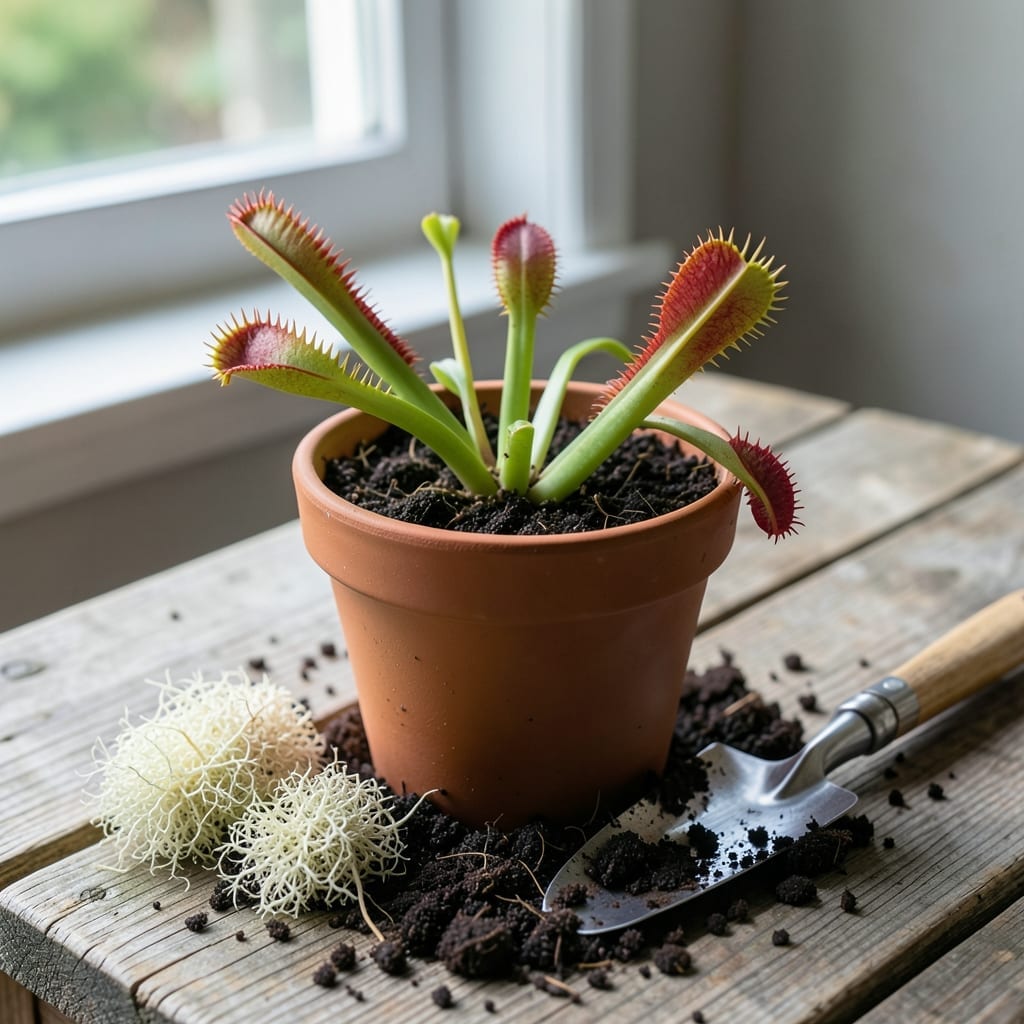
You’ve brought home a Venus Fly Trap 🪰, eager to watch its dramatic snap—but the wrong soil could spell doom for this carnivorous wonder. Most standard potting mixes pack too many nutrients, suffocating its delicate roots.
I learned the hard way that mimicking its native bog environment is the key to success. These plants thrive in acidic, nutrient-poor soil that stays consistently moist without waterlogging.
Discover how to create the perfect mix using sphagnum moss or peat, and keep your Venus Fly Trap healthy, happy, and ready to hunt.
Creating the perfect soil for a Venus Fly Trap starts with understanding its native habitat. These carnivorous plants thrive in acidic, nutrient-poor bogs, where the soil is consistently moist but never waterlogged. Standard potting soil simply won’t cut it.
I’ve found that a mix of peat moss and perlite works wonders. Peat moss provides the necessary acidity, while perlite ensures proper drainage to prevent root rot.
| Component | Ratio | Purpose |
| Peat Moss | 50-60% | Acidity & moisture retention |
| Perlite | 30-40% | Drainage & aeration |
| Sand | 0-10% | Optional texture improvement |
For best results, I use sphagnum moss as an alternative to peat moss. It’s equally acidic and holds moisture well. Just ensure it’s unfertilized and free of additives that could harm your plant.
Venus Fly Traps are sensitive to minerals in tap water. Always use distilled, rainwater, or reverse osmosis water to keep the soil’s pH between 3.5 and 4.5. This acidity level mimics their natural bog environment.
If you’re in a humid climate, you might reduce the perlite slightly and add a bit more sphagnum moss. In dry climates, increase perlite to improve drainage and prevent the soil from staying too soggy.
Never use compost or fertilizer in your mix. These add nutrients that can burn your plant’s roots. Venus Fly Traps evolved to grow in nutrient-poor conditions, getting their nourishment from insects instead.
I also recommend using plastic or glazed pots rather than terracotta. Terracotta can leach minerals into the soil over time, which can be harmful to your Venus Fly Trap.
Repot your Venus Fly Trap every 1-2 years to refresh the soil. Over time, the peat moss breaks down and loses its acidity, which can stress your plant.
With the right soil mix, your Venus Fly Trap will thrive, growing strong and ready to snap up its next meal 🪴
Even experienced gardeners make critical errors with Venus Flytrap soil. Using regular potting soil is the most common mistake—it’s too nutrient-rich and can burn your plant’s roots within weeks.
Another frequent issue is tap water. The minerals in municipal water can raise soil pH and harm your plant over time. Always use distilled or rainwater to maintain the acidic environment these plants need.
⚠️ Warning: Soil Pitfalls
Using fertilizer or compost in your Venus Flytrap soil can kill your plant. These additions introduce nutrients that carnivorous plants cannot process, leading to root burn and stunted growth.
I’ve seen many gardeners struggle with incorrect pH levels. Venus Flytraps need soil pH between 3.5 and 4.5. Test your mix with a soil pH meter to ensure it’s in the right range.
Choosing the wrong container can also cause problems. Terracotta pots can leach minerals into the soil. Stick to plastic or glazed ceramic to keep your soil mix pure and your plant healthy.
Overwatering is another issue. While Venus Flytraps love moist soil, they shouldn’t sit in standing water. Ensure your pot has drainage holes to prevent root rot.
Finally, avoid reusing old soil. Over time, peat moss breaks down and loses its acidity. Refresh your Venus Flytrap’s soil every 1-2 years to keep it in optimal condition.
By steering clear of these mistakes, your Venus Flytrap will have the perfect foundation to grow strong and snap happily 🪴