
Beautiful Plants For Your Interior
Beautiful Plants For Your Interior
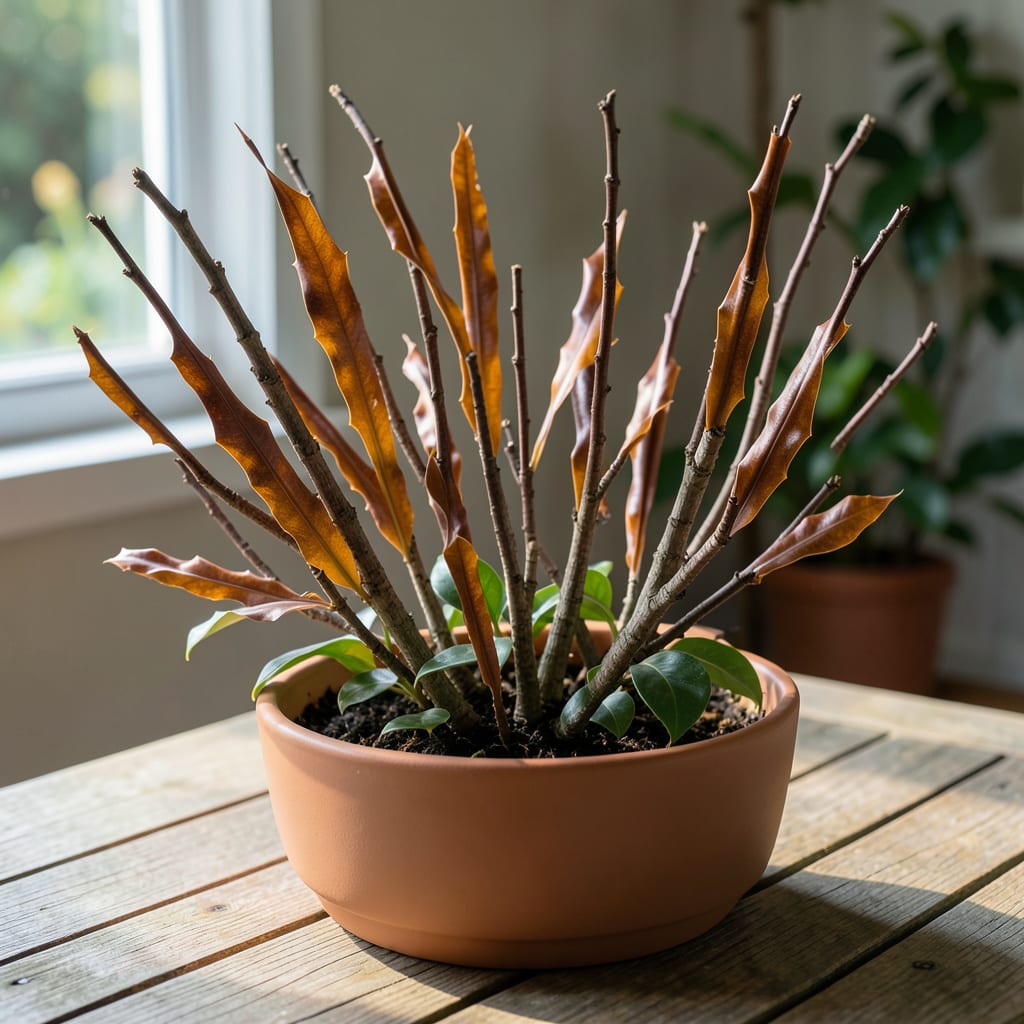
That sinking feeling when your sky pencil holly starts browning is real. I’ve watched mine go from vibrant green to crispy in weeks, and it always points to one of a few fixable issues.
Usually, it’s water stress—either too much or too little—or environmental shock from sudden temperature swings. Sometimes pests or disease sneak in, but the patterns tell the story if you know where to look.
With the right adjustments, you can stop the browning and nurse your holly back to health. I’ve revived mine more times than I can count, and the comeback is always satisfying.
Let’s figure out what your plant is trying to tell you and how to set it right.
Sky Pencil Holly (Ilex crenata) is a hardy evergreen, but browning foliage signals stress. Below are the most common causes, each with clear explanations and actionable insights.
Extreme temperatures, especially late frost or winter desiccation, can scorch the leaves. Cold winds strip moisture faster than the roots can absorb it, leading to brown, crisp edges. Drought stress in summer also triggers similar symptoms when soil moisture drops below the plant’s needs.
Both overwatering and underwatering disrupt nutrient uptake. Soggy roots suffocate, turning foliage yellow-brown, while dry soil causes uniform browning from the tips inward. Sky Pencil Holly prefers consistent moisture—neither waterlogged nor parched.
Spider mites and scale insects are frequent culprits. These pests pierce leaf cells to feed, causing stippling, yellowing, or bronzing. Severe infestations lead to widespread browning. Check leaf undersides for webbing (mites) or waxy bumps (scale).
Phytophthora root rot and leaf spot fungi thrive in wet conditions. Root rot starves the plant of water, turning leaves brown and brittle. Leaf spot diseases create irregular brown patches, often with dark margins. Improve drainage and avoid overhead watering to prevent spread.
A lack of iron or magnesium can cause interveinal chlorosis (yellowing between veins) that progresses to browning. Poor soil pH (above 6.5) locks out these nutrients. Test soil and amend with sulfur or chelated iron if needed.
If your sky pencil holly is turning brown, don’t panic—there are clear fixes for each cause. Below are targeted solutions, paired with prevention tips to keep your plant thriving.
Give your holly a slow, deep soak at the base (1–2 inches of water per week). Use a moisture meter to check soil depth—dryness below 2 inches means it’s time to water. Prevention: Apply a 2-inch layer of mulch to retain moisture and reduce evaporation.
Stop watering immediately and let the soil dry out. If the plant is in a pot, ensure it has drainage holes. For in-ground plants, amend heavy clay soil with compost or sand. Prevention: Water only when the top 1–2 inches of soil feel dry.
Remove all brown, infected foliage with sterilized pruners and dispose of it (do not compost). Apply a copper-based fungicide as directed. Prevention: Space plants for airflow and avoid overhead watering to keep leaves dry.
For spider mites or scale, spray with neem oil or insecticidal soap every 5–7 days until pests are gone. For severe cases, use a horticultural oil. Prevention: Inspect leaves regularly and encourage beneficial insects like ladybugs.
Move potted plants to a spot with afternoon shade, or use a shade cloth for in-ground holly. New plantings are especially vulnerable—acclimate them gradually. Prevention: Plant in a location with dappled sunlight or morning sun only.
Trim back dead branches in early spring to encourage new growth. Apply an anti-desiccant spray in late fall to reduce moisture loss. Prevention: Wrap young plants in burlap or use a windbreak in exposed areas.
💡 Pro Tip: Always sanitize pruning tools with rubbing alcohol between cuts to prevent spreading disease!
Once holly leaves turn brown, they won’t recover. Remove them to redirect energy to healthy growth. Focus on fixing the underlying issue to prevent further damage.
Water deeply once a week, providing 1-2 inches of water. Adjust based on weather—more in extreme heat, less in cool seasons. Always check soil moisture first.
Often not! Prune dead branches in early spring. Healthy plants typically rebound with new growth once temperatures warm. Protect young plants with burlap wraps.
Inspect leaf undersides with a magnifying glass. Look for webbing (mites) or waxy bumps (scale). Treat immediately with neem oil if found.
