
Beautiful Plants For Your Interior
Beautiful Plants For Your Interior
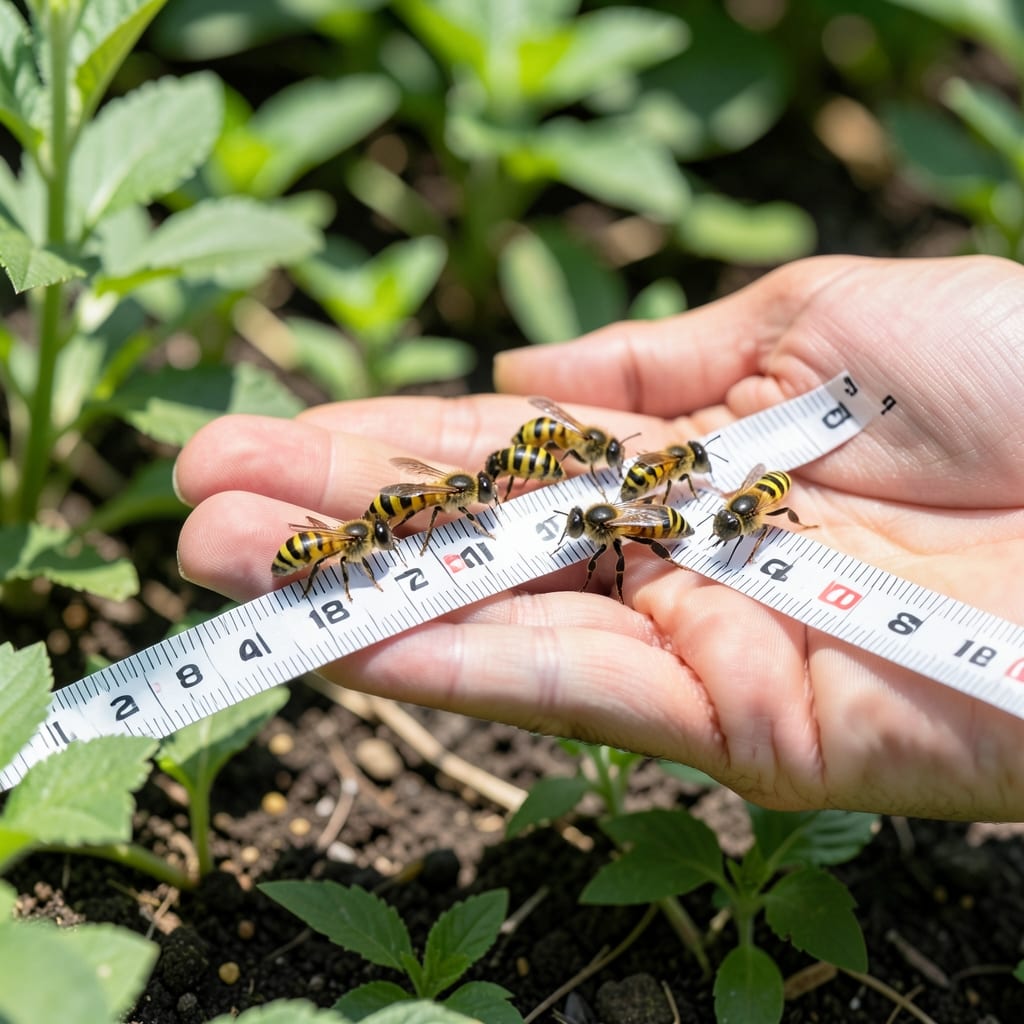
Adult yellow jackets typically measure 3/8 to 5/8 inch long, with workers being smaller than queens, which can reach up to 3/4 inch. Their slim, segmented bodies have bright yellow and black banding.
What stands out about these insects is their size hierarchy within colonies—queens are noticeably larger to accommodate egg production. 🔥 I’ve observed that their distinct banding patterns make them easy to spot, even at a distance. The compact build allows them to navigate tight spaces, which is why they often build nests in hidden areas like wall voids or underground burrows.
💡 In This Article
The size differences among yellow jackets stem from their colonial hierarchy. Queens grow largest, often reaching 3/4 inch, as their primary role is reproduction. This extra size accommodates their developed ovaries, which can produce thousands of eggs. Workers, at 3/8 to 5/8 inch, are smaller but more numerous, designed for foraging and nest defense. 🔥
Males, or drones, fall between workers and queens in size, typically measuring 1/2 to 5/8 inch. Their sole purpose is mating, so their bodies are streamlined for flight. The Eastern yellow jacket, Vespula maculifrons, tends to be on the larger end of these ranges, while the German yellow jacket, Vespula germanica, often runs slightly smaller.
These variations help entomologists distinguish species in the field.
Size also influences behavior. Larger queens can overwinter more successfully due to stored fat reserves, while the compact build of workers allows them to squeeze into tight spaces. This adaptability is why you often find nests in wall voids or underground cavities. The segmented bodies, though slender, are incredibly strong for their size.
Interestingly, environmental factors play a role too. Queens that emerge in early spring often grow larger due to abundant food resources. In contrast, late-season workers may be smaller if food is scarce. This size flexibility ensures colony survival across varying conditions. ✨
For comparison, yellow jackets are generally smaller than hornets but larger than many bee species. A queen hornet can reach 1.5 inches, while honey bees max out around 5/8 inch. This size difference is a key identifier when observing these insects in your garden or home.
Queens are noticeably larger, measuring up to 3/4 inch, while workers range from 3/8 to 5/8 inch. This size difference supports their role in reproduction and colony survival.
Males, or drones, measure 1/2 to 5/8 inch and have a streamlined build for mating flights. Their smaller size is an adaptation for agility rather than egg production.
Yes! Early spring queens often grow larger due to abundant food, while late-season workers may be smaller if resources are scarce.
Yellow jackets are slimmer and more compact, at 3/8 to 5/8 inch, while bees are stockier. Hornets are significantly larger, often exceeding 1 inch.