
Beautiful Plants For Your Interior
Beautiful Plants For Your Interior
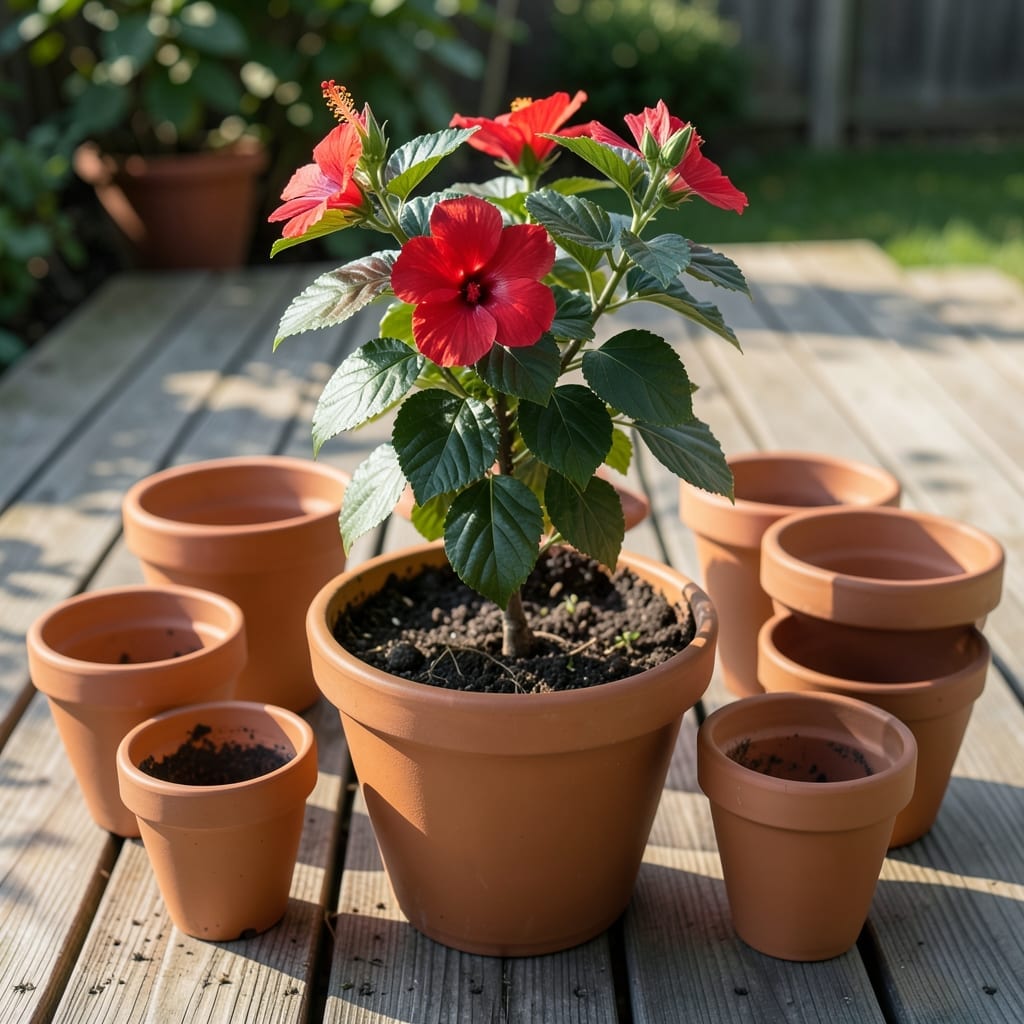
Choosing the right pot size for your Hibiscus 🌺 can mean the difference between a struggling plant and one that thrives with vibrant blooms. Those roots need room to grow, but too much space can actually harm your plant.
I’ve seen firsthand how the wrong container leads to overwatering or stunted growth. The perfect balance exists, and it’s simpler to find than you might think.
Let me walk you through exactly what size will give your Hibiscus the best chance to flourish, whether it’s just starting out or already established.


Getting the pot size right for your Hibiscus is crucial at every stage of growth. From tiny seedlings to mature plants, each phase has unique needs that directly impact root development and overall health.
I always start my Hibiscus seedlings in small containers to prevent overwatering. As they grow, I gradually increase the pot size to match their expanding root systems and encourage strong, healthy plants.
| Growth Stage | Pot Diameter | Pot Depth | Reasoning |
| Seedlings | 4-6 inches | 4-6 inches | Prevents overwatering and root rot |
| Young Plants | 8-10 inches | 8-10 inches | Allows root expansion and stability |
| Mature Hibiscus | 14-20 inches | 12-16 inches | Supports full growth and flowering |
| Repotting | 2-4 inches larger | Same increase | Encourages continued growth without shock |
For seedlings, a 4-6 inch pot works perfectly. This size prevents soil from staying too wet, which can cause root rot in young plants that don’t drink much water yet.
Once your Hibiscus reaches the young plant stage, move it to an 8-10 inch container. This gives the roots room to stretch while keeping the plant stable as it grows taller.
When your Hibiscus matures, it needs a 14-20 inch diameter pot with 12-16 inch depth. This larger space accommodates the extensive root system and supports abundant blooming.
If you notice roots circling the bottom or poking through drainage holes, it’s time to repot. Choose a container that’s only 2-4 inches larger in diameter to avoid overwhelming the plant.
Remember that drainage holes are non-negotiable. Even the perfect-sized pot won’t save your Hibiscus if water pools at the bottom and suffocates the roots.
I’ve found that plastic pots retain moisture longer, which can be great in hot climates but risky in cooler areas. Always match your pot material to your environment and watering habits.
For dwarf varieties, you can size down slightly, but don’t go smaller than 10 inches for mature plants. They still need room to thrive and produce those gorgeous blooms we all love 🌺
Your Hibiscus will tell you when it’s outgrown its home. I check mine regularly for these telltale signs that it’s time to size up their container.
The most obvious clue is seeing roots circling the bottom of the pot or poking through the drainage holes. This means your plant is root-bound and desperate for more space.
🌱 Key Indicators Your Hibiscus Needs Repotting
If your Hibiscus grows slowly despite proper light, water, and fertilizer, it might be root-bound. The roots have no room to expand, which stunts the entire plant.
Yellowing leaves can indicate many issues, but when combined with other signs, it often means the plant needs more space. I’ve rescued many Hibiscus plants by repotting at this stage.
When water drains too quickly through the pot, it’s usually because the roots have taken up most of the space, leaving little room for soil to hold moisture.
A top-heavy Hibiscus that keeps tipping over is begging for a larger, more stable home. This is especially common with the larger tropical varieties that can grow quite tall.
Remember that prevention is key. I recommend checking your Hibiscus roots every spring and upgrading the pot size before these signs appear 🌺