
Beautiful Plants For Your Interior
Beautiful Plants For Your Interior
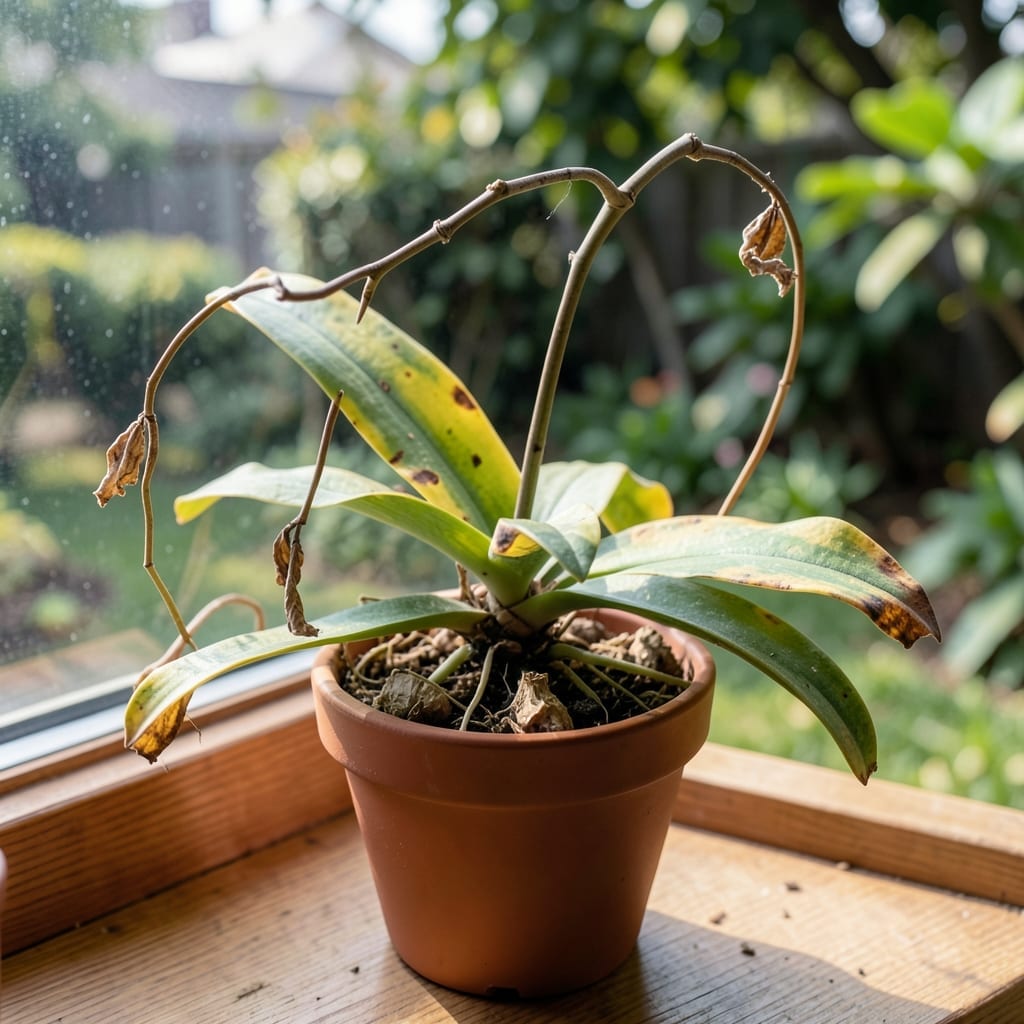
Shriveled orchid leaves hit different—they’re your plant’s SOS signal. I’ve seen this happen with both new and established orchids, and the fix always starts with proper diagnosis.
The usual suspects are underwatering, overwatering, or environmental stress. Roots drowning in soggy medium or gasping in bone-dry bark both lead to the same sad, wrinkled leaves.
Once you pinpoint the issue, recovery is often simpler than you’d expect. Adjust your watering routine, check for pests, or move your orchid to better light and humidity.
With the right approach, those leaves can plump back up within a week or two. The key is acting fast and staying consistent with care.
Understanding why your orchid’s leaves shrivel is the first step to reviving its health. Below are the most common causes, explained with actionable insights.
Orchids are sensitive to water extremes. Underwatering leads to dehydration, causing leaves to lose turgor pressure and wrinkle. Conversely, overwatering suffocates roots, blocking nutrient uptake and triggering leaf desiccation. Phalaenopsis orchids, for example, thrive when watered only when the potting mix is nearly dry.
Orchids prefer stable temperatures between 65–80°F (18–27°C). Exposure to cold drafts (<50°F/10°C) or heat sources (>90°F/32°C) disrupts cellular hydration. Sudden temperature swings can also shock the plant, leading to rapid moisture loss in leaves.
While orchids need bright, indirect light, direct sunlight (especially midday) can scorch leaves, causing them to shrivel and turn yellow. Symptoms often appear as sunburnt patches. Move your orchid to a shaded east- or north-facing window for optimal light.
Native to tropical climates, orchids require 40–70% humidity. Dry indoor air (common in winter) accelerates transpiration, leaving leaves parched. Use a humidity tray or room humidifier to maintain ideal moisture levels.
Soggy potting media or lack of drainage holes promotes root rot, a fungal or bacterial infection that destroys root function. Without healthy roots, the plant can’t absorb water, leading to shriveled foliage. Repot in fresh, airy mix (e.g., bark or sphagnum moss) if roots appear mushy or black.
Orchids are resilient, and with the right adjustments, you can restore their lush, healthy leaves. Below are targeted fixes for common causes of shriveling.
If dryness is the culprit, soak the orchid’s pot in room-temperature water for 10–15 minutes to rehydrate the roots. Let excess water drain completely to avoid rot. Prevention tip: 💡 Water when the top inch of the potting mix feels dry—usually every 7–10 days.
Trim any black, mushy roots with sterilized scissors, then repot the orchid in fresh, chunky bark mix for better airflow. Reduce watering frequency and ensure the pot has drainage holes. Prevention tip: ✨ Use a clear pot to monitor root health and moisture levels easily.
Move the orchid to a spot with bright, indirect light, like an east-facing window. If leaves are severely sunburned (brown patches), trim the damaged areas. Prevention tip: 🌡️ Avoid direct midday sun, which can scorch leaves quickly.
Place the orchid on a pebble tray filled with water or use a humidifier to maintain 40–70% humidity. Grouping plants together also helps. Prevention tip: 💧 Mist the leaves lightly in the morning, but avoid soaking them to prevent fungal issues.
Use a balanced orchid fertilizer (20-20-20) diluted to half strength, applied every 2–4 weeks during active growth. Flush the mix with water monthly to prevent salt buildup. Prevention tip: 🎯 Feed lightly but regularly—orchids prefer weak solutions over strong ones.
Water when the top 1 inch of potting mix feels dry, typically every 7-10 days. Soak for 10-15 minutes, then let excess drain completely.
Yes, orchids need 40-70% humidity. Dry air accelerates moisture loss. Use a pebble tray or humidifier to maintain proper levels.
Trim black, mushy roots with sterilized scissors and repot in fresh bark mix. Reduce watering and ensure the pot has drainage holes.
Yes, direct midday sun can scorch leaves. Move to bright, indirect light like an east-facing window. Trim sunburnt patches if needed.