
Beautiful Plants For Your Interior
Beautiful Plants For Your Interior
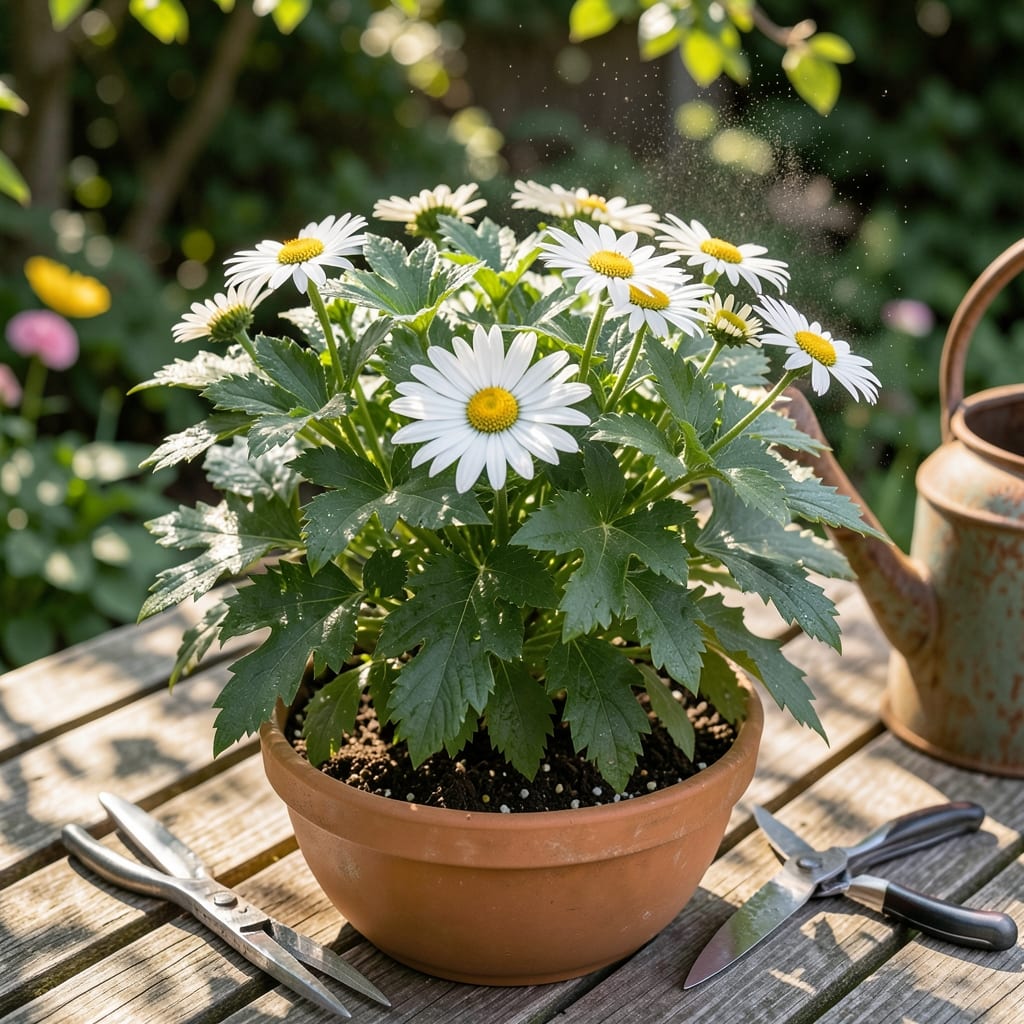
Shasta daisy leaves have that classic jagged look with deep serrations along the edges. They’re dark green, slightly rough to the touch, and grow in a low clump at the base of the plant.
If yours look different—yellowing, spotted, or misshapen—it’s usually too much water, not enough sun, or a fungus. The fix is often simpler than you think.
📚 In This Guide
Short list of supplies to diagnose and fix daisy leaf issues at home.
| Ingredient | Amount | Notes |
|---|---|---|
| Shasta Daisy Plants 🌼 | 1 plant | Healthy established specimens |
| Well-Draining Soil 🌾 | 2 gallons | Loamy garden mix preferred |
| Pruning Shears ✂️ | 1 piece | Sharp sterilized blades |
| Watering Can 💧 | 1 piece | With adjustable nozzle |
| Fungicide Spray 🧪 | 1 piece | Copper-based for leaf spot |
| Garden Gloves 🧤 | 1 piece | Breathable fabric recommended |
| Sunlight Access ☀️ | 6 hours | Full sun minimum daily |
| Mulch 🪵 | 1 gallon | Organic bark or straw |
[recipe_ingredient_scaler]
Local nurseries carry healthy Shasta daisies with the classic serrated leaves—the big-box stores often stock stressed plants. Look for deep green foliage without yellowing. Home Depot and Lowe’s usually have both the plants and well-draining soil in stock (the good stuff, not the bagged-up dirt from a sale).
No fungicide? Neem oil works as a natural alternative for leaf spot. If your soil is heavy clay, mix in perlite or sand for better drainage (trust me on the perlite). Watering cans with adjustable nozzles help target the soil, not the leaves—prevents fungal issues.
Store fungicide in a cool dry place—it lasts 2-3 years. Pruning shears stay sharp longer if wiped clean after use. I keep extra mulch sealed in a bag for mid-season touch-ups.
Here’s how to spot those distinctive jagged leaves and keep your plant thriving with proper care.
Shasta daisy leaves have a very distinct appearance with deep, irregular serrated edges that look like jagged teeth. The leaves are typically 2-4 inches long and 1-2 inches wide, with a dark green color and slightly rough texture.
I always check the lower leaves first—they’re the most developed and show the classic shape best. The upper leaves near the flowers may appear slightly different, often more narrow and less pronounced in their serration.
Use the 2 gallons of well-draining soil to create the ideal growing environment. Shasta daisies prefer loamy soil that doesn’t hold excess water, which can lead to root rot. Dig a hole just deep enough to accommodate the root ball of your 1 plant.
Place it in an area with the 6 hours of sunlight access—these plants thrive in full sun but can tolerate partial shade. Water immediately after planting with the watering can to help settle the soil around the roots.
Spread the 1 gallon of mulch around the base of the plant to retain moisture and suppress weeds. Keep the mulch about 2-3 inches away from the stem to prevent rot. Use the pruning shears to remove any dead or damaged leaves, which helps the plant focus its energy on healthy growth.
If you notice any spots or discoloration on the leaves, it might be a fungal issue. That’s when I reach for the fungicide spray—apply it according to the package instructions, usually every 7-10 days until the problem clears up.
Always wear the garden gloves when handling the plant or soil. This protects your hands from dirt, potential thorns, or any residual chemicals from the fungicide. It also gives you a better grip when using the pruning shears or handling the mulch.
I’ve found that breathable fabric gloves work best—they keep your hands dry while still allowing for dexterity when working with the delicate leaves or when planting new specimens.
If you’re sipping a drink while admiring your shasta daisy leaves look like, a crisp beer can complement the moment beautifully. A light Pilsner like Stella Artois offers a clean, refreshing finish with subtle floral notes that echo the daisy’s charm. For something bolder, try a Wheat Beer such as Blue Moon, where hints of citrus and spice can enhance the earthy vibes of your garden scene.
Wine lovers can enjoy a glass of Sauvignon Blanc, like Kim Crawford, with its zesty lime and herbal undertones that feel right at home next to serrated foliage. For a richer option, a Pinot Grigio such as Santa Margherita brings a crisp, mineral-forward profile that pairs well with the fresh, green essence of shasta daisy leaves.
Prefer to skip the alcohol? A sparkling Elderflower Lemonade from Belenos delivers a floral, citrusy fizz that feels garden-ready. Or, a chilled Hibiscus Iced Tea offers a tart, vibrant sip that mirrors the lively edges of those jagged leaves. Cheers to simple pleasures! 🌼
