
Beautiful Plants For Your Interior
Beautiful Plants For Your Interior
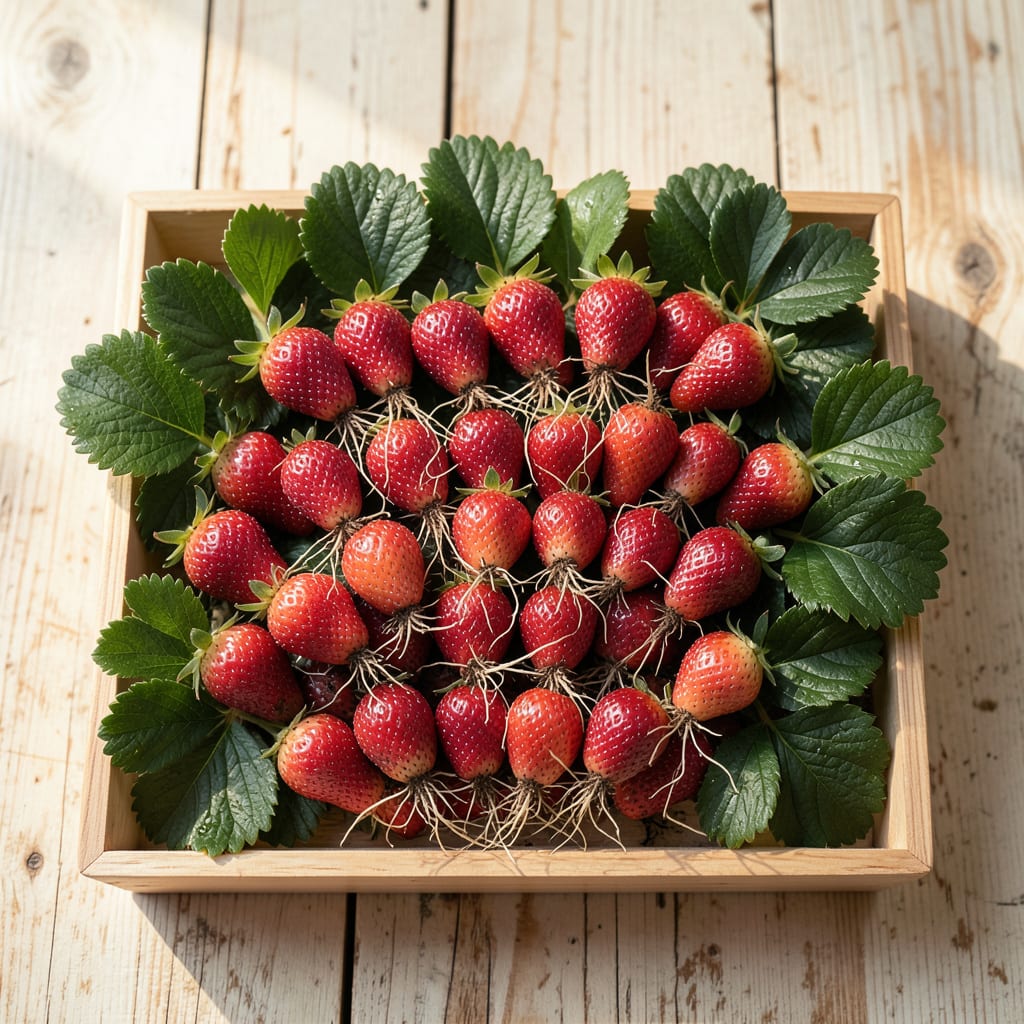
Early spring is the perfect time to plant bare root Sequoia strawberries. I’ve learned that getting them in the ground 6-8 weeks before your last frost gives roots time to establish before the heat hits.
The key is soaking the roots for 1-2 hours before planting and setting the crown just above soil level. These plants reward you with sweet, juicy berries by early summer if you nail the basics.
📚 In This Guide
Here’s the method I use every spring to get robust plants and a bountiful berry crop.
Begin by soaking the bare roots in cool water for 1-2 hours to rehydrate them after storage. I like to use a bucket or large bowl so the roots are fully submerged. This step revives the plants and gives them a strong start before they hit the soil.
While they soak, inspect each root carefully. Trim any broken or overly long roots with clean pruners to about 4-6 inches in length. This encourages healthy new root growth and prevents damage when planting. Discard any roots that look moldy or mushy.
Choose a location with full sun (at least 6-8 hours of direct sunlight daily) and well-draining soil. Strawberries thrive in slightly acidic soil with a pH between 5.5 and 6.5. I always test my soil first and amend with compost if needed.
Dig a hole wide enough to spread the roots out naturally without bending them. The hole should be deep enough so the crown (where the roots meet the stem) sits just above the soil surface. If the crown is buried too deep, it can rot.
Place each plant in the hole, spreading the roots out evenly. Hold the plant in position with one hand while you backfill the hole with soil using the other. Gently firm the soil around the roots to remove air pockets.
Ensure the crown remains ½ inch above the soil line—this prevents rot and encourages strong growth. Water each plant immediately after planting with 1-2 cups of water to settle the soil and hydrate the roots. You’ll see the soil darken as it absorbs the moisture.
Space the plants 12-18 inches apart in rows that are 2-3 feet apart to allow for good air circulation and easy harvesting. I’ve found that strawberries planted too closely are more prone to disease and produce smaller fruit.
Apply a 2-3 inch layer of mulch around each plant to retain moisture, suppress weeds, and keep the berries clean. Straw or pine needles work well. Leave a small gap around the crown to prevent moisture from pooling against the stem.
Water the plants deeply 2-3 times per week for the first 2-3 weeks, keeping the soil consistently moist but not waterlogged. You’ll know it’s time to water when the top 1 inch of soil feels dry to the touch.
Watch for new growth within 2-3 weeks—this is your sign the plants are establishing well. If leaves start to yellow, it’s often a sign of overwatering or poor drainage. Adjust your routine as needed and enjoy the process as your strawberries begin to thrive.
Small adjustments during planting can make a big difference in your harvest.
Soaking Time Matters: Don’t rush the 1-2 hour soak in Step 1. I learned the hard way that skipping this or cutting it short leads to stressed plants that struggle to establish. Fully submerged roots absorb water evenly, giving your strawberries the best possible start.
Sunlight Requirement: The 6-8 hours of daily sun in Step 2 isn’t just a suggestion. Plants in shadier spots produce fewer, smaller berries. If your garden doesn’t get full sun, consider container planting so you can move pots to follow the light throughout the day.
Crown Placement: In Step 3, that ½ inch above soil line rule is non-negotiable. I buried a few crowns too deep my first year and lost half my plants to rot. Use a ruler if you need to—this tiny detail prevents heartbreak later.
Watering Wisdom: During those first 2-3 weeks mentioned in Step 5, resist the urge to water daily unless the top inch of soil is truly dry. Overwatering is the most common mistake I see with new strawberry growers, and it shows up as yellow leaves.
Plant in early spring, as soon as the soil is workable and frost risk has passed. This gives roots time to establish before warm weather.
Set the crown (where roots meet leaves) just above soil level. Planting too deep can cause rot, while too shallow exposes roots.
Yes! Use a pot at least 12 inches deep with drainage holes. Ensure consistent moisture and full sun for best results.
Common causes: insufficient sunlight, over-fertilizing (especially nitrogen), or planting too late in the season. Ensure 6-8 hours of sun daily.
They’re bred for vigor but can still face issues like gray mold. Space plants 12-18 inches apart for airflow and water at the base.
