
Beautiful Plants For Your Interior
Beautiful Plants For Your Interior
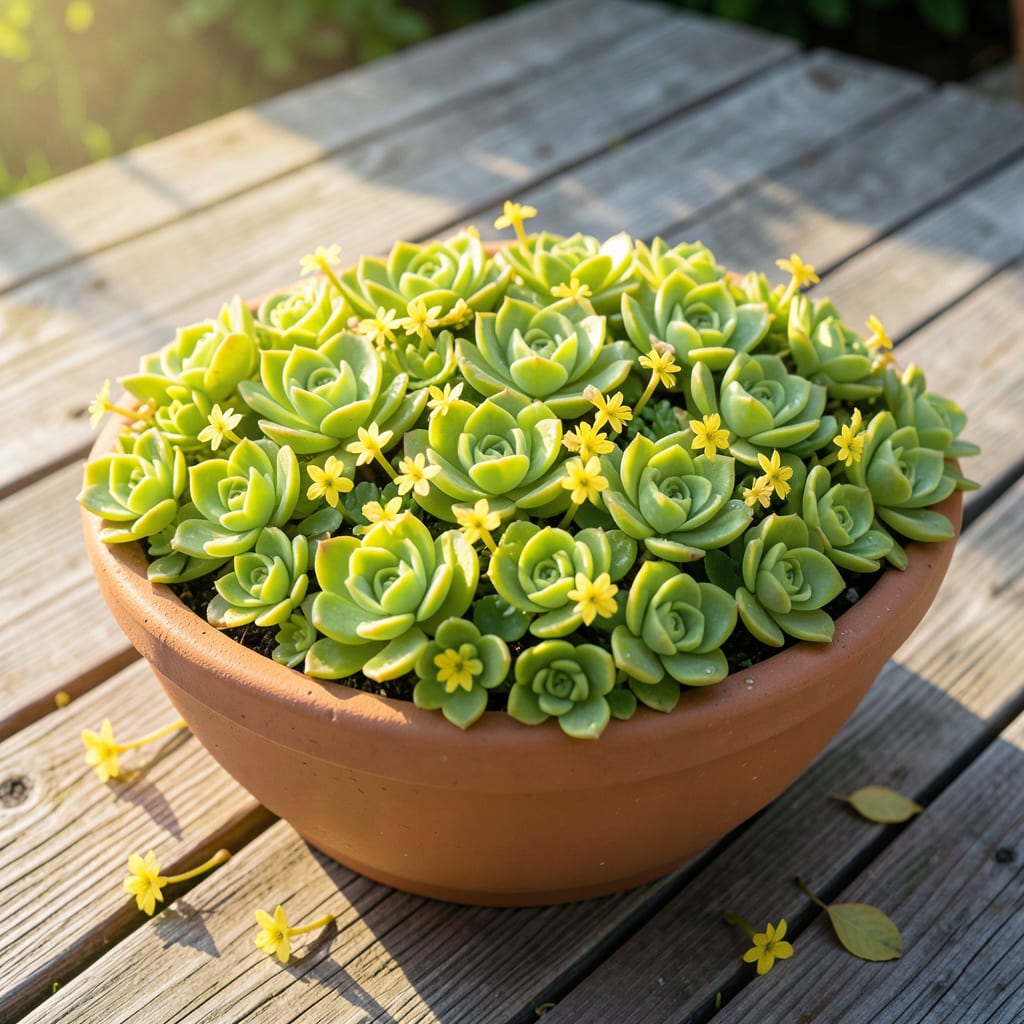
This ground cover changed my garden forever. Sedum ‘Yellow Brick Road’ spreads like a living carpet, its bright foliage glowing even in the toughest conditions.
It thrives on neglect—drought-tolerant, deer-resistant, and happy in poor soil. Plant it once, and it just keeps going, turning empty spaces into vibrant, low-maintenance beauty.
📚 In This Guide
This ground cover thrives with minimal care once established, and here’s how to get it off to the perfect start.
Sedum Yellow Brick Road performs best in full sun to partial shade, though its foliage color is most vibrant with at least 6 hours of direct sunlight daily. I always scout the area first—this plant tolerates poor soil but demands excellent drainage to prevent root rot.
Test your site by digging a 12-inch deep hole and filling it with water. If it drains completely within 2-3 hours, the location is suitable. Sloped areas work particularly well, as they naturally shed excess moisture.
Clear the space of all weeds and debris, then loosen the soil to a depth of 8-10 inches with a garden fork. While this sedum tolerates lean soil, I recommend mixing in 2-3 inches of compost to improve initial establishment without sacrificing its drought tolerance.
Rake the area smooth and level, breaking up any large clumps. This creates uniform contact between the plant’s roots and soil. Avoid adding sand to “improve drainage”—it often compacts and creates the opposite effect in clay soils.
Space plants 12-18 inches apart to allow for their mature spread of 18-24 inches. Dig a hole just deep enough so the plant sits at the same depth as it was in its nursery container. Here’s the thing—planting too deep can smother the crown and lead to stem rot.
Gently remove the plant from its pot and loosen any circling roots before placing it in the hole. Backfill with native soil, pressing lightly to eliminate air pockets. Water thoroughly after planting to settle the soil around the roots.
Water newly planted sedum deeply once a week for the first 4-6 weeks, allowing the soil to dry out between waterings. I check by pushing my finger 1-2 inches into the soil—if it feels dry at that depth, it’s time to water again.
After establishment, this drought-tolerant plant needs supplemental water only during prolonged dry spells. Overwatering is the most common mistake I see—it’s better to underwater than to keep the soil consistently moist, which encourages root rot.
A light application of balanced, slow-release fertilizer in early spring gives plants a boost, but avoid over-fertilizing, which can cause leggy growth and reduce drought tolerance. I use about ½ cup per plant and scratch it lightly into the soil surface.
Trim back the foliage by about one-third in early spring to encourage compact, bushy growth. This also removes any winter damage. The trimmings can be used to propagate new plants—simply lay them on bare soil where you want more coverage.
Here’s what I learned through trial and error to ensure your planting succeeds.
Sunlight Strategy: To achieve that vibrant foliage color, prioritize locations with at least 6 hours of direct sunlight daily. While it tolerates partial shade, the most striking yellow hues develop in full sun. I’ve noticed areas with morning sun and afternoon shade work particularly well in hotter climates.
Drainage Test: The 2-3 hour drainage test in Step 1 is non-negotiable. Dig that 12-inch deep hole, fill it with water, and time it precisely. If water remains after 3 hours, consider raised beds or slopes. This single test prevents more root rot cases than any other precaution.
Planting Depth: In Step 3, resist the urge to plant deeper than the nursery container level. I learned this the hard way after losing several plants to crown rot. The top of the root ball should sit slightly above soil level to allow for settling.
Watering Wisdom: During those critical first 4-6 weeks mentioned in Step 4, water deeply but infrequently. Use that 1-2 inch finger test religiously—if the soil feels dry at 2 inches down, it’s time to water. Overwatering during establishment is the most common mistake I see.
This hardy succulent thrives in full sun to partial shade with well-draining soil. Water sparingly—only when the soil is completely dry. It’s drought-tolerant once established, making it perfect for low-maintenance gardens!
Plant in spring or early fall to give it time to establish roots before extreme heat or cold. Avoid planting in the peak of summer or during freezing temperatures for best results.
Yes! It adapts well to containers as long as they have drainage holes. Use a cactus or succulent mix and ensure the pot isn’t too deep to prevent root rot.
Overwatering is the most common culprit. Check the soil—if it’s soggy, reduce watering and ensure proper drainage. Brown leaves may also signal sunburn; provide light shade if needed.
Try Sedum ‘Angelina’ for similar golden foliage or Sedum ‘Dragon’s Blood’ for a red-tinged ground cover. Both are equally drought-resistant and easy to grow.
