
Beautiful Plants For Your Interior
Beautiful Plants For Your Interior
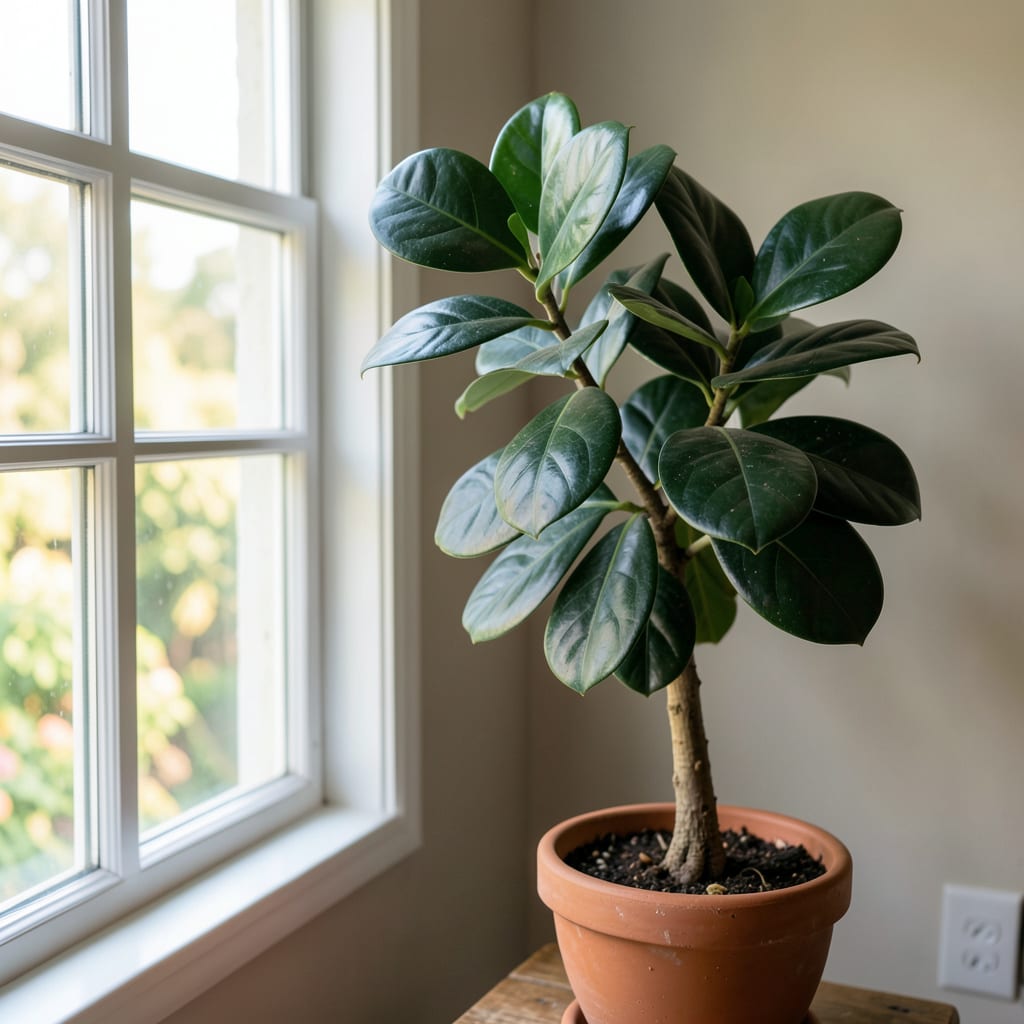
I’ve always been fascinated by the Rubber Plant 🌱, known for its stunning, glossy leaves. To keep it thriving, understanding its light requirements is crucial. Too little or too much light can significantly impact its health and appearance.
So, how much light does your Rubber Plant actually need to flourish? Let’s explore the optimal lighting conditions and practical tips to ensure your plant gets just the right amount of light in your home.

Rubber plants are known for their large, glossy leaves and can thrive in various lighting conditions, but understanding their ideal light requirements is crucial for maintaining their health and vibrant appearance. I’ve found that providing the right amount of light is one of the most critical factors in keeping these plants happy and thriving.
The key to successful Rubber Plant care is understanding the difference between direct and indirect light. While they can tolerate some direct sunlight, too much can cause damage to their leaves 🌱.
Rubber Plants naturally grow under the canopy of larger trees in their native habitats, so they are adapted to receiving filtered sunlight. This makes bright, indirect light the ideal condition for their growth.
When placing your Rubber Plant, consider east- or west-facing windows as they provide the most suitable natural light conditions. North-facing windows can also work if supplemented with artificial lighting on cloudy days or during winter months.
It’s also worth noting that variegated varieties of Rubber Plants may require slightly more light than their non-variegated counterparts to maintain their color patterns effectively 🌿.
To ensure optimal growth, it’s essential to monitor your plant’s response to its lighting conditions and make adjustments as needed. This might involve moving the plant to a different location or using supplemental lighting during periods of low natural light.
By understanding and meeting your Rubber Plant’s light requirements, you can help it maintain its stunning foliage and overall health. Proper lighting is just one aspect of Rubber Plant care, but it’s a crucial one that sets the foundation for other care practices like watering and fertilizing.
As you observe your Rubber Plant’s response to different lighting conditions, you’ll develop a better understanding of its specific needs. This will allow you to make informed decisions about its placement and care, ensuring it continues to thrive in your home.
Proper lighting not only affects the plant’s appearance but also its overall health and longevity. By providing the right light conditions, you’re investing in your plant’s long-term well-being.
In summary, understanding your Rubber Plant’s light requirements is fundamental to its care. By providing bright, indirect light and being mindful of its specific needs, you can enjoy a healthy, thriving plant that adds beauty to your indoor space for years to come.
I’ve found that understanding the specific light needs of your Rubber Plant is crucial for its health and growth. While they can adapt to various lighting conditions, there’s an optimal range that promotes their best growth 🌱.
Rubber Plants generally require 4-6 hours of bright, indirect light daily. This can be achieved by placing them near east- or west-facing windows, which provide gentle, indirect sunlight that’s ideal for their growth.
For optimal growth, rotate your Rubber Plant every 1-2 weeks to ensure even light distribution across all leaves.
The intensity of light is also important. While direct sunlight can be harmful, especially during peak hours, filtered sunlight through a sheer curtain can provide the right balance. This helps prevent leaf scorch while still delivering sufficient light for photosynthesis.
In environments with limited natural light, consider using supplemental lighting, such as LED grow lights. These can be particularly useful during winter months or in rooms that don’t receive much natural light.
It’s also worth noting that the light requirements can vary slightly depending on the variety of your Rubber Plant. Variegated varieties may need a bit more light to maintain their color patterns, while non-variegated types might tolerate slightly lower light conditions 🌿.
To ensure your Rubber Plant is getting the right amount of light, observe its response. If it’s receiving too little light, you might notice slow growth or leggy stems. On the other hand, too much light can cause leaf discoloration or scorching.
Adjusting your plant’s position based on these observations can help you find the perfect balance. Remember, the goal is to provide consistent, bright, indirect light that supports healthy growth and maintains the plant’s vibrant appearance.
By paying attention to your Rubber Plant’s light needs and making necessary adjustments, you can help it thrive and enjoy its beautiful foliage for years to come.
I’ve observed that Rubber Plants can be quite sensitive to light conditions, and improper lighting can lead to noticeable changes in their appearance. Understanding these signs helps you adjust their placement for optimal health 🌱.
When a Rubber Plant receives too little light, you might notice slow growth or leggy stems as the plant stretches towards available light sources. The leaves may also become paler or lose their vibrant color intensity.
Monitor your Rubber Plant’s leaves for signs of light stress: pale or dropping leaves may indicate too little light, while scorched or discolored leaves suggest too much direct sunlight.
On the other hand, too much direct sunlight can cause leaf scorch, leading to brown or crispy edges on the leaves. In severe cases, leaves may develop sunburn spots or drop prematurely.
To adjust your plant’s lighting, consider moving it to a spot with bright, indirect light if it’s currently in a low-light area. Conversely, if it’s getting too much direct sun, filtering the light with a sheer curtain can help protect the leaves.
Regularly checking your Rubber Plant’s response to its lighting conditions allows you to make timely adjustments, ensuring it remains healthy and continues to thrive in your home 🌿.
By being attentive to these signs and making necessary changes, you can provide your Rubber Plant with the optimal light conditions it needs to flourish.
Maintaining the right balance of light not only enhances the plant’s appearance but also supports its overall health and longevity.
In conclusion, keeping an eye on your Rubber Plant’s light exposure and adjusting as needed is a simple yet effective way to ensure it remains a beautiful and vibrant part of your indoor space.
East- or west-facing windows are perfect for Rubber Plants as they provide 4-6 hours of bright, indirect light daily. This direction offers gentle sunlight that’s ideal for their growth.
While Rubber Plants can handle some direct sunlight, too much can cause leaf scorch and damage. It’s best to filter the sunlight with a sheer curtain to provide bright, indirect light.
If your Rubber Plant is receiving insufficient light, you may notice slow growth, leggy stems, or leaves becoming paler. Consider moving it to a brighter location or using supplemental lighting.
Yes, you can use LED grow lights to supplement natural light, especially during winter months or in low-light environments. This helps maintain the plant’s health and promotes optimal growth.
