
Beautiful Plants For Your Interior
Beautiful Plants For Your Interior
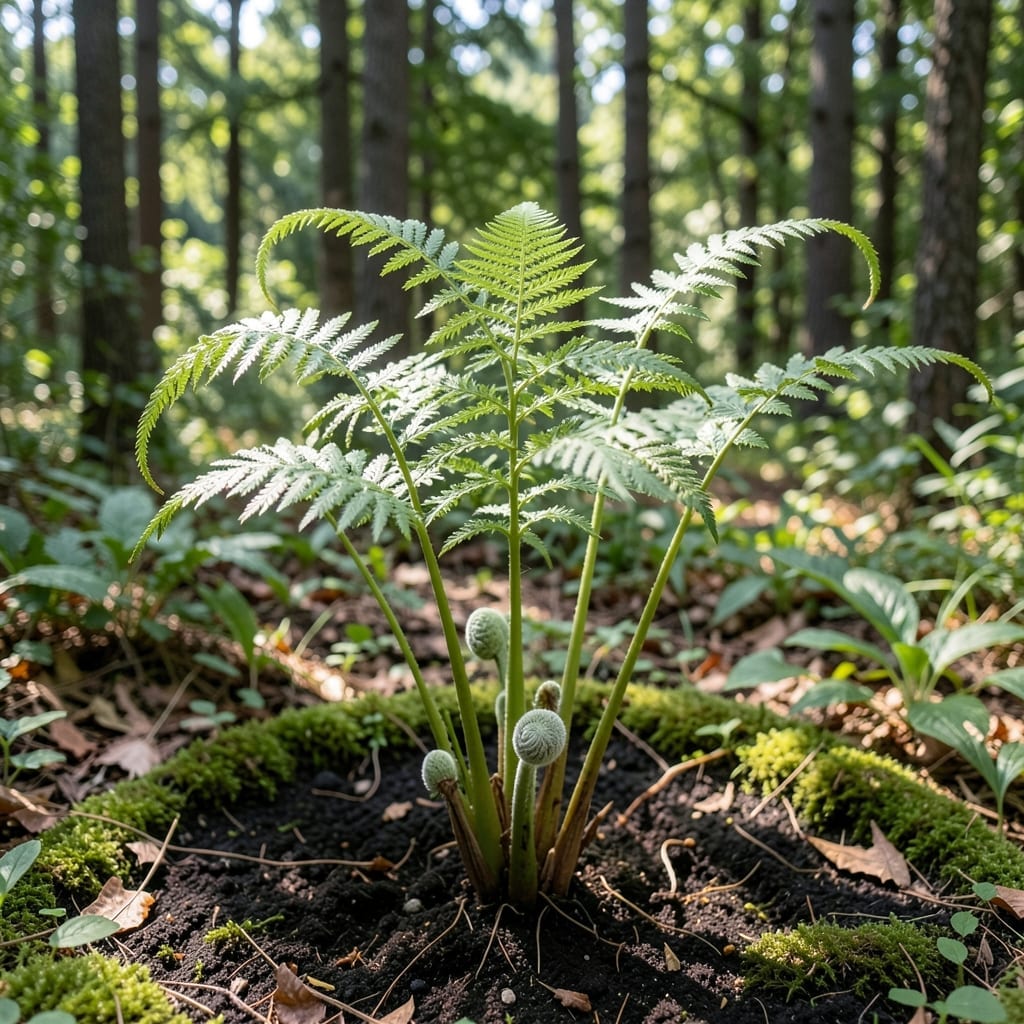
Royal ferns produce the most elegant fiddleheads of any native species. I’ve watched these tight, spiraling fronds emerge every spring, transforming damp corners into living art.
With the right conditions—consistent moisture and partial shade—you’ll harvest tender, edible fiddleheads within 2-3 weeks of emergence. The key is timing: pick them young, before they unfurl completely.
📚 In This Guide
Master the timing and technique to harvest these wild delicacies sustainably while encouraging future growth.
Learn to recognize royal fern by its distinctive 7-9 pairs of leaflets on mature fronds and cinnamon-colored scales at the base. Fiddleheads emerge in early spring as tightly coiled shoots, typically 2-4 inches tall with a smooth, papery brown covering.
Search in moist, shaded woodlands near streams or swampy areas where royal ferns thrive. The ideal harvesting window lasts only 10-14 days—from when shoots first break soil until they begin unfurling. Look for clusters of 3-5 fiddleheads per crown, a sign of a healthy, established plant.
Use sharp scissors or pruners to cut fiddleheads at ground level, leaving the underground rhizome intact. Never harvest more than half the fiddleheads from a single crown to ensure the plant’s survival and future production. I carry a small knife and basket for clean, efficient collection.
Select shoots that are 1-3 inches tall with tightly closed coils—they’ll be most tender. Avoid any with visible unfurling or brown, papery scales falling away, as these indicate the fiddlehead is past its prime. A single mature royal fern crown can produce 3-8 harvestable fiddleheads per season.
Rinse fiddleheads thoroughly in cold water to remove dirt and the papery brown covering (which should slip off easily when rubbed). Trim the very bottom of the stem if it’s woody or discolored. The papery covering, called the cochlea, protects the developing frond and should come off during washing.
For best quality, process within 24 hours of harvest. Fiddleheads deteriorate quickly at room temperature. I keep them in a paper bag in the refrigerator until ready to use, which maintains their crisp texture for up to 3 days. Never store them in airtight containers, as this accelerates spoilage.
After harvesting, mark the location with a small, unobtrusive marker (like a painted stick) to monitor the plant’s recovery. Royal ferns are perennial and will produce fiddleheads each spring if not overharvested. The remaining uncut fiddleheads will unfurl into the characteristic lacy fronds.
Return to the same patch year after year, but rotate your harvesting spots within the colony. This practice allows plants to recover and maintain genetic diversity. I’ve maintained productive foraging sites for over a decade using this method. The ferns will spread slowly via rhizomes, creating larger patches over time.
Small details make the difference between a successful harvest and a wasted trip.
Identification Tip: The 7-9 pairs of leaflets on mature royal fern fronds are your most reliable identifier. I’ve found that the cinnamon-colored scales at the base are often overlooked by beginners, but they’re a dead giveaway. Confession: I once harvested the wrong plant until I learned to count those leaflet pairs religiously.
Timing Secret: That 10-14 day harvesting window in early spring is non-negotiable. The moment you see fiddleheads beginning to unfurl, the clock is ticking. I set calendar reminders for my favorite spots, as missing this window by even a few days means the difference between tender shoots and inedible fronds.
Sustainability Factor: Never harvesting more than half the fiddleheads from a single crown might seem conservative, but it’s preserved my patches for over a decade. The 3-8 harvestable fiddleheads per mature crown gives you enough to enjoy while leaving plenty for the plant’s survival and future production.
Storage Wisdom: The 24-hour processing window after harvest is critical. I learned the hard way that fiddleheads left at room temperature for even 12 hours lose their crisp texture. That paper bag method in the fridge maintains quality for up to 3 days—just don’t make my mistake of using plastic, which traps moisture and accelerates spoilage.
No, royal fern fiddleheads should never be eaten raw. They contain toxins that can cause stomach upset. Always cook them thoroughly (boiling for 10+ minutes is recommended) to neutralize harmful compounds and ensure safety.
The ideal time is early spring, when fiddleheads are just emerging (1-3 inches tall). Harvest before the fronds uncurl—once they open, they become bitter and tough. Check for tight, vibrant green coils for the best flavor and texture.
Ostrich fern fiddleheads are the most popular edible alternative, with a similar taste and texture. Asparagus or green beans can also work in recipes as a substitute, though the flavor differs slightly.
Bitterness often means they were harvested too late or undercooked. Ensure you pick young, tight fiddleheads and boil them for at least 10 minutes. Soaking in salted water before cooking can also help reduce bitterness.