
Beautiful Plants For Your Interior
Beautiful Plants For Your Interior
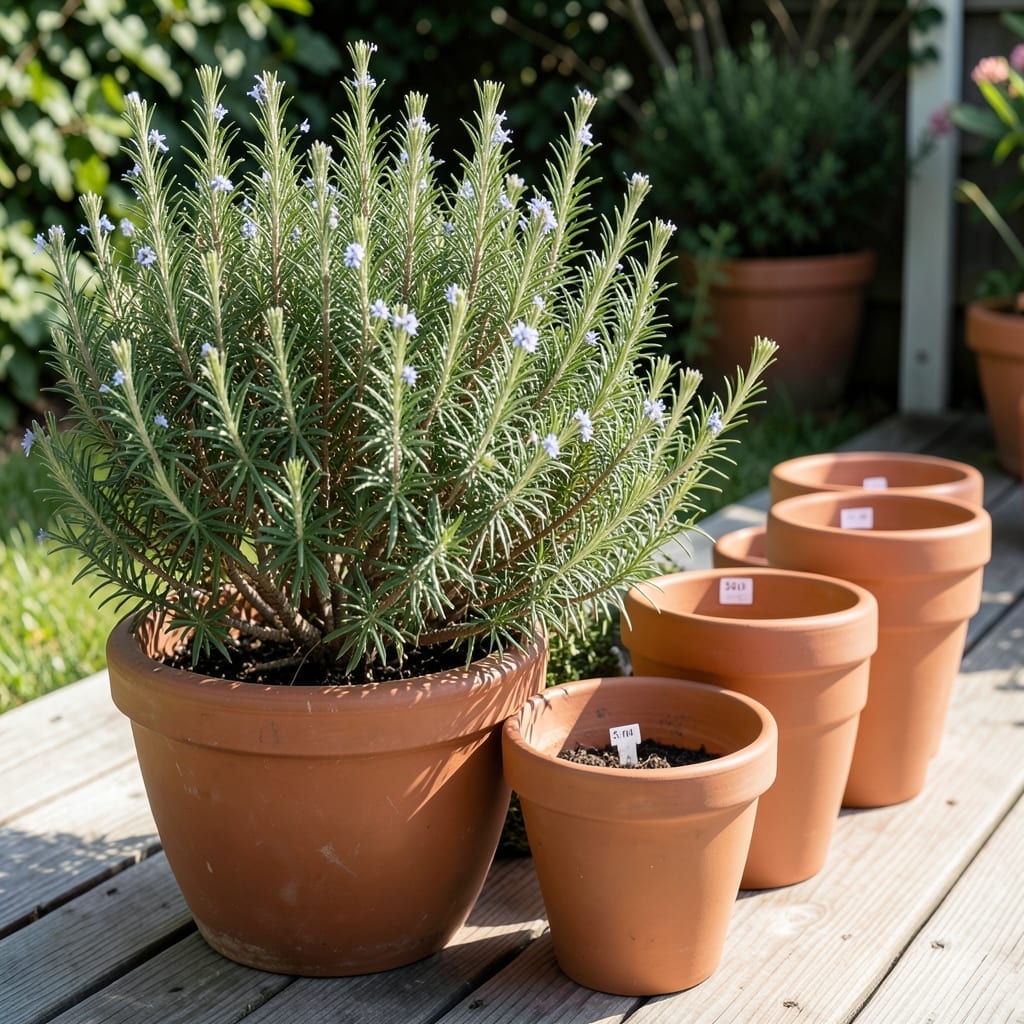
Choosing the right pot size for 🌿 Rosemary can mean the difference between a struggling plant and a thriving, fragrant herb that lasts for years.
This hardy Mediterranean plant demands space to grow, but the wrong container can stunt its roots and limit its potential.
I’ve learned through trial and error that root space and drainage are non-negotiable for healthy growth. Without them, even the most attentive gardener can watch their efforts wither.
Let me show you exactly how to pick the perfect container so your 🌿 Rosemary can flourish, not just survive.

Selecting the right pot size for rosemary starts with understanding its root system and growth habits. This Mediterranean herb thrives when its roots have room to spread, but too much space can lead to overwatering risks. I always recommend matching the pot to the plant’s mature size for best results.
For dwarf rosemary varieties, a 1-gallon pot is the minimum starting size, while upright types need at least 3-5 gallons to accommodate their woody stems and extensive roots. In my experience, 12-inch diameter containers work well for most home gardeners.
| Variety | Minimum Size | Optimal Size |
|---|---|---|
| Dwarf | 1 gallon | 2-3 gallons |
| Semi-Dwarf | 2 gallons | 3-5 gallons |
| Standard | 3 gallons | 5-7 gallons |
Remember that rosemary roots can grow 2-3 feet deep in the ground, so depth matters as much as width. I’ve seen shallow pots cause stunted growth even when the diameter seems adequate. Aim for 10-12 inches deep for most varieties.
As your rosemary plant matures, you’ll notice it needs more frequent repotting. I repot my upright rosemary every 2-3 years into a container that’s 2 inches larger in diameter. This prevents root binding while avoiding excess soil moisture.
For container gardening, drainage holes are non-negotiable. I’ve lost count of how many rosemary plants I’ve seen suffer in pretty but non-draining pots. Even the perfect pot size won’t save a plant from root rot without proper drainage.
The material of your pot also affects how your rosemary grows. Terracotta pots are my top choice because they’re porous and breathe, which helps prevent soil moisture buildup. Just be prepared for more frequent watering in hot climates.
If you’re growing rosemary indoors, start with a 1-gallon pot and upgrade as it grows. I’ve found that indoor rosemary stays smaller, so 3-gallon pots are often sufficient. But watch for yellowing leaves, which can signal it’s time for a larger container.
For outdoor container gardens, I recommend going one size larger than you think you need. A 5-gallon pot gives most rosemary plants enough room to thrive for several years without repotting. This size also provides better stability in windy conditions.
Lastly, consider the weight of the pot when filled with soil. A large rosemary in a 5-gallon terracotta pot can become quite heavy. I use pot feet or a plant caddy to make moving my containers easier during seasonal changes or cleaning.
🌿Even experienced gardeners can choose the wrong rosemary pot size. I’ve seen stunted growth and yellowing leaves when roots are cramped in small containers. The plant can’t access enough water or nutrients this way.
Another common issue is ignoring drainage holes. Without them, root rot sets in quickly, especially for this Mediterranean herb that hates soggy soil.
⚠️ Avoid These Container Pitfalls
Choosing a pot that’s too small restricts root growth and leads to a weak, leggy plant.
Pots without drainage holes cause waterlogging, which rosemary cannot tolerate.
Using non-breathable materials like plastic without ventilation can suffocate the roots.
I’ve also noticed that plastic pots can trap too much moisture. While they’re lightweight, they often lack the breathability that terracotta or fabric pots provide for healthy root systems.
Another mistake is selecting a container that’s too deep for the plant’s stage. Young rosemary doesn’t need a 5-gallon pot right away—it’s better to upsize gradually as it grows.
Don’t overlook the material’s insulation properties either. In cold climates, ceramic pots can crack in winter, while fabric pots may not offer enough protection against frost.
Finally, remember that weight matters. A large terracotta pot can become heavy when filled with soil, making it hard to move indoors during cold snaps. 🌿