
Beautiful Plants For Your Interior
Beautiful Plants For Your Interior
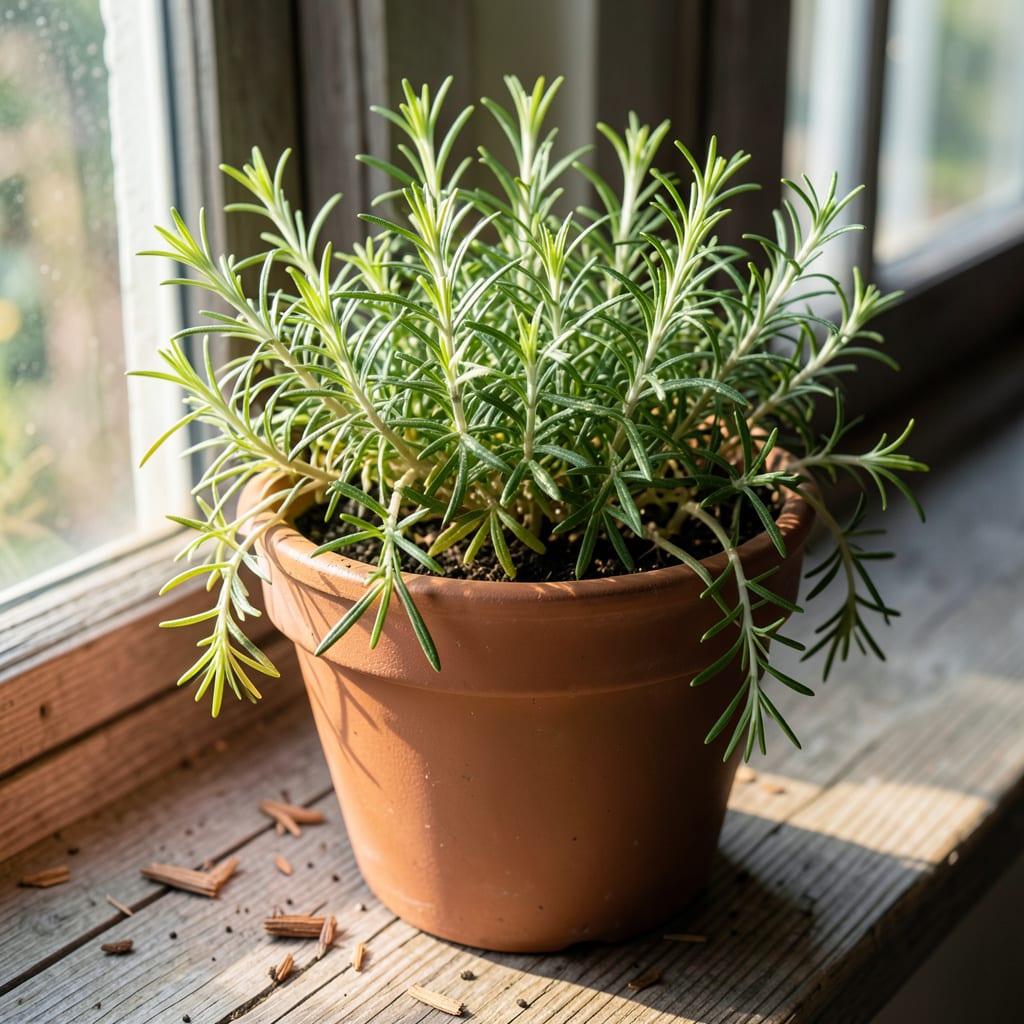
Yellowing rosemary leaves had me stumped last season. Turns out, it’s usually overwatering or poor drainage—rosemary hates wet feet.
Diagnose the issue fast with a soil check, then adjust watering or repot in well-draining mix. Most plants bounce back within 2-3 weeks with the right fix.
📚 In This Guide
Here’s the method I use to diagnose and correct yellow leaves fast, with minimal stress to the plant.
Check the soil moisture by inserting your finger 2 inches deep. Rosemary hates wet feet, so if the soil feels soggy or damp beyond the top layer, you’re overwatering. Yellowing leaves often start at the bottom when roots are suffocating from excess moisture.
If the soil is bone dry and leaves are crisp or curling, underwatering is the issue. I’ve found that rosemary prefers the soil to dry out completely between waterings—wait until the top 2-3 inches feel dry to the touch before watering deeply.
Rosemary thrives in full sun (at least 6-8 hours daily). Yellow leaves, especially on the lower branches, often signal insufficient light. Move potted plants to a sunnier location or trim nearby plants that may be casting shade.
If your rosemary is indoors, place it near a south-facing window or supplement with a full-spectrum grow light for 12-14 hours daily. Leggy growth with widely spaced leaves confirms it’s stretching for more light.
Gently remove the plant from its container and examine the roots. Healthy rosemary roots are white and firm. If they’re brown, mushy, or have a foul odor, root rot from poor drainage is likely. Trim away any affected roots with clean shears.
Ensure your pot has drainage holes and uses a well-draining mix with 30-50% perlite or sand. Repot if necessary, using fresh mix, and avoid saucers that trap standing water. I always elevate pots on feet or bricks to improve airflow underneath.
Rosemary prefers slightly alkaline soil with a pH between 6.0 and 7.5. Yellowing between leaf veins suggests iron deficiency, often caused by soil that’s too acidic. Test your soil—if it’s below 6.0, amend with lime to raise the pH gradually.
Avoid high-nitrogen fertilizers, which can cause rapid, weak growth and yellowing. Instead, use a balanced, water-soluble fertilizer diluted to half strength, applied every 4-6 weeks during the growing season. Over-fertilizing does more harm than good with this hardy herb.
If the plant is in the ground, work in a handful of compost around the base to improve soil structure without overwhelming the roots.
These simple adjustments can bring your plant back to vibrant health faster than you think.
Watering Precision: The 2-inch soil check in Step 1 is your best diagnostic tool. Rosemary roots need that top layer to dry completely between waterings—wait until the top 2-3 inches feel dry before giving it a deep drink. I learned this after losing two plants to root rot from overwatering.
Light Requirements: Don’t underestimate the 6-8 hours of full sun mentioned in Step 2. If your plant is indoors, that 12-14 hours under a grow light isn’t optional—it’s essential. Leggy growth is your plant’s way of begging for more light.
Drainage Check: The 30-50% perlite or sand in Step 3 isn’t just a suggestion—it’s the difference between thriving and struggling. I elevate all my rosemary pots on bricks to ensure no water pools at the bottom, even with drainage holes.
Fertilizer Strategy: That 4-6 week fertilizer schedule in Step 4 exists for a reason. Over-fertilizing creates weak growth that’s more susceptible to yellowing. Stick to half-strength balanced fertilizer and resist the urge to “help” it grow faster.
Yellow leaves often signal overwatering, poor drainage, or nutrient deficiencies. Check soil moisture and ensure pots have drainage holes. Too much water can suffocate roots, leading to yellowing.
Once leaves turn yellow, they usually won’t revert to green. Focus on fixing the root cause (e.g., adjust watering or improve soil quality) to prevent further yellowing and encourage new, healthy growth.
Water deeply but infrequently—only when the top 1-2 inches of soil are dry. Rosemary thrives in dry conditions, so avoid soggy soil. Use well-draining soil to prevent root rot.
Yes! Spider mites, aphids, or fungal infections like powdery mildew can stress the plant, leading to yellowing. Inspect leaves and stems, and treat with neem oil or fungicides if needed.
Yes, trim yellow or brown leaves to redirect the plant’s energy toward healthy growth. Use clean shears to avoid spreading disease, and prune sparingly to avoid shocking the plant.
