
Beautiful Plants For Your Interior
Beautiful Plants For Your Interior
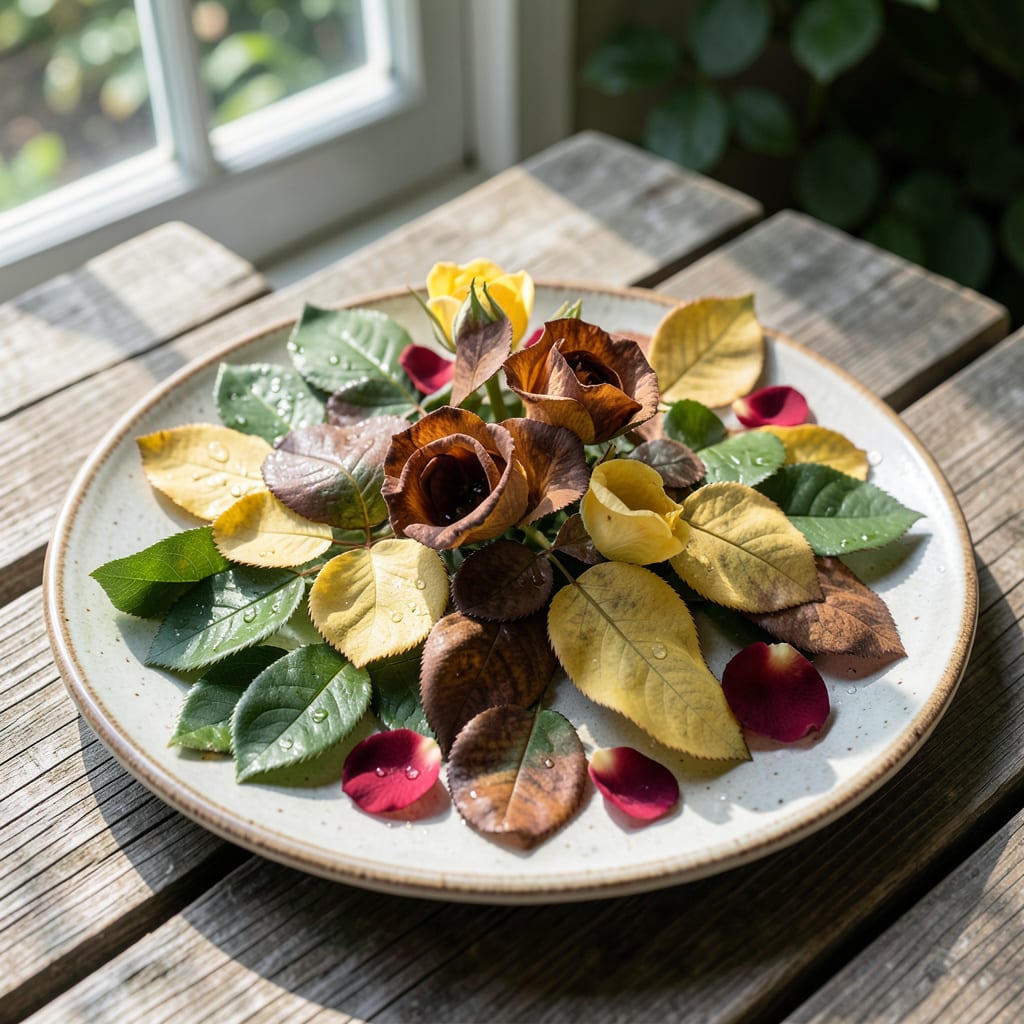
Yellow and brown rose leaves aren’t just ugly—they’re your plant’s distress signal. I’ve seen healthy bushes turn sickly overnight, and the culprit is usually one of three things: water stress, nutrient hunger, or a sneaky disease taking hold.
Here’s the thing—most gardeners jump to spraying chemicals when a simple soil test or watering adjustment could fix it. My roses bounced back within 2 weeks once I matched the treatment to the actual problem, not the symptoms.
You’ll learn to spot the difference between nitrogen deficiency (pale yellow), fungal spots (brown edges), and pest damage (chewed leaves). Each has a foolproof fix that doesn’t involve guessing games.
Works for all rose types, from climbers to miniatures. Let’s diagnose and treat this before it spreads.
Rose leaves turning yellow and brown often signal underlying issues that disrupt their health. Below are the most common causes, explained scientifically for clarity and actionability.
Excessive heat or direct sunlight can scorch rose leaves, leading to yellowing (chlorosis) followed by browning. High temperatures accelerate transpiration, causing water loss faster than roots can absorb it. Leaves may develop necrotic (dead) edges or patches. Shade cloth or afternoon watering can mitigate this.
Both overwatering and underwatering stress roses. Overwatering suffocates roots, reducing oxygen uptake and leading to root rot, which manifests as yellowing leaves with brown spots. Underwatering causes dehydration, turning leaves crispy and brown. Aim for 1–1.5 inches of water per week, adjusting for soil drainage.
Pathogens like Black Spot (Diplocarpon rosae) or Powdery Mildew (Podosphaera pannosa) disrupt chlorophyll production, causing yellow halos around brown lesions. Fungal spores thrive in humid, poorly ventilated conditions. Remove infected leaves and apply copper-based fungicides preventatively.
Nitrogen deficiency causes uniform yellowing (older leaves first), while magnesium or potassium shortages lead to interveinal chlorosis (yellowing between veins) with brown edges. Iron deficiency, common in alkaline soils, also triggers yellowing. A balanced rose fertilizer (e.g., 10-10-10) or soil pH adjustment (6.0–6.5) can correct this.
Sap-sucking pests like aphids or spider mites drain nutrients, causing stippling (tiny yellow/brown dots) and curled, discolored leaves. Their honeydew secretions also promote sooty mold. Treat with neem oil or insecticidal soap at first signs.
Addressing yellow and brown leaves on your roses starts with identifying the root cause and applying targeted fixes. Here’s a practical guide to revive your plants:
Roses need 1-1.5 inches of water per week, split into 2-3 deep waterings. Water in the early morning to reduce evaporation and fungal risks.
Remove infected leaves immediately and apply neem oil or a copper-based fungicide. Prune for better airflow to prevent recurrence.
No, once leaves turn yellow or brown, they won’t recover. Focus on fixing the root issue to save the rest of the plant.
Look for tiny dots, curled edges, or sticky residue (honeydew). Use insecticidal soap or introduce beneficial insects like ladybugs.
