
Beautiful Plants For Your Interior
Beautiful Plants For Your Interior
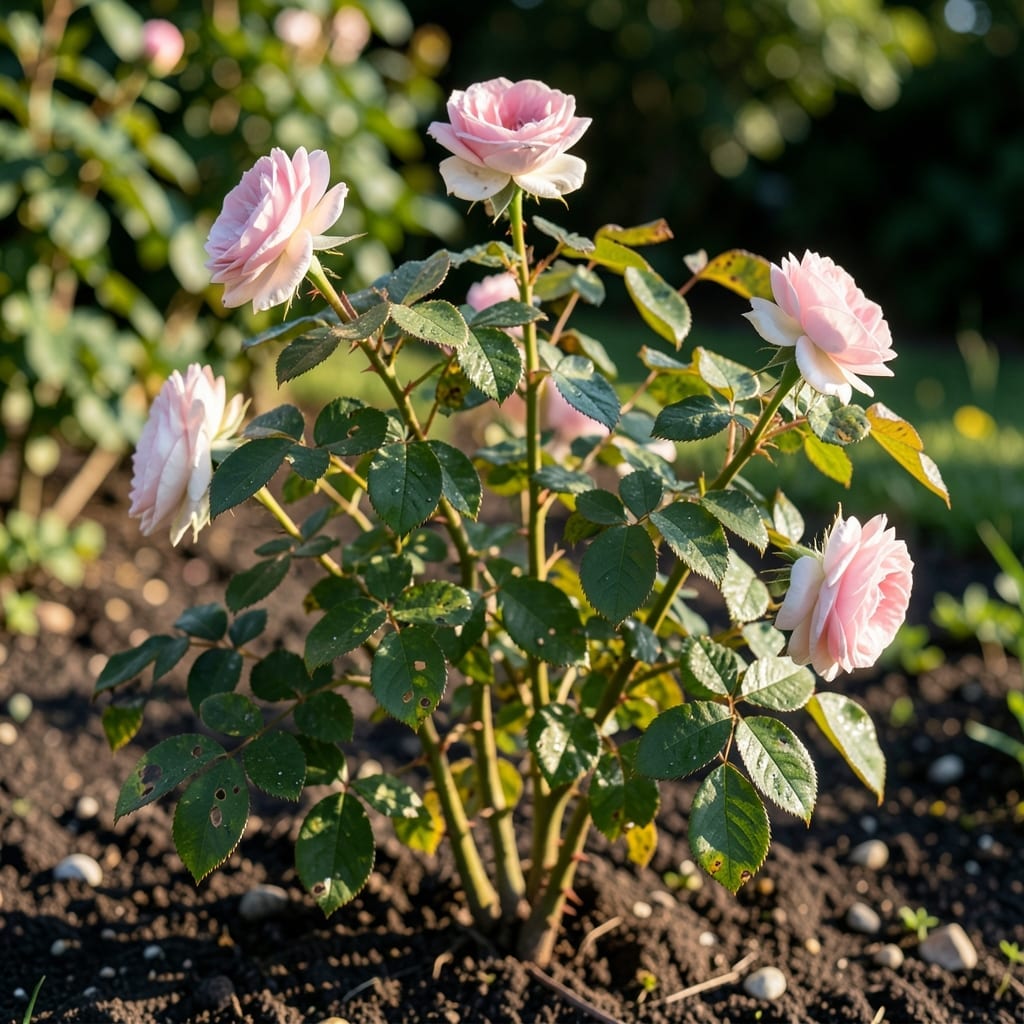
Noticing holes in your 🌹 Rose Bush leaves? Those ragged edges and skeletonized foliage are classic signs of unwelcome visitors turning your garden into their personal buffet.
Before you reach for harsh chemicals, let’s identify the real culprits. The damage you’re seeing is often caused by pests that thrive in spring and early summer.
Discover how to spot the exact invaders and reclaim your blooms with targeted, effective solutions that actually work.
When I see holes in rose bush leaves, my first suspect is always the Japanese beetle. These pests create ragged edges and skeletonized foliage as they feed between the veins.
Unlike other pests, Japanese beetles leave irregular holes rather than clean cuts. They’re most active on sunny days and often attack the upper leaves first. 🌿
| Damage Type | Appearance | Causative Pest |
|---|---|---|
| Skeletonized leaves | Lacy pattern, veins remain | Japanese beetles |
| Ragged holes | Irregular edges, various sizes | Beetles or slugs |
| Small pinpricks | Tiny dots on leaf surface | Aphids |
I always check for the beetles themselves – they’re metallic blue-green with copper-brown wings. You’ll often find them clustering on leaves in the morning hours.
Another telltale sign is beetles dropping to the ground when disturbed. They’re about 1/2 inch long and have a distinctive shape that’s hard to mistake for other insects.
It’s important to differentiate this from slug damage, which typically shows as smooth-edged holes and is more common on lower leaves. Slugs also leave a slime trail behind. ✂️
For aphid damage, you’ll notice sticky residue (honeydew) on leaves and curled foliage. Aphids are tiny and often cluster on new growth and flower buds.
I recommend examining your roses early morning when pests are less active. Look for chewed edges and beetles feeding on the upper leaf surface.
The damage often starts at the top of the plant and works downward. Japanese beetles prefer roses in full sun and are less likely to attack shaded plants. 🌹
Remember that healthy plants can often outgrow minor damage. But if you’re seeing extensive defoliation, it’s time to take action before your roses’ blooming potential is affected.
I’ve found that handpicking beetles in the early morning is surprisingly effective. Drop them into soapy water to prevent escape. This method works best for small infestations and is completely organic.
Neem oil is my go-to organic solution. Mix 2 tbsp per gallon of water and spray every 3-4 days on both leaf surfaces. It disrupts the beetles’ feeding cycle without harming beneficial insects.
For severe infestations, I recommend pyrethrin-based sprays. These work quickly but should be a last resort as they also harm beneficial insects. Always spray in the evening when bees are less active.
Companion planting can deter beetles naturally. I’ve had success with garlic, chives, and catnip planted near my roses. These plants confuse pests with their strong scents.
Milky spore is a long-term solution that targets beetle grubs in the soil. Apply in late summer for best results. It takes 2-3 years to fully establish but provides lasting protection.