
Beautiful Plants For Your Interior
Beautiful Plants For Your Interior
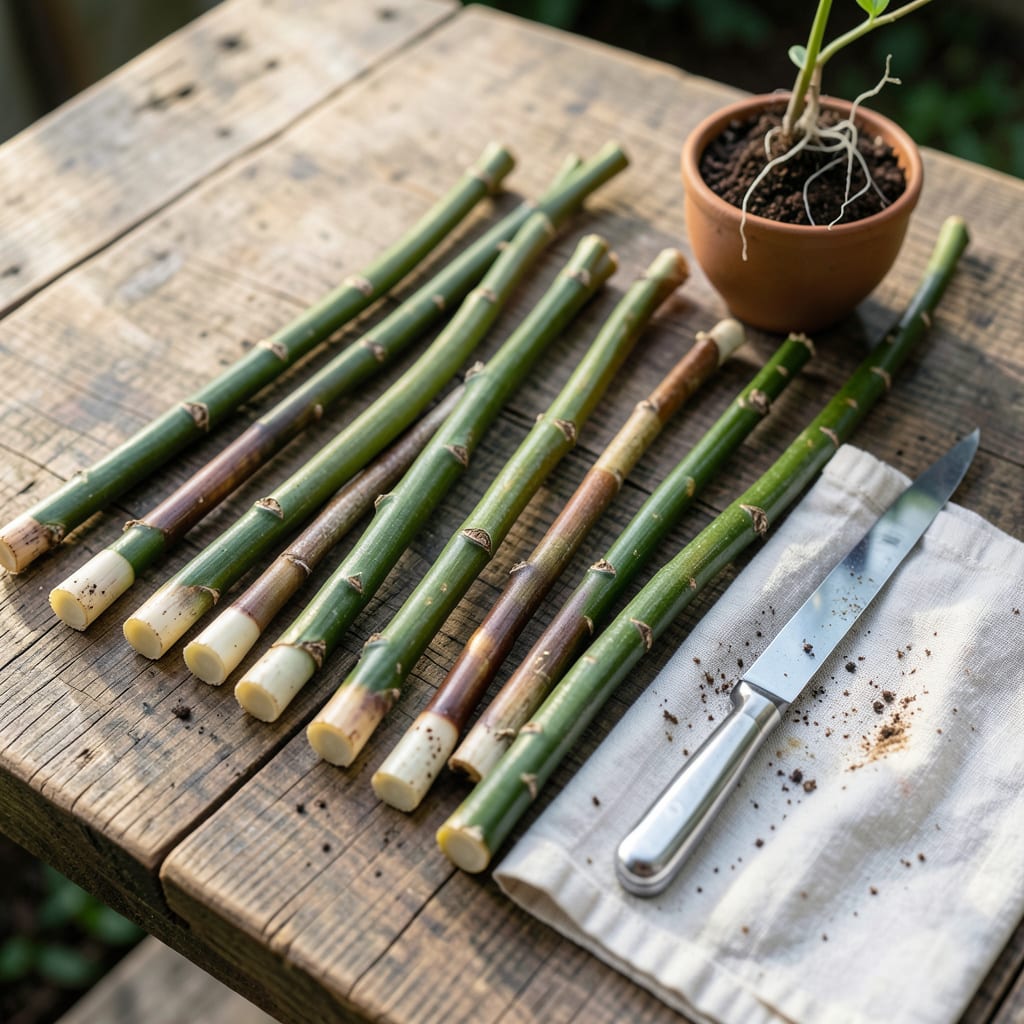
Grafting changed how I grow fruit trees, and it starts underground. The right rootstock determines everything—tree size, disease resistance, even how fast you’ll see fruit.
I’ve learned that matching scion to rootstock is like finding the perfect dance partner. Get it right, and you’ll have a strong foundation that supports vigorous growth for years to come.
📚 In This Guide
Here’s the method I use to ensure a strong rootstock foundation for successful grafting every time.
Begin by choosing disease-free rootstock with a diameter of at least ¼ to ½ inch. The best candidates are vigorous, young plants with a well-developed root system. I look for stems that snap cleanly when bent—a sign of active growth and strong cell structure.
Avoid rootstock with visible damage, pests, or signs of stress like yellowing leaves. The rootstock’s health directly determines the graft’s success, so don’t compromise on quality. If you’re sourcing from a nursery, ask for rootstock specifically bred for grafting compatibility.
Using a sharp, sterilized knife, make a clean 1 to 2 inch diagonal cut at the top of the rootstock. This angled surface increases the contact area between the rootstock and scion, improving the chances of a successful union.
Remove any leaves or side shoots from the lower 4 to 6 inches of the stem to reduce moisture loss and direct the plant’s energy toward healing the graft. Keep the rootstock in a shaded, humid environment until you’re ready to attach the scion—this prevents drying out.
Select a scion with a diameter that closely matches the rootstock, ideally within 1/8 inch. The cambium layers—just beneath the bark—must align for the graft to take. I always double-check this alignment; even a slight misplacement can cause failure.
Cut the scion at a complementary angle to the rootstock, ensuring both surfaces are smooth and flat. This precision allows the two pieces to fit snugly together, maximizing contact between the cambium layers. A well-matched graft will look seamless and stable.
Wrap the graft union tightly with grafting tape or rubber bands to hold the scion and rootstock in place. The pressure should be firm but not so tight that it damages the tissue. I’ve found that a slight overlap of the tape ensures no gaps where pests or disease could enter.
Cover the graft with a plastic bag or grafting wax to retain moisture and protect it from environmental stress. Place the newly grafted plant in a warm, shaded area with temperatures around 70-75°F to encourage callus formation. Expect to see signs of successful union in 2 to 3 weeks.
Check the graft daily for signs of stress, such as wilting or discoloration. If the scion begins to dry out, mist it lightly with water to maintain humidity. Once the graft has fully healed—indicated by new growth at the union—gradually introduce the plant to brighter light.
Avoid fertilizing immediately after grafting, as the plant needs time to recover. After 4 to 6 weeks, when the graft is fully established, you can resume normal care. This patience pays off with a strong, productive plant that will thrive for years.
Mastering the art of grafting starts with attention to detail—here’s how to get it right.
The Selection Process: In Step 1, choosing rootstock with a diameter of at least ¼ to ½ inch is non-negotiable. Smaller stems lack the strength to support a successful graft, while larger ones may not align well with the scion. Confession: I learned this the hard way after a failed attempt with undersized stock.
Precision in Preparation: For Step 2, that 1 to 2 inch diagonal cut must be clean and smooth. A jagged cut reduces contact between the cambium layers, significantly lowering your success rate. Use a razor-sharp knife and sterilize it between cuts to prevent disease transmission.
Alignment is Everything: Step 3’s emphasis on matching diameters within 1/8 inch isn’t arbitrary. The cambium layers must align perfectly for the graft to take. I always double-check this alignment under good lighting—even a millimeter off can mean failure.
Healing Environment: In Step 4, maintaining temperatures around 70-75°F is critical for callus formation. Too cold slows the process, while too hot can stress the plant. A warm, shaded spot with consistent humidity (like a greenhouse or under a cloche) works best.
The best rootstock depends on your goals. For dwarf trees, try M.9 for apples; for disease resistance, MM.111 is a great choice. Consider climate, soil, and tree size when selecting.
Late winter or early spring, just before the rootstock breaks dormancy, is ideal. This timing ensures strong union formation as both scion and rootstock enter active growth.
No, compatibility matters! Apple rootstocks won’t work for peaches, for example. Always match rootstocks with the same genus (e.g., Prunus for stone fruits, Malus for apples).
Common reasons include poor alignment, contamination, or incompatible rootstock-scion pairing. Ensure clean cuts, proper fit, and a sterile environment to improve success rates.
Yes! You can grow trees from seeds or cuttings, but these methods may lack disease resistance or desired traits. Grafting ensures consistency and faster fruit production.
