
Beautiful Plants For Your Interior
Beautiful Plants For Your Interior
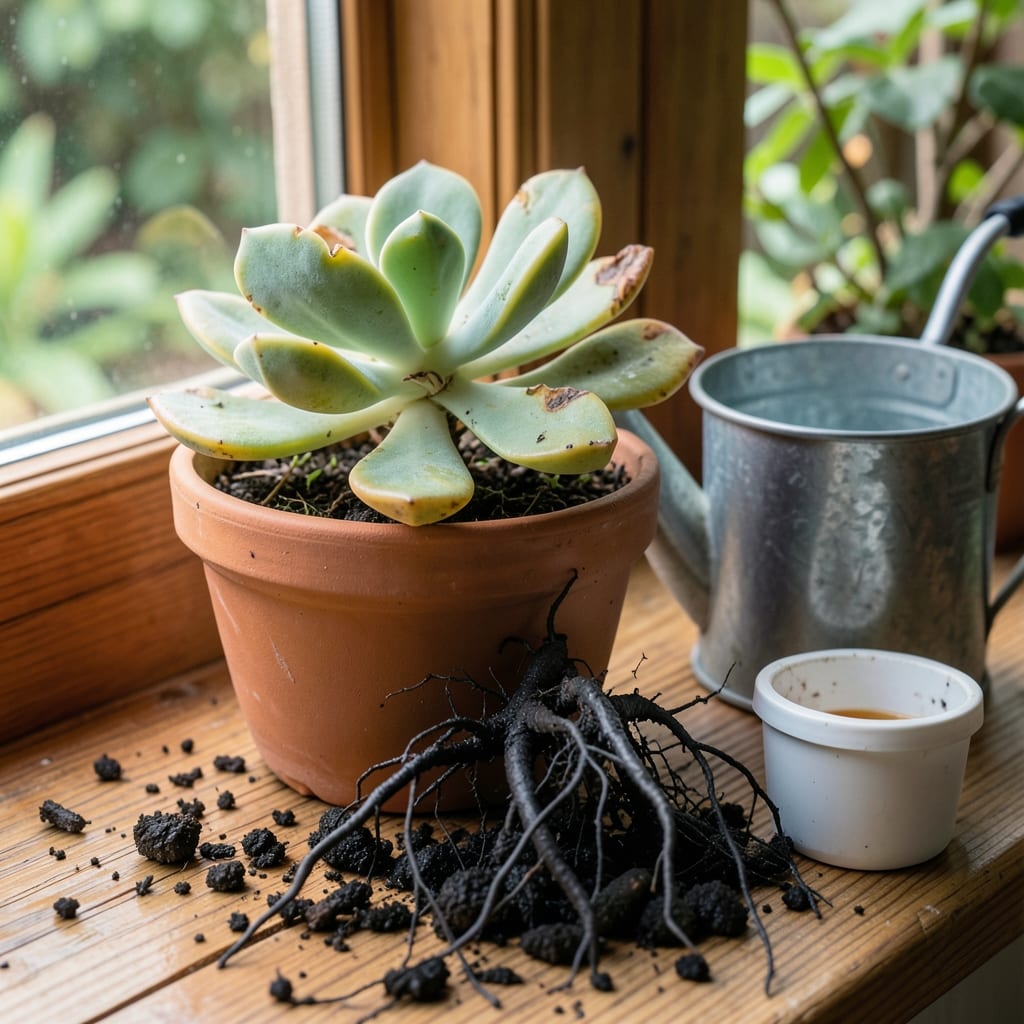
I killed my first three succulents with kindness. Overwatering is the silent assassin of these tough little plants, and root rot follows like clockwork.
Here’s the thing—succulents store water in their leaves. That means they need far less than you think. I learned the hard way that their roots drown faster than any other houseplant.
Catching it early makes all the difference. Yellowing leaves, mushy stems, and soil that stays damp for days are your warning signs. The fix involves removing the plant, trimming away rot, and letting it dry out completely.
Prevention is simpler than cure. Wait until the soil is bone dry before watering again, and always use pots with drainage holes. This saved my entire collection.
Succulents thrive in dry, arid conditions, making overwatering the primary culprit behind root rot. Here’s a breakdown of the key causes, explained scientifically and actionably:
Succulents store water in their leaves and stems, so their roots don’t need constant hydration. When soil stays soggy, it suffocates the roots by blocking oxygen exchange. Anaerobic conditions (lack of oxygen) trigger fungal pathogens like Phytophthora and Pythium, which decompose root tissues, leading to rot.
Actionable fix: Water only when the top 1–2 inches of soil are completely dry, and ensure pots have drainage holes.
Pots without drainage holes or dense, water-retentive soils (e.g., regular potting mix) trap moisture around the roots. Even if you water infrequently, the lack of airflow accelerates fungal growth. Succulents need fast-draining substrates like cactus/succulent mix or DIY blends with perlite/pumice.
Actionable fix: Repot in a well-draining mix and use containers with drainage holes.
Succulents in dim or cold environments (below 50°F/10°C) use less water and take longer to dry out. Combined with overwatering, this slows evaporation, creating a perfect storm for root rot. Light and warmth drive transpiration—the process where plants release excess moisture through their leaves.
Actionable fix: Place succulents in bright, indirect light and reduce watering in cooler months.
Big containers hold more soil, which retains moisture longer. Succulent roots occupy a small volume, so excess soil stays wet, promoting rot. Additionally, large pots can lead to compaction, reducing aeration.
Actionable fix: Choose pots just 1–2 inches wider than the plant’s diameter.
If your succulent is suffering from root rot due to overwatering, don’t panic—there’s still hope! Follow these practical steps to nurse it back to health. 🌱
Gently take the plant out of its pot and inspect the roots. Healthy roots are firm and white, while rotten ones appear mushy, black, or brown. Shake off excess soil to get a clear view.
Using sterilized scissors or pruning shears, cut away all affected roots. Be thorough—any lingering rot can spread. If the rot has reached the stem, trim until you see healthy tissue.
Place the succulent in a dry, shaded area for 1–3 days. This allows the cuts to callous over, preventing further infection. Avoid direct sunlight during this time to prevent stress.
Choose a well-draining potting mix (cactus or succulent soil works best) and a pot with drainage holes. Repot the plant, ensuring the remaining roots are gently spread out. Do not water immediately—wait at least a week.
Water only when the top 1–2 inches of soil are completely dry. Stick your finger in to check! Succulents thrive on neglect, so less is more. 💡 Pro Tip: Use a moisture meter if you’re unsure.
With these steps, your succulent can bounce back stronger than ever! ✨
Look for yellowing leaves, mushy stems, or soil that stays damp for days. Healthy roots are firm and white, while rotting ones turn black or brown and feel soft.
Use a fast-draining mix like cactus or succulent soil. Add perlite or pumice for extra aeration. Avoid regular potting soil—it holds too much moisture.
If all roots are gone but the stem and leaves are healthy, you can propagate the top portion. Let it dry for 1–2 days, then place on fresh soil to regrow.
Wait at least 1 week before watering again. After that, only water when the top 1–2 inches of soil are completely dry.