
Beautiful Plants For Your Interior
Beautiful Plants For Your Interior
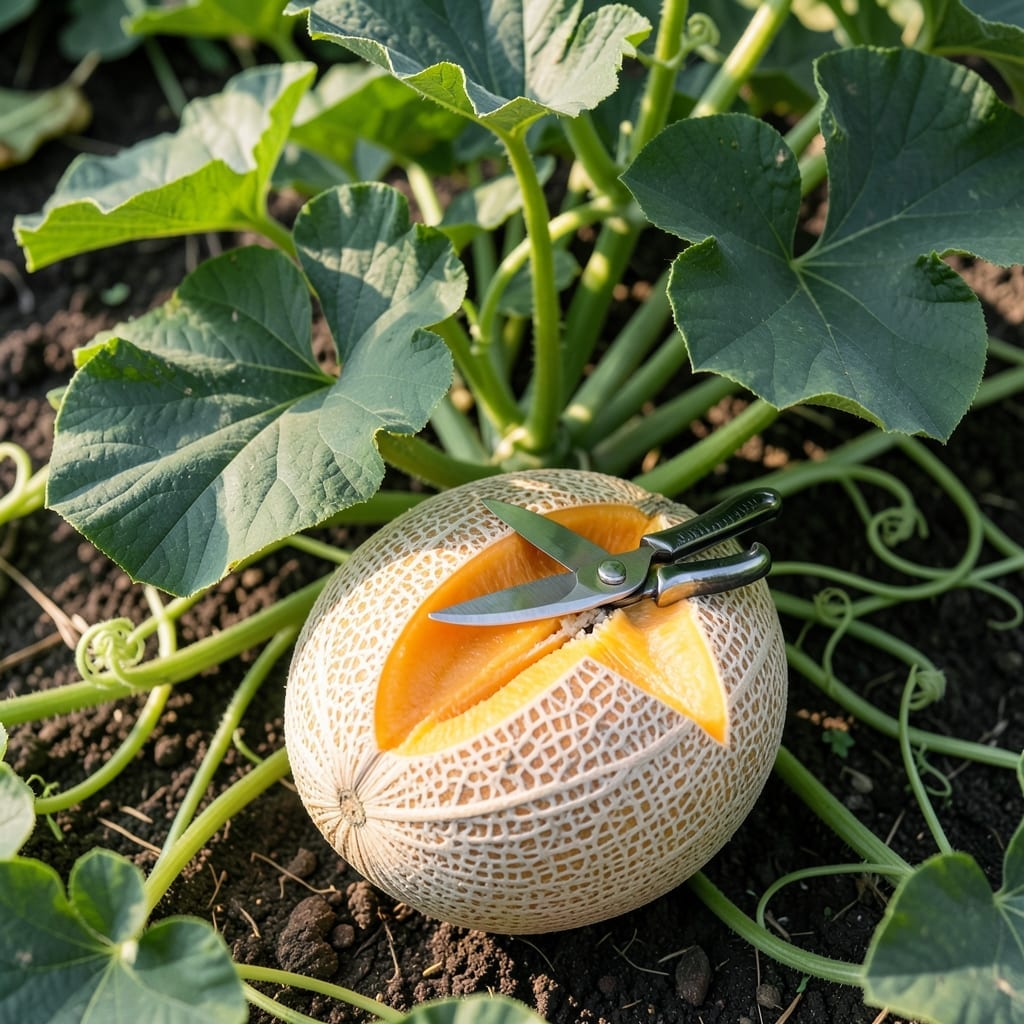
Nothing beats the sweet, juicy taste of a perfectly ripe 🍈 Cantaloupe—but how do you know it’s ready to pick? The secret lies in subtle changes you might overlook.
I’ve learned that color alone doesn’t tell the whole story. The rind’s transformation from green to beige under the netting is just the beginning. There’s one game-changer most gardeners miss.
What if you could harvest at peak sweetness every time? I’ll show you how to spot the 3 key signs that your melon is ready, beyond just its color.
From stem slip to ground spot changes, these visual cues will help you pick the perfect Cantaloupe from your garden this season.


I love watching cantaloupe vines transform in my garden. The first sign I look for is the rind color shift. A ripe cantaloupe transitions from green to beige under its netting, signaling sugar development.
Another key indicator is the stem slip. When the melon is ready, the stem detaches easily with gentle pressure. This natural separation means the fruit is at peak sweetness.
| Sign | Description |
|---|---|
| Rind color | Shifts from green to beige or tan under netting |
| Stem slip | Detaches easily with gentle pressure |
| Netting texture | Becomes pronounced and raised |
| Ground spot | Turns cream or yellow |
The netting texture also changes as the fruit matures. In my experience, the netting becomes more raised and pronounced when the cantaloupe is ripe and ready for harvest.
Don’t forget to check the ground spot—the area where the melon touches the soil. A ripe cantaloupe will have a cream or yellow ground spot instead of green.
I also pay attention to the aroma. A ripe cantaloupe emits a sweet, musky scent at the stem end. If it smells fresh and fragrant, it’s likely ready to pick.
Timing matters too. Cantaloupes typically mature in 75 to 85 days after planting. I start checking for ripeness signs once the fruit reaches this stage.
In my garden, I’ve found that morning checks are best. The fruit is cooler, making it easier to assess its true color and texture without the heat affecting my judgment.
If the stem doesn’t slip easily, I wait another day or two. Forcing it can damage the vine or result in an underripe melon.
Finally, I always use both hands to gently lift the fruit and check for these signs. This ensures I don’t miss any visual cues and can enjoy the sweetest cantaloupes from my garden. 🌱
I see many gardeners struggle with ripe cantaloupe color because they assume uniform beige tones mean it’s ready. But that’s not always true. The rind under the netting is the real indicator, not the overall appearance.
Another common error is ignoring the stem attachment. A cantaloupe can look perfectly colored but still be unripe inside if the stem doesn’t slip easily from the vine.
Some folks also overlook the ground spot, which should turn yellow or cream when ripe. A white or green spot means it’s not ready, even if the rest looks good.
Another mistake is picking too early based on size alone. A large cantaloupe might still be green underneath its netting. Always verify the color shift and stem separation first.
I’ve found that morning checks work best. The cool temperature makes it easier to spot the subtle color changes in the rind. Avoid checking in direct sunlight, which can wash out the true hues.
Finally, don’t confuse disease spots with ripeness. If you see dark or mushy areas, it’s likely overripe or damaged, not just changing color. A healthy ripe cantaloupe has a firm texture and sweet aroma at the stem.
With these tips, you’ll avoid the most common pitfalls and harvest at the perfect time 🌿