
Beautiful Plants For Your Interior
Beautiful Plants For Your Interior
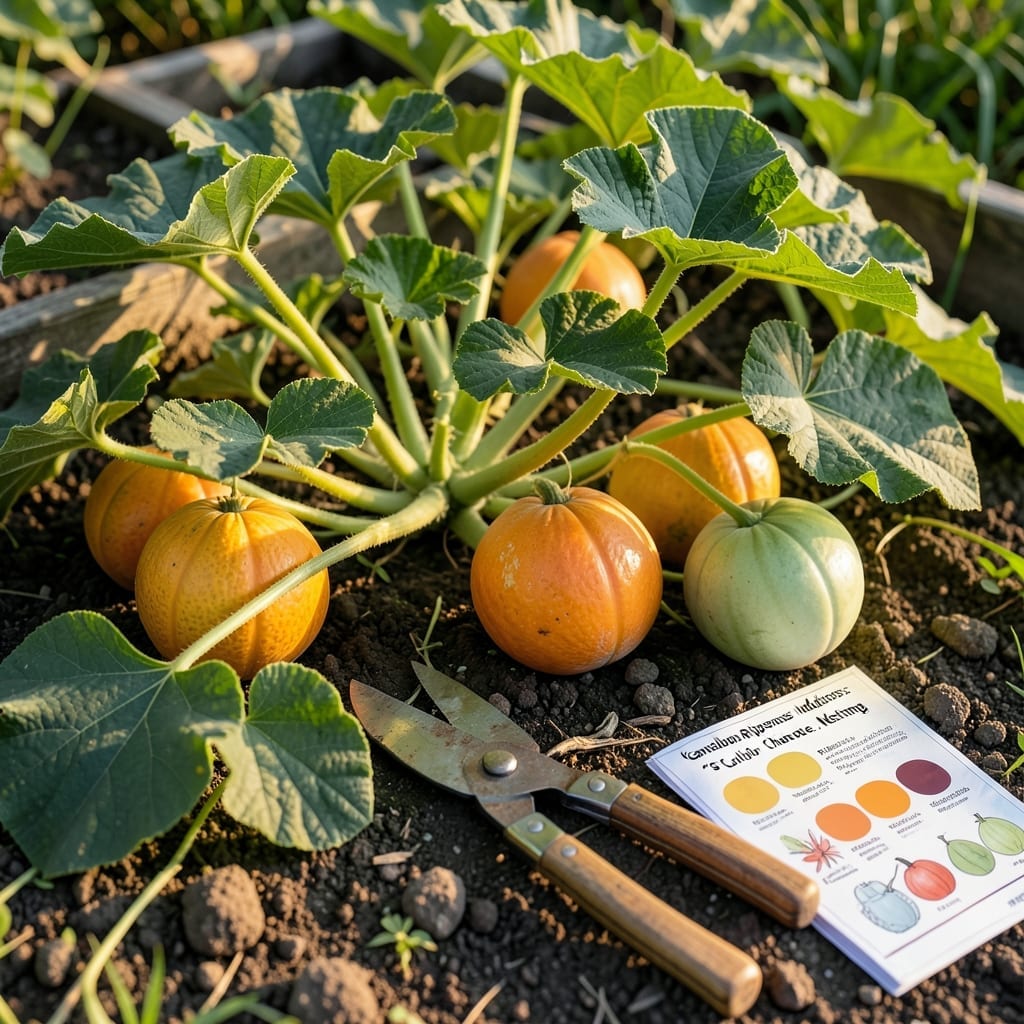
Nothing beats the taste of a perfectly ripe 🍈 Cantaloupe fresh from your garden. But knowing when to pick it can be tricky.
I’ve seen too many gardeners miss that sweet spot, ending up with fruit that’s either underripe or overripe. The good news is, there are clear signs to watch for.
With the right visual cues and timing, you can learn how to harvest at peak ripeness every time. Our chart makes it simple to spot those telltale changes.
From color shifts to stem separation, I’ll walk you through what to look for so your Cantaloupes are always bursting with flavor.


I know how tricky it can be to pick the perfect cantaloupe from your garden. The ripe cantaloupe chart below will help you spot the visual and tactile signs that signal it’s time to harvest. Look for these clues to ensure peak sweetness.☀️
First, check the rind color under the netting. A ripe cantaloupe shifts from green to beige or tan. The stem end should also give slightly when pressed. These are the most reliable indicators for most gardeners.
| Sign | Ready When |
|---|---|
| Rind color | Beige/tan under netting |
| Stem slip | Detaches with gentle pressure |
| Sweet aroma | Strong smell at stem end |
| Netting | Well-defined and raised |
| Thumping sound | Dull, hollow thud |
The stem slip test is my go-to method. If the cantaloupe detaches easily from the vine with a gentle tug, it’s ready. This happens when the abscission layer forms, which is nature’s way of saying the fruit is ripe.
Another key sign is the netting pattern on the rind. As the cantaloupe matures, the netting becomes more pronounced and rough to the touch. This is a great visual cue to watch for as harvest time approaches.
Don’t underestimate the aroma test. A ripe cantaloupe will have a sweet, musky smell at the stem end. If you don’t notice an aroma, it likely needs more time on the vine.
For the thumping method, tap the cantaloupe with your knuckles. A dull, hollow sound indicates ripeness, while a high-pitched sound means it’s not ready yet. This takes practice but is very reliable.
Remember that cantaloupes don’t ripen off the vine, so timing is everything. I always check multiple signs to be sure. If the rind color and stem slip both confirm ripeness, it’s safe to harvest.🌱
Finally, consider your growing zone and variety. Most cantaloupes take 75-95 days to mature. In warmer climates, this may happen faster, while cooler areas might need the full range.
By combining these visual and tactile tests, you’ll never be left guessing. The ripe cantaloupe chart above is your quick reference guide for the best harvest every time.✂️
Timing your cantaloupe harvest right depends on the variety and your climate zone. Warm regions often see earlier ripening, while cooler areas may need extra weeks of growth.
Popular types like Hale’s Best or Athena typically mature in 80-90 days, but Ambrosia can take up to 95 days. Always check your local frost dates for the best window.☀️
| Variety | Days to Maturity | Climate Suitability |
|---|---|---|
| Hale’s Best | 80-85 | Warm climates |
| Athena | 85-90 | Moderate to warm |
| Ambrosia | 90-95 | Cooler zones |
In USDA Zone 6, I start seeds indoors 4 weeks before the last frost to extend the growing season. This gives vines a head start before outdoor planting.
For cool climates, use black plastic mulch to retain heat and speed up fruit development. This trick can shave 5-7 days off maturity time.
Watch the weather forecast as harvest nears. A cold snap can stunt growth, so I cover plants if temps drop below 50°F at night.🌱
Remember, soil temperature matters too. 70°F or warmer is ideal for fast germination and strong vine growth. Use a soil thermometer to check.
Finally, adjust expectations based on your microclimate. Urban areas or southern exposures may ripen fruit a week earlier than shaded spots.🌿