
Beautiful Plants For Your Interior
Beautiful Plants For Your Interior
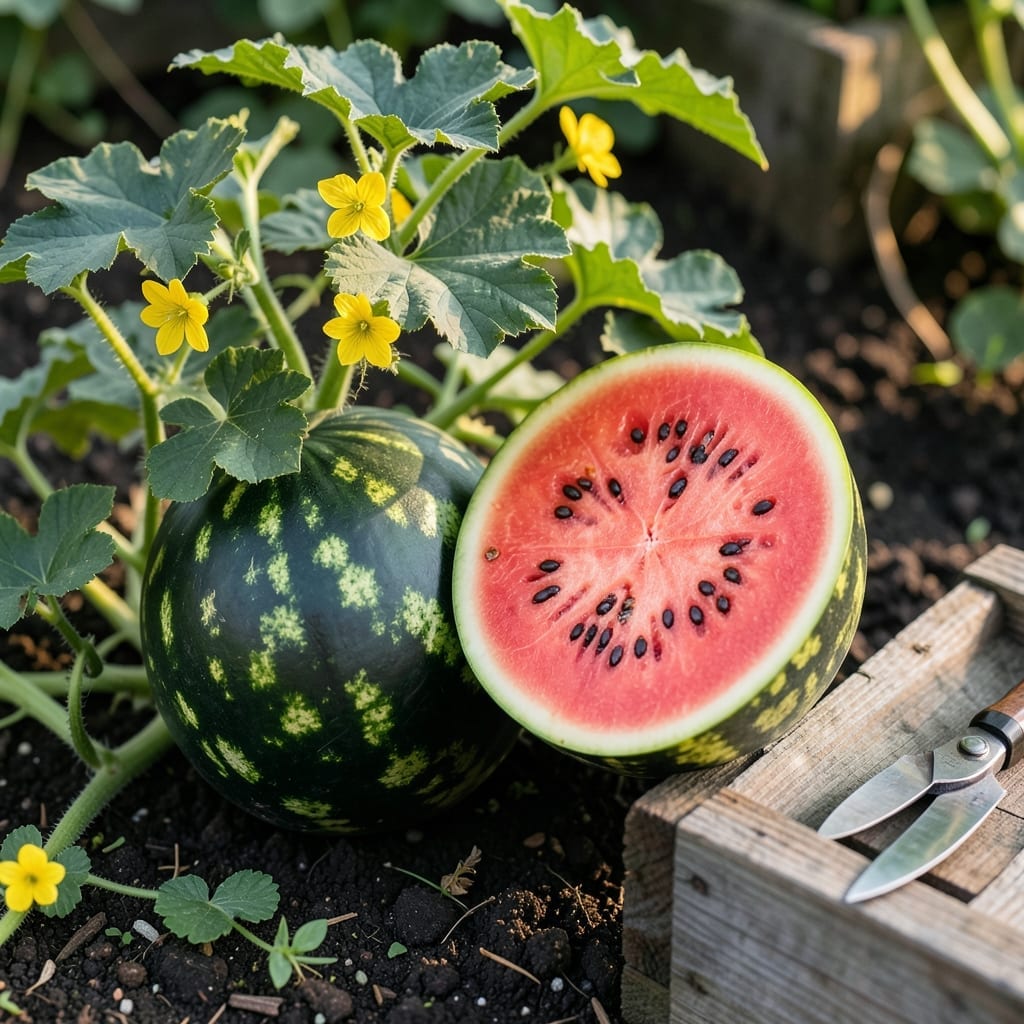
There’s nothing quite like biting into a perfectly ripe Black Diamond watermelon. This heirloom variety, 🍉 Watermelon, delivers deep red, incredibly sweet flesh that’s become a summer staple in zone 6 gardens.
But here’s the catch: timing is everything. Picking too early means missing out on that signature sweetness, while waiting too long can ruin the texture. The good news? Learning to spot the subtle signs takes just a little practice.
Discover the simple tricks to identify peak ripeness and enjoy the best harvests from July through September. Your taste buds will thank you.

Identifying a ripe Black Diamond watermelon starts with observing the tendril nearest the stem. When it turns brown and dry, your melon is likely ready for harvest.
The ground spot, where the melon rests on the soil, is another key indicator. A cream or yellow color signals ripeness, while white or pale green means it needs more time.
| Sign | Ripe Indicator | Not Ready Indicator |
|---|---|---|
| Rind Color | Dull green | Shiny green |
| Ground Spot | Cream or yellow | White or pale green |
| Tendril | Brown and dry | Green and flexible |
| Tap Test | Deep, hollow sound | High-pitched sound |
I always check the rind color first. A dull green hue is a strong sign that the melon is ripe, while a shiny green rind means it’s not ready yet.
The tap test is another reliable method. Tap the melon with your knuckles—if it produces a deep, hollow sound, it’s ripe. A high-pitched sound means it needs more time on the vine.
For the best results, I combine multiple signs. If the tendril is dry, the ground spot is yellow, and the tap test sounds hollow, I’m confident it’s time to harvest.
Harvesting in the early morning helps retain the melon’s sweetness. I use a sharp knife or pruners to cut the stem, leaving about 2 inches attached to the fruit.
After harvesting, I let the melons sit at room temperature for a day to enhance their flavor before storing them in the fridge.
Remember, Black Diamond watermelons typically take 85 days to mature, but this can vary based on growing conditions. Patience and observation are key.
By paying attention to these visual and auditory cues, you’ll consistently pick perfectly ripe Black Diamonds every time. ☀️
To grow the sweetest Black Diamond watermelons, start with the right soil. I always ensure my garden beds have well-draining soil enriched with organic compost for optimal nutrient content.
The ideal pH level is between 6.0 and 6.8. Testing your soil before planting helps avoid issues later. These melons thrive in warm soil, so I wait until temperatures reach at least 70°F before sowing seeds.
I find that mulching around plants helps retain moisture and suppress weeds. Black plastic mulch works especially well, as it also warms the soil, which Black Diamonds love.
These vines can spread up to 10-12 feet, so I give them plenty of space. If space is limited, consider training them on a sturdy trellis, though the melons will need support as they grow.
Regular feeding is crucial. I apply a balanced fertilizer every 4-6 weeks, switching to a low-nitrogen formula as the plants begin to fruit. This encourages sweeter melons rather than excessive leaf growth.
Finally, watch for pests like cucumber beetles and aphids. I use row covers early in the season and inspect plants regularly. With the right care, you’ll be rewarded with juicy, sweet Black Diamonds that are the highlight of summer. 🌱