
Beautiful Plants For Your Interior
Beautiful Plants For Your Interior
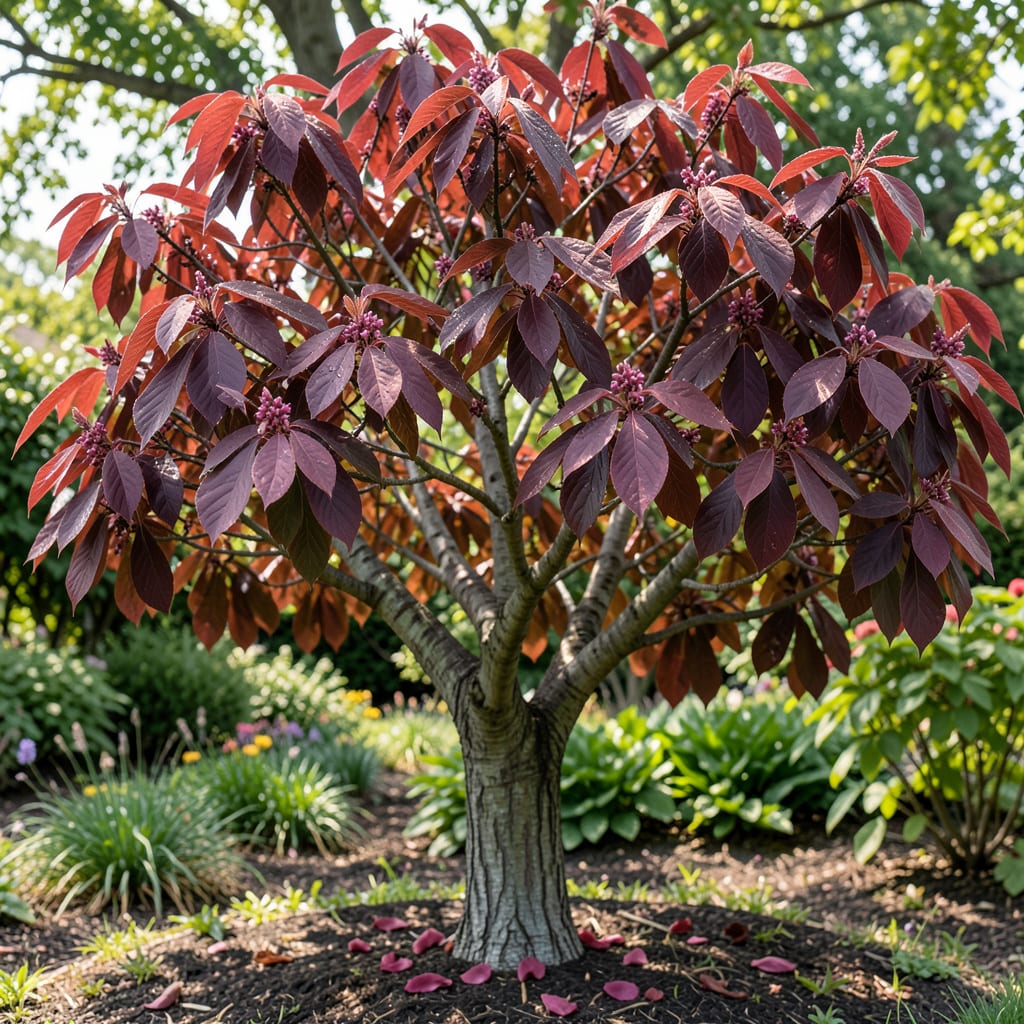
That first burst of color in early spring always takes my breath away. Redbud trees light up the landscape with their vibrant blooms, and some varieties add even more drama with deep red leaves that last through the season.
These trees are low-maintenance once established, thriving in partial shade and well-drained soil. With proper care, you’ll enjoy decades of stunning foliage and seasonal interest that transforms your garden year after year.
📚 In This Guide
Here’s the method I use to ensure vibrant red foliage every spring without fail.
Not all redbuds produce red leaves—you’ll need a specific cultivar like ‘Forest Pansy’ or ‘Ruby Falls’. I always verify the tag at the nursery to confirm it’s a red-leaf variety. Standard Eastern redbuds (Cercis canadensis) produce green leaves and won’t give you that deep burgundy color.
Look for young trees with healthy, deep purple-red foliage already emerging. Avoid specimens with yellowing leaves or sparse growth, as these indicate stress. The best candidates have a strong central leader and well-distributed branches.
Redbuds thrive in moist but well-draining soil with a slightly acidic to neutral pH (6.0-7.5). I dig a hole twice as wide as the root ball but no deeper—planting too deep suffocates the roots. The soil should crumble easily in your hand; if it’s clay-heavy, amend with compost.
Position your tree where it will receive full sun to partial shade. While redbuds tolerate shade, the red foliage color intensifies with more sunlight. In hotter climates, afternoon shade prevents leaf scorch. Water deeply after planting to settle the soil around the roots.
For the first 6-8 weeks after planting, keep the soil consistently moist but not waterlogged. I check by inserting my finger 2-3 inches into the soil—if it feels dry, it’s time to water. A slow, deep soak once or twice weekly is better than frequent shallow watering.
Once established, redbuds are moderately drought-tolerant, but you’ll see the difference in foliage quality. During dry spells, the leaves of well-watered trees remain vibrant, while stressed trees develop dull, brittle foliage. Mulch with 2-3 inches of organic material to retain moisture.
Prune in late winter or early spring, just before new growth starts. I remove any dead, diseased, or crossing branches first. Then, thin out about 20% of the oldest stems at ground level to encourage vigorous new growth, which produces the most vibrant red leaves.
Avoid heavy pruning in summer, as this can stress the tree and reduce the next year’s foliage quality. If you notice suckers emerging from the base, remove them promptly—they divert energy from the main tree and rarely develop the same rich color.
Redbuds are generally low-maintenance, but a few issues can dull that stunning red foliage. I inspect the leaves weekly for signs of leaf spot diseases (brown or black spots) or aphid infestations (curled or sticky leaves). A strong blast of water often dislodges aphids, while fungal issues may require a copper-based fungicide.
Yellowing leaves in summer often indicate heat stress—increase watering frequency temporarily. If the red color fades to green, your tree may need more sunlight. Adjust its exposure gradually to avoid shocking the plant.
Small details make the difference between disappointing green leaves and show-stopping burgundy foliage.
Cultivar Selection: Don’t assume all redbuds produce red leaves—this is the most common mistake. I’ve seen gardeners plant standard Eastern redbuds expecting burgundy foliage, only to get green leaves. Always verify the tag specifies ‘Forest Pansy’ or ‘Ruby Falls’ for that deep red color.
Soil Preparation: The pH sweet spot of 6.0-7.5 isn’t just a suggestion. I test my soil before planting, and if it’s outside this range, I amend with sulfur to lower pH or lime to raise it. Planting in clay without compost amendment virtually guarantees poor drainage and stressed foliage.
Watering Precision: During those critical first 6-8 weeks, I’ve found that checking soil moisture 2-3 inches down prevents both underwatering and root rot. A slow, deep soak once weekly works better in most climates than daily light watering, which encourages shallow root systems.
Pruning Timing: Late winter pruning isn’t just about aesthetics—it’s about timing with the tree’s growth cycle. I once pruned in summer and lost half the next year’s foliage vibrancy. Removing exactly 20% of the oldest stems at ground level stimulates the most colorful new growth.
Redbuds like ‘Forest Pansy’ are cultivated for their deep burgundy foliage, not flowers. If your tree has red leaves year-round, it’s likely a purple-leaf variety. If the red appears suddenly, check for stress, disease, or nutrient deficiencies.
Most redbuds bloom in early spring (March–April) before leaves emerge. Varieties with red foliage, like ‘Merlot,’ still produce pink or purple flowers first, followed by their signature deep red or purple leaves.
Yes! Cultivars like ‘Forest Pansy’ and ‘Merlot’ retain their reddish-purple leaves throughout the growing season. In fall, the leaves may turn bronze or gold before dropping.
Plant in well-drained soil with partial shade to full sun. Water deeply during dry spells, and mulch to retain moisture. Prune only in late winter to avoid bleeding sap. Avoid over-fertilizing, which can reduce leaf color intensity.
These trees thrive in slightly acidic to neutral soil (pH 6.0–7.5). Amend heavy clay with compost for better drainage. Avoid soggy or compacted soil, which can stress the tree and dull its vibrant foliage.
