
Beautiful Plants For Your Interior
Beautiful Plants For Your Interior
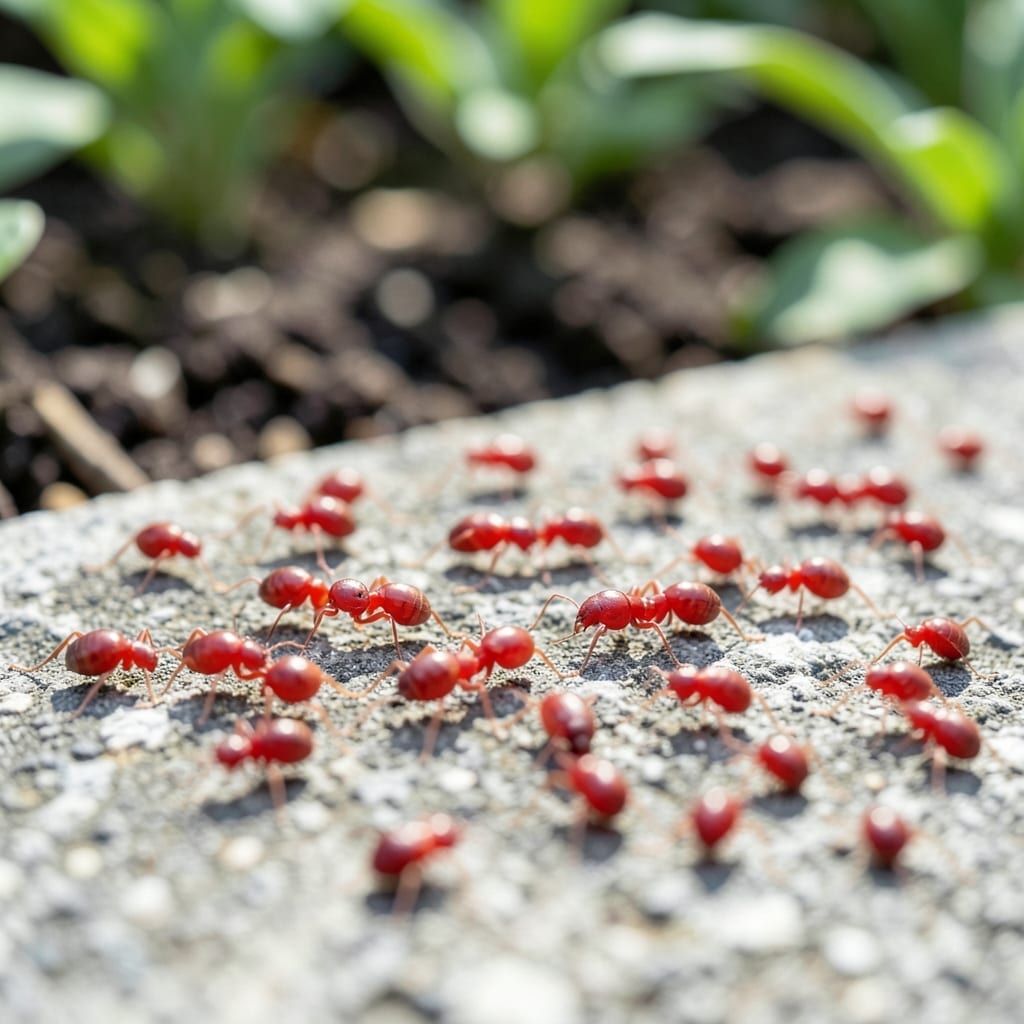
Those tiny red invaders on your concrete are likely clover mites. I’ve dealt with them every spring, and they’re more annoying than harmful—but you’ll still want them gone.
The good news is they don’t bite or damage structures. The bad news? They multiply fast and leave red stains when squished. They appear when weather warms and vegetation touches your home’s foundation.
You can eliminate them with a simple soap-and-water spray. A 30-second application to infested areas breaks down their protective coating. They’ll be gone within hours.
Prevent future outbreaks by removing plants near your foundation and sealing entry points. This keeps them from returning next season.
Red little bugs on concrete often appear due to specific environmental and biological factors. Understanding these causes can help you address the issue effectively.
Many tiny red bugs, like clover mites or red spider mites, are drawn to damp areas. Concrete retains moisture, especially in shaded or poorly drained spots, creating an ideal habitat for these pests. They thrive in humid conditions, often multiplying rapidly when water is present.
Leaves, grass clippings, and other organic matter accumulate on concrete surfaces, providing food and shelter for bugs. Species like chiggers or red velvet mites feed on decaying plant material, making untidy areas a hotspot for infestations.
Concrete near gardens, lawns, or mulch beds often hosts these pests as they migrate from plants to hard surfaces. Overwatered landscapes or dense foliage can push bugs onto adjacent concrete in search of drier ground.
Extreme heat or cold drives small red bugs to seek refuge on concrete, which absorbs and retains warmth. In cooler months, they may cluster on sun-exposed slabs, while summer heat can force them out of soil onto cooler surfaces.
Dealing with tiny red invaders on your concrete? Here’s how to tackle each cause with simple, actionable fixes.
Trim back bushes, weeds, or grass touching the concrete. These bugs love moisture and shelter, so removing their habitat forces them to relocate. Fix: Use a weed trimmer or pruners to clear a 12-inch barrier around the area. Prevention tip: 💡 Keep landscaping neat and maintain a dry zone with gravel or mulch.
Crumbs, fallen fruit, or leaf litter attract red bugs like clover mites or spider mites. Fix: Sweep the concrete thoroughly, then hose it down to remove residue. For stubborn organic buildup, use a mild soap solution and scrub. Prevention tip: 🎯 Store outdoor trash in sealed bins and clean up spills immediately.
Damp concrete is a magnet for these pests. Fix: Improve drainage by ensuring downspouts direct water away. Use a dehumidifier in nearby basements or crawl spaces if needed. Prevention tip: ✨ Seal cracks in the concrete with a waterproof sealant to block moisture.
Clover mites thrive in nitrogen-rich soil. Fix: Apply a thin layer of diatomaceous earth along the concrete’s edge—it dehydrates bugs naturally. For severe cases, use a miticide labeled for red mites. Prevention tip: 🌡️ Balance soil pH with lime or sulfur, and avoid over-fertilizing lawns adjacent to concrete.
Some red bugs seek concrete for warmth. Fix: Install reflective mulch or shade cloths to reduce surface temperature. Prevention tip: 🔥 Regularly inspect sun-exposed areas and treat early signs with insecticidal soap.
These tiny red pests don’t bite, sting, or transmit diseases. They’re mostly a nuisance and may leave red stains when crushed.
Warmer weather and increased moisture activate their eggs. They emerge to feed on plants and seek shelter, often migrating onto concrete near foundations.
A 50-50 vinegar-water mix works as a natural spray. Apply directly to clusters, but avoid using it on nearby plants as it may harm them.
Remove vegetation touching your home, seal cracks, and reduce moisture. A 12-inch gravel barrier around the foundation helps deter them.