
Beautiful Plants For Your Interior
Beautiful Plants For Your Interior
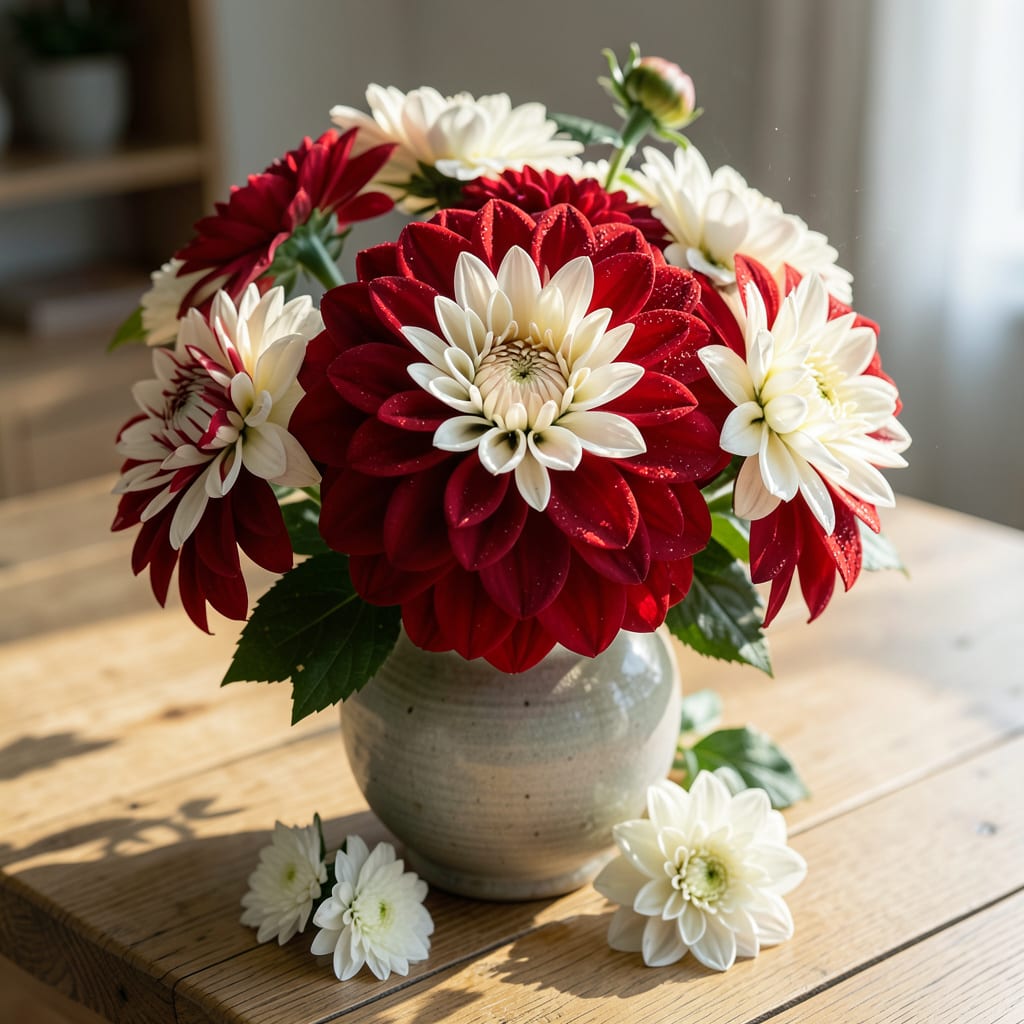
Red and white dahlias stop people in their tracks. I planted my first tubers last spring, and the contrast between deep crimson and pure white petals created a display that neighbors still ask about.
They thrive in full sun with well-draining soil, and the blooms keep coming from midsummer through frost. With basic care—regular watering and deadheading—you’ll get armfuls of cut flowers that last over a week in vases. Simple, but the payoff is anything but.
📚 In This Guide
These show-stopping blooms are easier to cultivate than they look with the right approach.
Select a location that receives full sun for at least 6-8 hours daily. Dahlias thrive in warmth and need good air circulation to prevent fungal issues. I always test the spot by placing a small flag there for a day to confirm it gets unfiltered light from mid-morning to late afternoon.
Avoid low-lying areas where water pools or windy spots that can snap the tall stems. The soil should drain well—if water sits on the surface 15 minutes after a heavy rain, amend with compost or sand. Work the soil to a depth of 12 inches to loosen it for the tubers.
Plant tubers in spring after the last frost when soil temperatures reach 60°F. Dig a hole about 6 inches deep and place the tuber horizontally with the eye (the small bud) facing up. If you’re not sure which side is up, lay it on its side—it will figure it out.
Space tubers 18-24 inches apart to give the plants room to grow without competing. Cover with soil and water lightly to settle the dirt around the tuber. Don’t water heavily at first—this prevents rot before the sprouts emerge. You’ll see green shoots poking through in 2-3 weeks.
Install stakes or a support system at planting time to avoid damaging tubers later. Dahlias grow tall and their heavy blooms can topple without support. I use 5-foot bamboo stakes for each plant and tie the stems with soft garden twine as they grow.
Water deeply once a week, allowing the soil to dry slightly between waterings. When the plant is 12 inches tall, pinch out the top set of leaves to encourage bushier growth and more blooms. Fertilize lightly with a balanced 10-10-10 formula every 3-4 weeks until buds form.
Once buds appear, switch to a low-nitrogen, high-phosphorus fertilizer to boost flowering. Water at the base of the plant to keep foliage dry and prevent disease. In hot climates, a 2-inch layer of mulch around the base keeps roots cool and conserves moisture.
Deadhead spent blooms daily by snipping the stem just above a set of leaves or side bud. This redirects energy to new growth and extends the blooming season. The more you cut, the more flowers you’ll get—it’s that simple.
After the first frost blackens the foliage, cut the stems back to 4-6 inches. Carefully dig up the tubers with a fork, taking care not to pierce them. Brush off excess soil and let them dry in a well-ventilated area for 2-3 days.
Store tubers in a cool, dark place (40-50°F) with moderate humidity. I pack mine in boxes with slightly damp peat moss or vermiculite. Check monthly for rot or shriveling and discard any damaged tubers. Replant in spring for another season of stunning red and white blooms.
These simple adjustments will help you get the most vibrant blooms from your garden.
Sunlight is Non-Negotiable: The 6-8 hours of daily full sun mentioned in Step 1 isn’t just a suggestion—it’s critical for strong stems and abundant flowers. I learned this the hard way when my first dahlias in partial shade produced weak, leggy plants with few blooms. Test your spot thoroughly before planting.
Drainage Test: That 15 minutes after heavy rain mentioned in Step 1 is your soil’s way of telling you if it needs help. If water lingers longer, work in compost or sand to that 12-inch depth—your tubers will thank you by avoiding rot.
Eye Placement: In Step 2, when planting at that 6-inch depth, don’t stress about getting the eye perfectly upright. As the instructions say, laying it on its side works fine. The tuber will correct itself as it grows toward the surface.
Support System: Step 3 mentions installing stakes at planting time, and here’s why: I waited until my dahlias were 12 inches tall to add support once, and the process of driving stakes in damaged several tubers. Install those 5-foot bamboo stakes early—it’s much easier and safer.
Keep soil moist but well-drained, and ensure full sun exposure (6+ hours daily). Deadhead spent blooms to encourage more flowers, and stake tall varieties for support. Fertilize lightly every 2-3 weeks during growing season.
Plant tubers in spring after the last frost, when soil temperatures reach 60°F (15°C). In warmer climates, you can start earlier. For potted dahlias, begin indoors 4-6 weeks before the last frost.
Yes! Choose a large pot (12+ inches deep) with drainage holes. Use well-draining potting mix and place in full sun. Container-grown dahlias may need more frequent watering and staking.
Yellowing leaves often signal overwatering, poor drainage, or nutrient deficiencies. Check soil moisture and ensure proper drainage. If needed, adjust watering or add a balanced fertilizer.
For similar bicolor drama, try Alstroemeria, Zinnias (like ‘Profusion Red Yellow’), or Gerbera daisies. These offer vibrant, two-tone blooms with less maintenance.
