
Beautiful Plants For Your Interior
Beautiful Plants For Your Interior
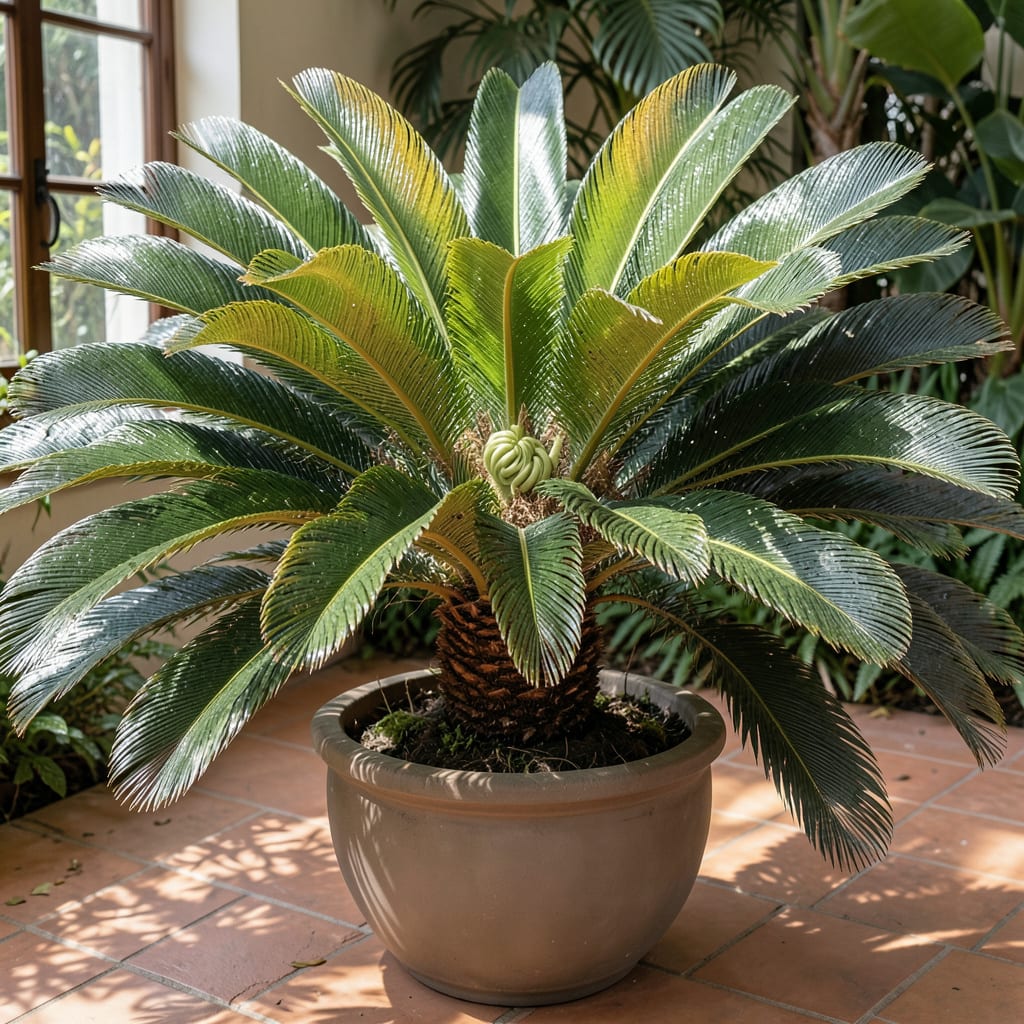
This palm brings the tropics indoors with its lush, arching fronds. I’ve watched mine transform a plain corner into a vacation vibe, and it’s easier to care for than you’d think.
Give it bright, indirect light, consistent moisture, and occasional misting. It’ll reward you with rapid growth and that dramatic tropical look—no greenhouse required.
📚 In This Guide
This tropical beauty thrives indoors with proper light, water, and humidity—here’s my method.
Place your palm in bright, indirect light near an east or west-facing window. Direct southern exposure can scorch the fronds, especially during peak summer hours when the sun is most intense.
If natural light is limited, supplement with a full-spectrum grow light for 12-14 hours daily. I position mine 12-18 inches above the plant to mimic natural conditions. You’ll notice new fronds emerging uniformly when light is adequate.
Rotate the pot quarter-turn weekly to ensure even growth. Without rotation, the plant will lean toward the light source, creating an unbalanced silhouette.
Water when the top 1-2 inches of soil feel dry to the touch. Majesty palms are sensitive to both overwatering and drought, so consistency is key. I use room-temperature water to avoid shocking the roots.
Ensure the pot has drainage holes to prevent waterlogging, which leads to root rot. Empty the saucer 15-20 minutes after watering to avoid standing water. During active growth in spring and summer, you may need to water every 5-7 days.
If the tips of the fronds turn brown, it’s often a sign of low humidity or inconsistent watering. Adjust your routine and mist the leaves 2-3 times weekly to maintain moisture.
Majesty palms thrive in high humidity levels (50-60%). In dry indoor environments, use a humidifier or place the pot on a tray filled with pebbles and water. The water evaporates around the plant, creating a microclimate.
Keep the temperature between 65-80°F during the day and avoid drafts from windows, doors, or air conditioning vents. A sudden temperature drop below 55°F can stress the plant and cause leaf yellowing.
I’ve found that grouping plants together naturally increases humidity around them. Just ensure there’s enough airflow to prevent fungal issues.
Feed your palm with a balanced liquid fertilizer (10-10-10 or 20-20-20) diluted to half strength every 4-6 weeks during the growing season (spring through early fall). Avoid fertilizing in winter when growth slows.
Prune only when necessary to remove brown or yellow fronds. Use clean, sharp shears and cut at the base of the stem. Never remove more than 20% of the foliage at once, as this can shock the plant.
Regular pruning encourages new growth and keeps the plant looking tidy. I also wipe the fronds with a damp cloth monthly to remove dust, which helps the plant photosynthesize more efficiently.
Repot your Majesty palm every 2-3 years or when roots start growing out of the drainage holes. Choose a pot that is 2-3 inches larger in diameter than the current one to allow room for growth.
Use a well-draining potting mix designed for palms or tropical plants. I like to add 20% perlite to improve aeration. Gently remove the plant from its old pot, loosen the roots, and place it in the new container at the same depth.
Water thoroughly after repotting and place the plant in a shaded area for 3-4 days to reduce transplant shock. Resume normal care once the plant has adjusted.
Mastering the care of this tropical palm comes down to understanding its natural habitat and replicating those conditions indoors.
Light Exposure: In Step 1, the 12-14 hours under a full-spectrum grow light is non-negotiable for healthy growth. Positioning it 12-18 inches above the plant mimics the dappled sunlight of its native environment. I learned the hard way that too close causes leaf burn, while too far leads to leggy growth.
Watering Precision: The 15-20 minutes after watering in Step 2 is critical—standing water is the fastest way to kill your palm through root rot. I use a moisture meter to confirm the top 1-2 inches are dry before watering again, especially during the 5-7 day intervals in active growth seasons.
Temperature Control: That 65-80°F range in Step 3 is ideal, but here’s what nobody tells you—drafts from AC vents can drop the temperature below 55°F faster than you think. I keep mine away from vents and doors to prevent stress-induced yellowing.
Repotting Insight: The 2-3 inches larger pot size in Step 5 prevents overpotting, which leads to soggy soil and root issues. I also add that 20% perlite to the mix for better drainage, and I’ve never had transplant shock when following the 3-4 days of shaded recovery time.
Water your Majesty Palm when the top 1-2 inches of soil feel dry, typically every 1-2 weeks. Ensure good drainage to prevent root rot, and reduce watering in winter when growth slows.
Majesty Palms thrive in bright, indirect light. Avoid direct sunlight, which can scorch the leaves. A spot near an east- or north-facing window is ideal for healthy growth.
Brown tips often indicate low humidity or underwatering. Increase humidity with a pebble tray or humidifier, and check soil moisture regularly. Trim brown tips to keep the plant looking tidy.
Yes, but only in warm climates (USDA zones 10-11). It loves tropical conditions and can be planted outdoors in well-draining soil with partial shade. Protect it from cold drafts or frost.
Consider compact palms like the Parlor Palm or Areca Palm. Both offer lush, tropical vibes but stay smaller, making them perfect for apartments or cozy corners.
