
Beautiful Plants For Your Interior
Beautiful Plants For Your Interior
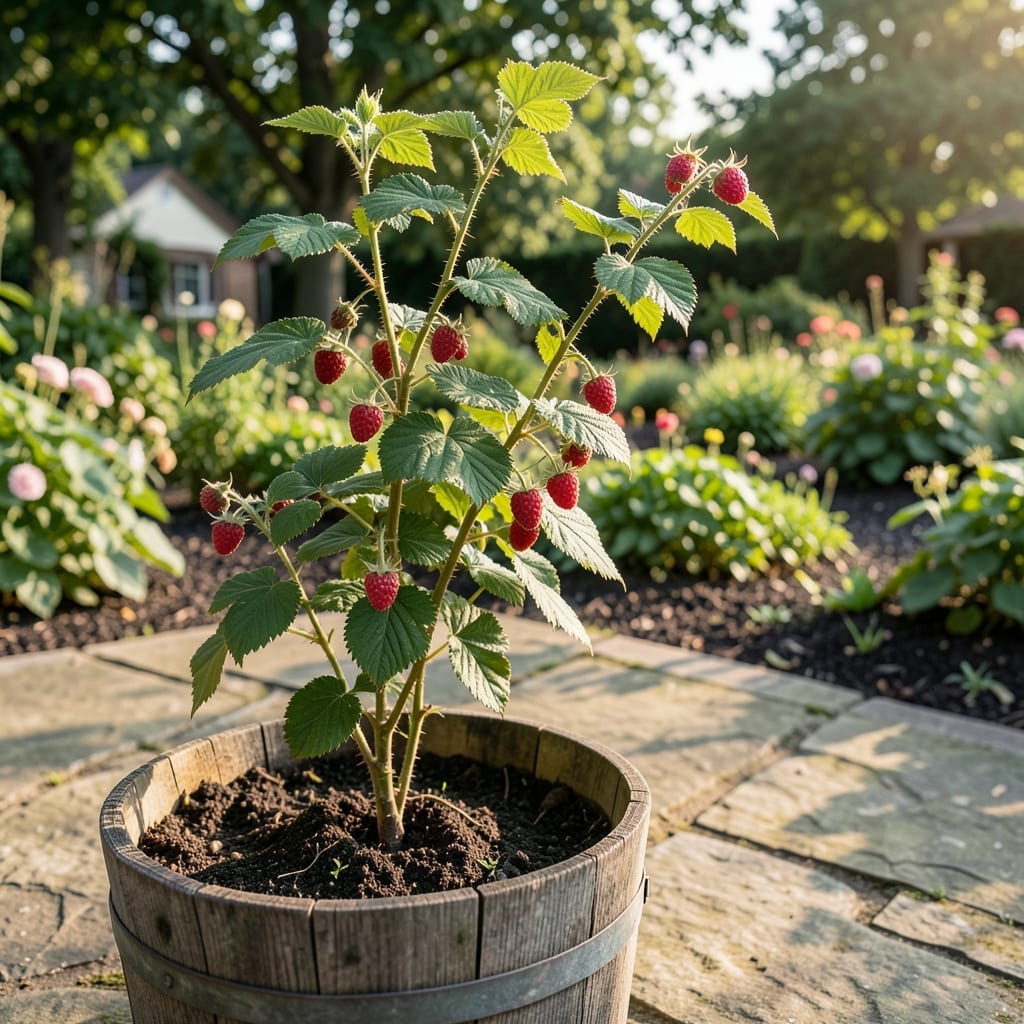
Growing 🍇 Raspberry in containers opens up possibilities for gardeners with limited space. But choosing the wrong pot size can severely limit your plants’ potential.
Those tiny roots need room to stretch out. Without adequate space, your Raspberry bushes will struggle to produce those sweet, plump berries we all love.
I’ve seen firsthand how the right container transforms a struggling plant into a thriving one. It’s not just about size – it’s about giving your Raspberries the foundation they need.
Discover the ideal dimensions that will have your container-grown Raspberries flourishing and fruiting abundantly. Let’s get started on the right foot.


Choosing the right raspberry container size starts with knowing your variety. Each type has unique root system needs and growth habits that demand specific dimensions for optimal health and fruit production.
I’ve tested various container sizes with different raspberry types, and the results clearly show that matching the pot to the plant’s mature size and growth pattern makes all the difference in yield and vitality.
| Variety | Minimum Depth | Minimum Width | Volume | Notes |
|---|---|---|---|---|
| Summer-bearing | 24-36 inches | 24 inches | 15-25 gallons | Tall canes need deep root space |
| Ever-bearing | 20-24 inches | 20 inches | 10-15 gallons | Compact growth, multiple harvests |
| Dwarf | 12-18 inches | 18 inches | 5-10 gallons | Perfect for small spaces or patios |
Summer-bearing raspberries are the giants of the container world. Their tall canes and extensive root systems require deeper pots to accommodate growth. I recommend at least 24-36 inches depth for these varieties.
Ever-bearing types are more forgiving but still need room. A 20-24 inch deep container with 20 inch width supports their dual harvests. These plants produce fruit on both old and new wood.
For dwarf raspberries, you can downsize slightly. A 12-18 inch deep pot works, but don’t go smaller than 18 inches wide. These compact plants still need space for their shallow roots to spread.
Remember that container volume matters as much as dimensions. A 15-gallon pot is my minimum recommendation for most raspberries, with 25 gallons being ideal for summer-bearing varieties. This ensures adequate soil volume for moisture retention.
In my experience, plants in too-small containers show stress quickly. Leaves yellow, growth stunts, and fruit production drops. The extra investment in a properly sized pot pays off in healthier plants and bigger harvests.
Consider the mature height of your raspberry variety when choosing. Taller plants need deeper containers to prevent toppling. I’ve seen 6-foot canes in shallow pots struggle to stay upright, even with supports.
For best results, always size up rather than down. Raspberry roots grow quickly, and a container that seems large at planting will fill up faster than you expect 🌱
Selecting the right raspberry container size isn’t just about dimensions. I’ve learned that drainage holes are non-negotiable to prevent root rot in these moisture-sensitive plants.
The container material matters too. Terracotta pots breathe better but dry out faster, while plastic containers retain moisture but may need extra drainage.
I always recommend choosing a pot that’s 2-3 inches larger than the plant’s current root ball. This gives raspberry roots room to expand without drowning in excess soil.
Volume matters as much as dimensions. For standard varieties, aim for at least 20-25 gallons of soil capacity. Dwarf types can thrive in 15-gallon containers.
Don’t forget about container stability. Tall raspberry canes can make top-heavy plants. I use wide, sturdy bases or secure my pots to prevent tipping in windy conditions.
Finally, consider your climate. In hot areas, larger containers buffer temperature swings. Colder regions benefit from insulated pots that protect roots from freezing. 🌱